A relationship between materials, not a fixed style
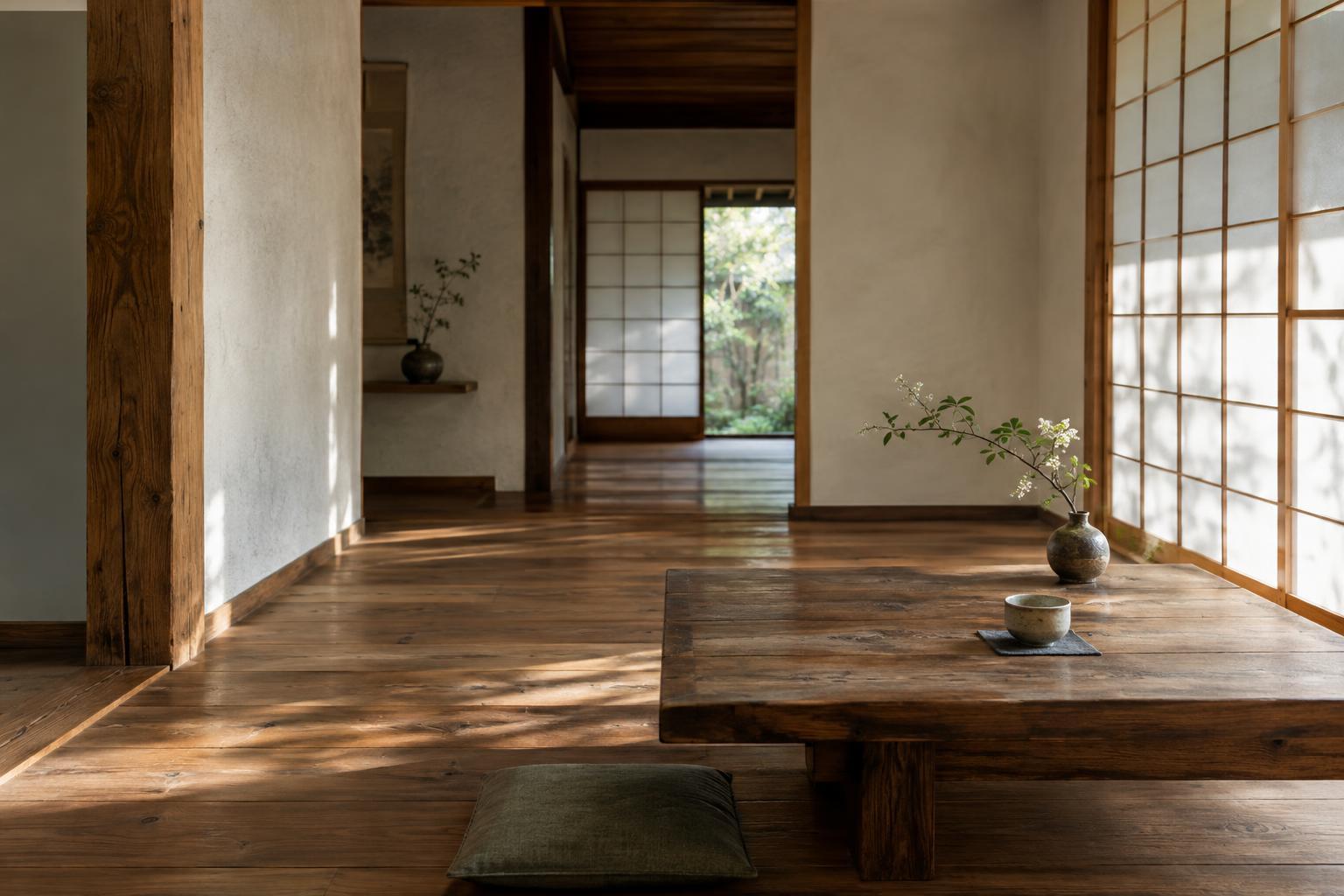
A room does not become Japanese simply because it contains a sliding screen or a pale wood table. Japanese interiors vary by region, building, age and the people who use them. Still, wood, plaster and paper appear together in many traditional spaces. Each does a different job: wood defines edges and bears wear, plaster creates a quiet backdrop, and paper changes the way light and privacy are experienced.
Their appeal lies partly in contrast. A smooth wall makes a wooden post more noticeable; a dark frame gives a paper panel definition. None of these materials needs to dominate. Looking at what each contributes is more useful than trying to reproduce a particular room from an image, especially when adapting ideas to a different home and climate.
Wood: structure, touch and visible age
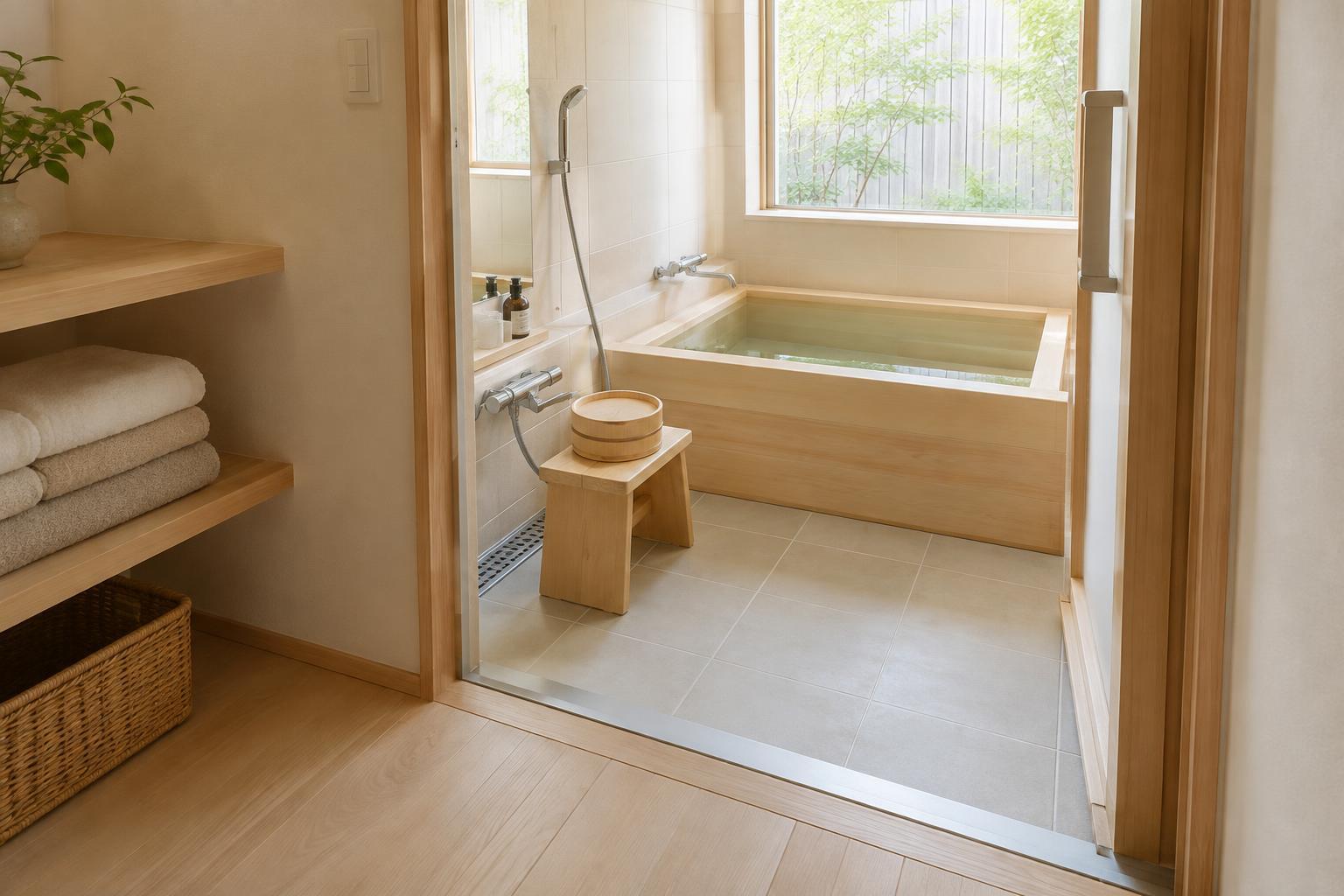
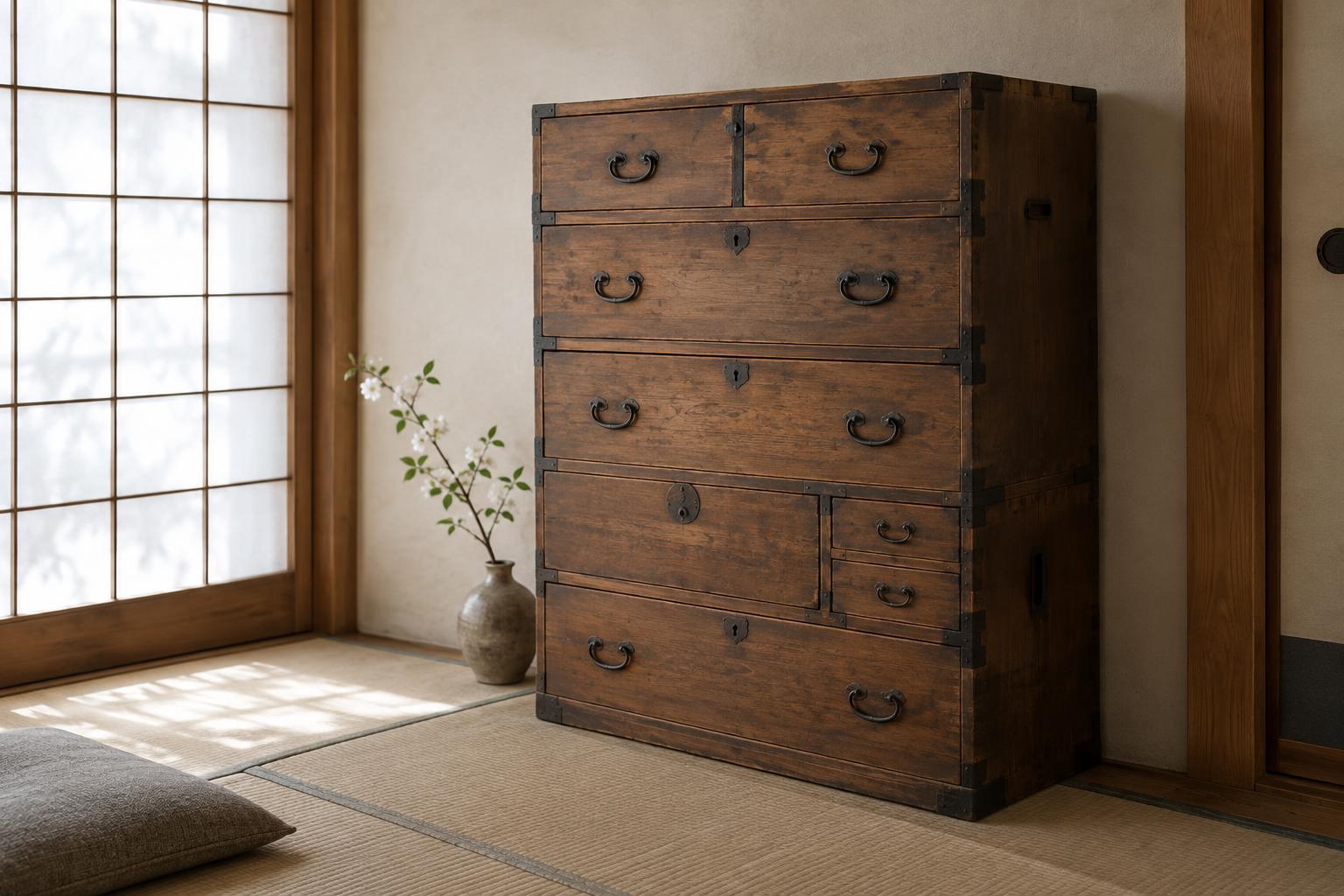
Wood can be the most tangible part of an interior. Floors, posts, beams, doors and furniture all invite contact, so their finish affects daily life as much as their appearance. A broad wooden surface brings visual warmth, while a narrow frame can give a room a clear rhythm. In a traditional timber building, some members are structural; in a contemporary room, wood may serve mainly as a finish or furnishing.
Color and grain change the effect. Pale wood tends to keep a small space feeling light; darker wood can emphasize thresholds and make adjoining surfaces seem brighter. Neither choice is inherently more authentic. It is often the restraint of the arrangement that matters: a few well-placed wooden elements leave room for texture and shadow elsewhere.
Wood also records use. A tabletop may develop marks, and a handrail may become smoother where it is touched. That can be welcome, but it is worth choosing finishes with the household in mind. A surface near water or heavy foot traffic needs different care from a decorative shelf. Before selecting wood for an interior, consider what will touch it, how easily it can be cleaned, and whether you would enjoy seeing it change.
Plaster: a calm surface with depth
Plaster walls often appear simple at first glance, yet their surfaces can hold subtle variation. Depending on the material and application, a wall may look nearly smooth or show gentle traces of the tool that shaped it. Under changing daylight, those small irregularities create depth without a busy pattern. Beside wood, plaster gives the eye a place to rest.
The word plaster covers different mixes and methods, so it should not be treated as one universal Japanese finish. Traditional approaches may use earth or lime-based materials, while modern interiors can use other wall systems to achieve a related visual effect. If you are renovating, appearance is only one consideration: the existing wall, room conditions and maintenance needs matter too.
For a modest update, the lesson may be compositional rather than technical. A matte, softly textured wall can support the character of a timber frame or a simple cabinet. Choose a sample and look at it in morning and evening light before committing to a whole room. What reads as warm and quiet in a photograph may look very different under your own lighting.
Paper: light, privacy and changeable boundaries
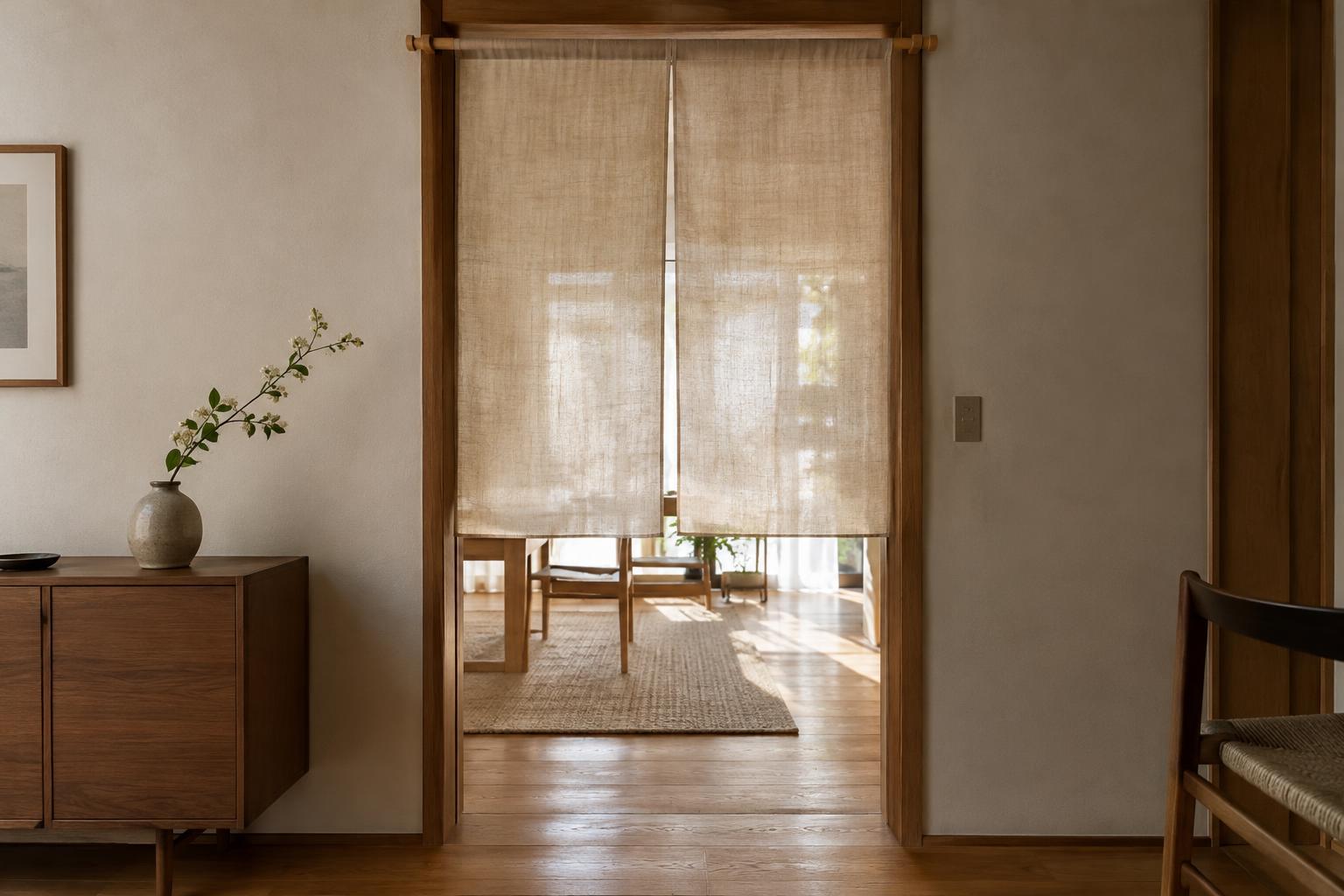
Paper is most familiar in shoji, the translucent panels often set within wooden frames. A shoji screen does not block daylight in the way a solid door does. Instead, it diffuses incoming light, reducing sharp contrasts and lending the space beyond it a softer presence. It can also offer privacy while still suggesting that another area lies on the other side.
Paper panels have practical limits. They can tear, stain or need replacing, particularly where children, pets or frequent movement put them within reach. Their value is not that they are effortless, but that they make a light boundary possible. Other types of screen or glazing may suit a household better while preserving the idea of filtered light.
You can explore that idea without installing a full set of sliding doors. A paper-shaded lamp, a translucent window covering or a movable screen can make an evening corner feel gentler. Pay attention to where the light comes from and what you need to see through or conceal; the placement will have as much effect as the material.
Putting the three together at home
Start with a room you already use and identify one need: warmer surfaces, a less stark wall or softer daylight. Then change one element at a time. A wooden stool against a matte wall, for example, lets you notice their contrasting textures. A translucent shade near that pairing adds another layer without requiring a themed redesign.
Leave space for the room’s ordinary functions. A beautiful screen is of little help if it obstructs a route you use every day, and an unfinished surface may not suit an area that needs frequent wiping. Wood, plaster and paper are most compelling when their roles are clear. Together they can shape how a room feels across the day while still making room for the people who live there.