What a noren can do in a home
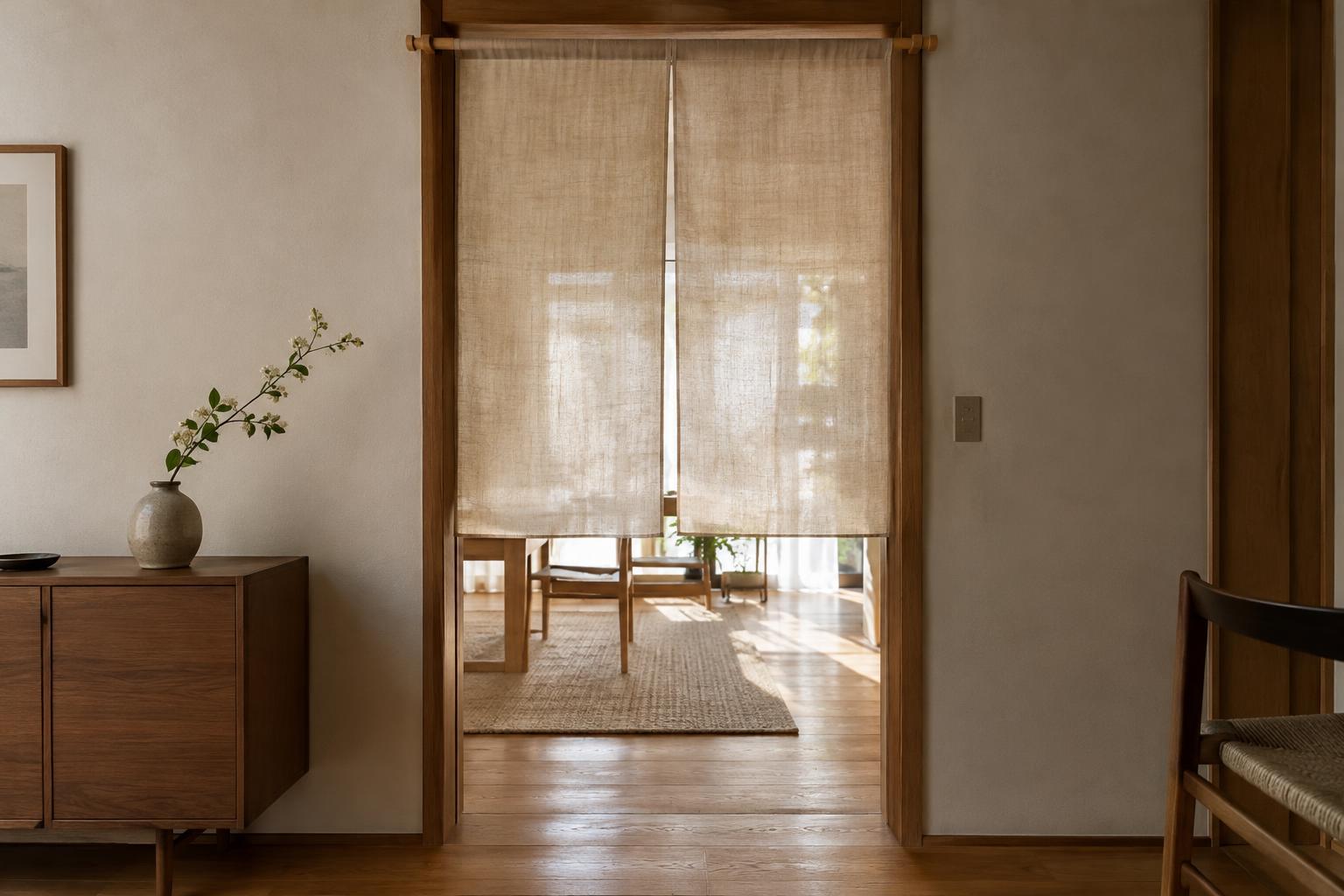
A noren is a fabric hanging, usually divided by one or more vertical slits, that can be placed across an entrance or opening. In Japan, noren appear in settings ranging from shops to homes, with their appearance and purpose varying by place. At home, one can mark a transition between rooms, partly screen a view or bring color and texture to a plain doorway. It is not a substitute for a door: sound, light and air can still pass around and through it.
Start by deciding what you want the hanging to do. A short noren can draw attention to an entrance while leaving the room beyond visible. A longer one offers more visual separation, though its central opening still makes passage easy. If privacy is the main goal, consider how much can be seen from different angles and whether a door, blind or fuller curtain would serve you better.
Choose a doorway that suits the way you move
An opening between a kitchen and dining area, a hallway and living room, or a work corner and the rest of a room can be a useful place to begin. These spots allow a noren to signal a change of space without requiring anyone to open and close a door. A doorway used often may especially benefit from the divided design: people can pass through the center rather than pushing a whole panel aside.
Before buying, stand on both sides of the opening. Notice sightlines, nearby furniture and the direction people approach from. Check whether the fabric would catch on a door handle, brush against a shelf or swing into a cooking area. Keep it clear of flames, hot surfaces and anything that needs unobstructed access. In a narrow route, a lightweight hanging that parts easily may be more comfortable than heavy, stiff cloth.
Also consider who uses the space. A low edge may be awkward for someone carrying laundry, a child moving quickly or a pet that likes to investigate fabric. The best location is one where the noren feels like a gentle threshold, not a daily obstacle.
Find a length and width that feel intentional
Measure the inside width of the opening and the distance from the intended hanging point to the floor. Then decide how much of the doorway you want covered. A compact noren placed near the top can frame an entrance and leave an open view beneath it. A mid-length piece can screen part of a room while preserving an airy feeling. A longer piece makes a stronger visual division but may need more attention to clearance.
Check the finished dimensions of the textile rather than relying on a product photo. Width matters as much as length: fabric that is too narrow can look stranded in the opening, while excess width may bunch along the rod. If you want a flatter appearance, choose a width close to the space available. If you prefer soft folds, allow room for them without forcing the fabric against the sides.
It can help to tape paper or an old sheet at the proposed lower edge before committing. Walk through the doorway several times and view it while seated as well as standing. This simple test reveals whether the length blocks a useful sightline or places the design at an awkward height. If you expect to wash the noren, check its care instructions and allow for any shrinkage the maker warns about.
Select fabric for light, texture and upkeep
Cotton and linen are approachable choices when you want a soft, everyday textile. A loosely woven or lighter fabric may admit more light and movement; a denser weave can provide a stronger screen. Rather than assuming a material will provide privacy, hold a sample or the hanging itself against a light source. Shapes behind a pale curtain may remain visible, especially in the evening when the room beyond is lit.
Think about the surrounding surfaces before choosing a pattern. A quiet solid color can give the eye a resting place in a busy room. A bold motif can become a focal point in a simpler setting. Repeating a color already present in a cushion, ceramic piece or wall finish can help the noren feel connected to the space without turning everything into a matched set.
Care requirements deserve equal attention. A washable fabric may be easiest near a kitchen or in a busy passage; a delicate weave or printed piece may call for gentler cleaning. Follow the maker’s instructions, particularly for dyed or hand-finished textiles. If you are drawn to a design with Japanese writing or symbolic imagery, take time to understand what it depicts rather than treating it as decoration alone.
Hang it securely, then let it settle into daily life
Many noren have a sewn channel or loops along the top for a rod. Choose hardware suited to the opening and the fabric’s weight, and check that it sits level and stays secure when the panels are parted. A removable tension rod can be convenient where its use is appropriate, while fixed brackets may suit a heavier hanging or a frequently used doorway. Follow the hardware’s installation guidance and avoid blocking necessary exits or access.
Once it is up, live with the noren for a few days before making other design changes. Notice where the panels fall after someone walks through and whether they interfere with light, movement or conversation. A small adjustment in height or location can matter more than finding a different pattern. Used thoughtfully, a noren adds a soft boundary while leaving the rhythms of the home intact.