What makes a tansu a tansu?
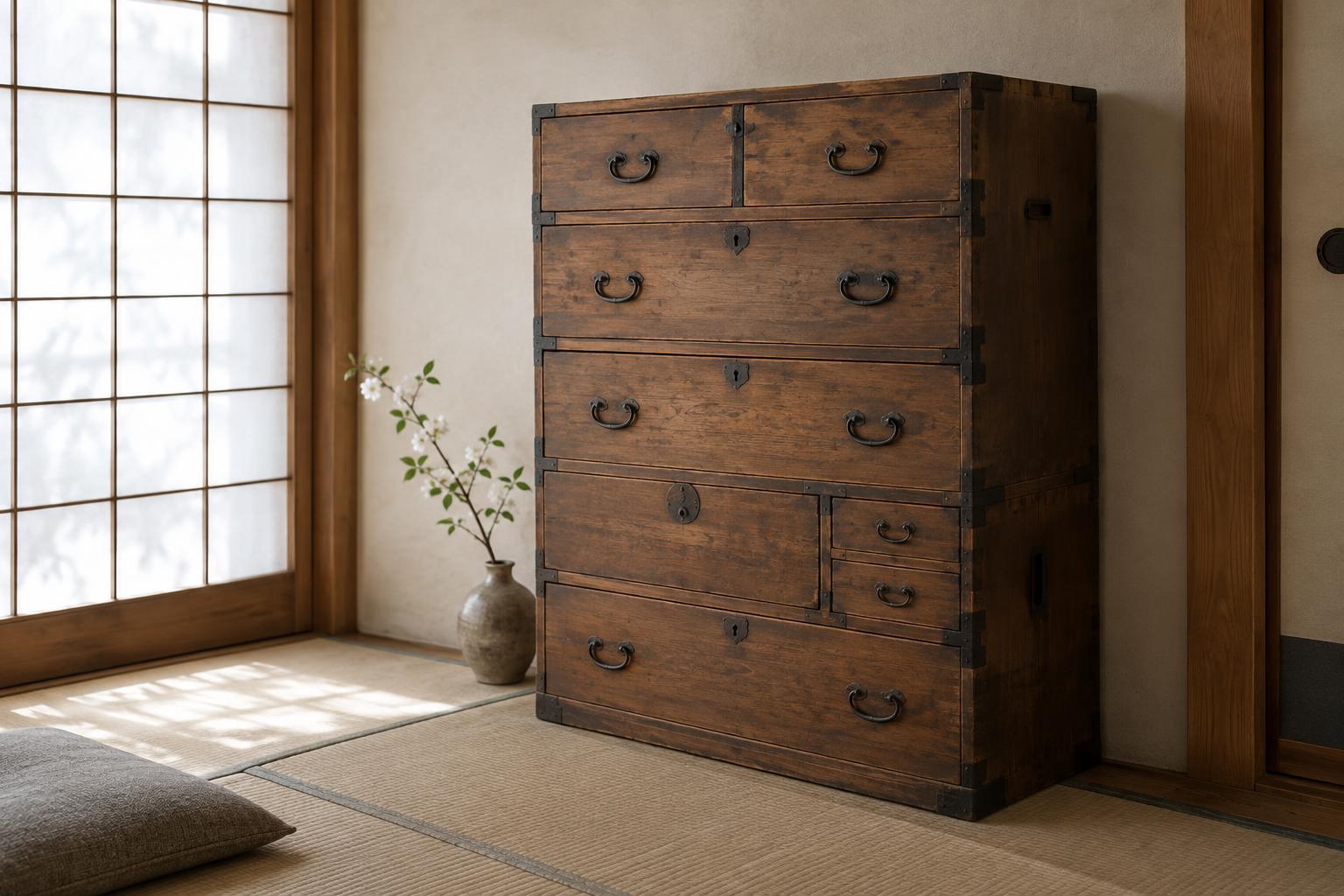
Tansu is a Japanese term for storage furniture that includes chests and cabinets made for different settings and purposes. A tansu might hold clothing, business records or kitchen goods. Many have wooden drawers, metal fittings and a compact shape, but there is no single silhouette that defines them all. Start by asking what the piece was designed to store rather than treating every cabinet with Japanese-style hardware as the same kind of furniture.
Traditional examples can show considerable variation in wood, construction and ornament. Some are restrained; others have prominent ironwork or multiple sections. Age alone does not make a chest the right purchase. A sound, practical piece that suits your space may give you more pleasure than an older one whose drawers are difficult to use or whose size makes it awkward to place.
Recognizing common forms
Isho-dansu are clothing chests, generally arranged with drawers for folded garments and other personal belongings. Choba-dansu were associated with merchants and their work, often combining drawers and compartments for records and supplies. Mizuya-dansu are kitchen storage cabinets, typically larger and more varied in layout, with shelves, sliding doors or drawers. A mizuya may be better suited to displaying dishes than storing small items out of sight.
Kaidan-dansu have a stepped form that resembles a staircase; some were designed to serve as both storage and access to an upper level. That history does not mean a staircase chest offered for sale today is safe to climb. Names in listings may be used loosely, and later pieces can borrow the appearance of older forms. Let the layout and construction guide your understanding, and ask the seller for any known history without assuming an unverified origin.
Inspect the structure before the surface
Look at the chest from the front, sides and back. It should sit steadily on a level floor, without pronounced leaning or separation at major joints. Open and close every drawer and door. Drawers should move without excessive force, although an older wooden drawer may not glide like a modern one. Check for sagging drawer bottoms, loose runners, split panels and doors that no longer meet their openings. If you are buying remotely, request clear photographs of these areas and a short video of the moving parts.
Examine the wood for active-looking insect damage, soft patches, persistent dampness or a strong musty smell. Small holes and wear can reflect a piece’s past, but photographs alone may not establish whether a problem is old or ongoing. Inspect metal pulls, hinges and locks to see whether they are secure and usable; ask whether keys are included if locks matter to you. Repairs are not automatically a drawback, but you should know what was replaced or reinforced before deciding what the chest is worth to you.
Ask about finish, age and alterations
A dark surface, worn edges or decorative fittings do not, on their own, establish age. Ask the seller what they know about the chest’s date, origin and restoration, and which parts of that account can be documented. Look for differences in color or wear between drawers, hardware and the main body. These may suggest repairs or replacement parts, though they are not proof by themselves. If a listing uses terms such as “antique” or names a particular region, ask what supports that description.
Consider how the finish will work in your room. A heavily refinished chest may have a different character from one with an older surface, but either could be a reasonable choice. Avoid treating every mark as damage to erase: wear can be part of the object’s appeal. At the same time, flaking coatings, rough splinters or residue inside drawers may need attention before you use the piece for linens or clothing.
Plan for the room and the journey home
Measure the full chest, including projecting handles and fittings, then measure doorways, stairs and the place where it will stand. Check whether it comes apart into sections; do not assume that a chest which appears stacked is meant to be separated. Note the depth of drawers and the clearance needed to open them. If the piece will hold everyday items, think about whether you can comfortably reach each compartment and whether the storage layout suits what you own.
Before paying, confirm the total cost, delivery arrangements and return terms. Ask how the seller will protect the corners, fittings and drawers during transport, especially if the chest must travel far. Once home, place it on a stable surface away from persistent dampness and strong, direct sunlight. A thoughtfully chosen tansu need not be treated as a museum object: its value in a home can lie in the balance between a distinctive history, honest condition and useful storage.