What miso is, and what its color can tell you
Miso is a fermented paste commonly made with soybeans, salt and koji, a grain such as rice or barley cultivated with a fermentation mold. It brings saltiness and a rounded savory flavor to food. A small amount can give a simple broth depth, while a spoonful mixed into a sauce can make vegetables or noodles feel more complete.
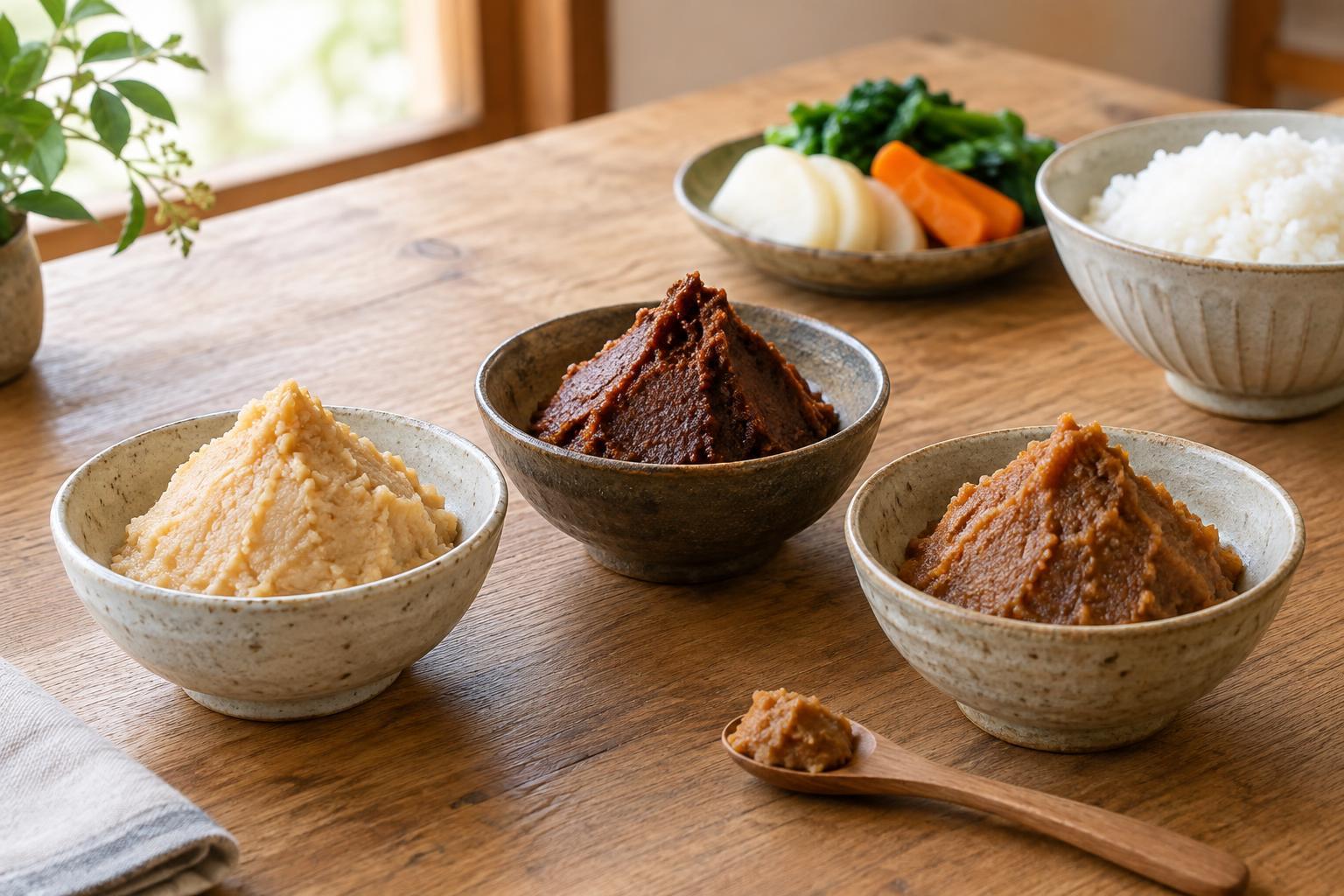
White, red and mixed are useful starting points, not strict flavor guarantees. Ingredients, proportions and fermentation methods vary among makers, and a pale miso from one producer may taste different from another. Color can offer a clue: lighter miso often tastes gentler, while darker miso often has a more pronounced savory character. The best way to choose is to read the label, taste a little, and adjust the amount you use.
White miso: soft flavor for gentle dishes
White miso, often labeled shiro miso, is typically pale beige or light golden. It commonly has a mellow, slightly sweet taste that works well when you want miso to support rather than dominate other ingredients. Its sweetness does not mean it is free of salt; the balance depends on the particular paste.
Try stirring white miso into a light soup with tofu, mushrooms or leafy greens. It also makes an approachable dressing: loosen a spoonful with water and a little rice vinegar, then taste before adding more. Toss it with cucumber, spoon it over steamed vegetables, or use it as a dip. For a quick glaze, mix it with a small amount of water and brush it onto roasted vegetables near the end of cooking so it is less likely to scorch.
White miso is a good choice when cooking for someone new to miso, but there is no need to reserve it for delicate food. Its rounded flavor can also soften the sharper edges of citrus or vinegar in a dressing.
Red miso: depth in hearty cooking
Red miso, or aka miso, is usually deeper in color and more assertive in flavor. Depending on the variety, it may taste earthy, intensely savory or pleasantly sharp. A dish that calls for white miso may need less red miso to reach a similar level of intensity, so begin with a small spoonful and build from there.
Its strong character suits soups with root vegetables, mushrooms or sturdy greens. It can add depth to a bean stew or a sauce for noodles without requiring a long list of ingredients. For a simple marinade, whisk red miso with a little water and a touch of sweetness, then spread it thinly over tofu or vegetables. Wipe off any thick excess before cooking, since miso on the surface can darken quickly under high heat.
Red miso can also be blended with a gentler miso when you want some of its depth without making it the main flavor. This is especially useful if a new tub tastes stronger than you expected.
Mixed miso: a flexible middle ground
Mixed miso is often sold as awase miso, a blend of different misos. It may combine lighter and darker pastes to offer both softness and depth, though the result varies by brand. For a household that wants one everyday tub, a mixed miso can be a practical place to start.
Use it in a familiar bowl of miso soup, then let that first taste guide other dishes. If it seems mild, try it in a dressing or as a finishing touch for sautéed mushrooms. If it seems robust, pair it with more substantial ingredients such as eggplant or potatoes. You can also make your own blend by mixing small amounts of two misos in a bowl before adding them to a recipe.
There is no fixed rule requiring one color for one dish. The useful question is what you want the miso to do: brighten a light combination, anchor a hearty one, or add quiet background savoriness.
A few habits that make miso easier to use
For soup, take a little warm broth into a bowl, dissolve the miso in it, and return the mixture to the pot. This helps prevent lumps. Many cooks add miso near the end and avoid a vigorous boil afterward to preserve its aroma. Taste before adding other salty seasonings; miso may already provide enough.
Keep the tub sealed and follow its storage instructions, which commonly call for refrigeration after opening. Use a clean spoon each time. If you cook for someone with an allergy or dietary restriction, check the ingredients rather than relying on color: miso may contain soy, barley or other grains, and prepared blends can include additional ingredients.
The most useful comparison is one you make in your own kitchen. Taste a dab of each miso on its own, then try the same small amount dissolved in warm water. You will notice how sweetness, saltiness and savory depth change between tubs. From there, choosing miso becomes less about memorizing rules and more about building the flavor you want.