Two sliding panels, two different jobs
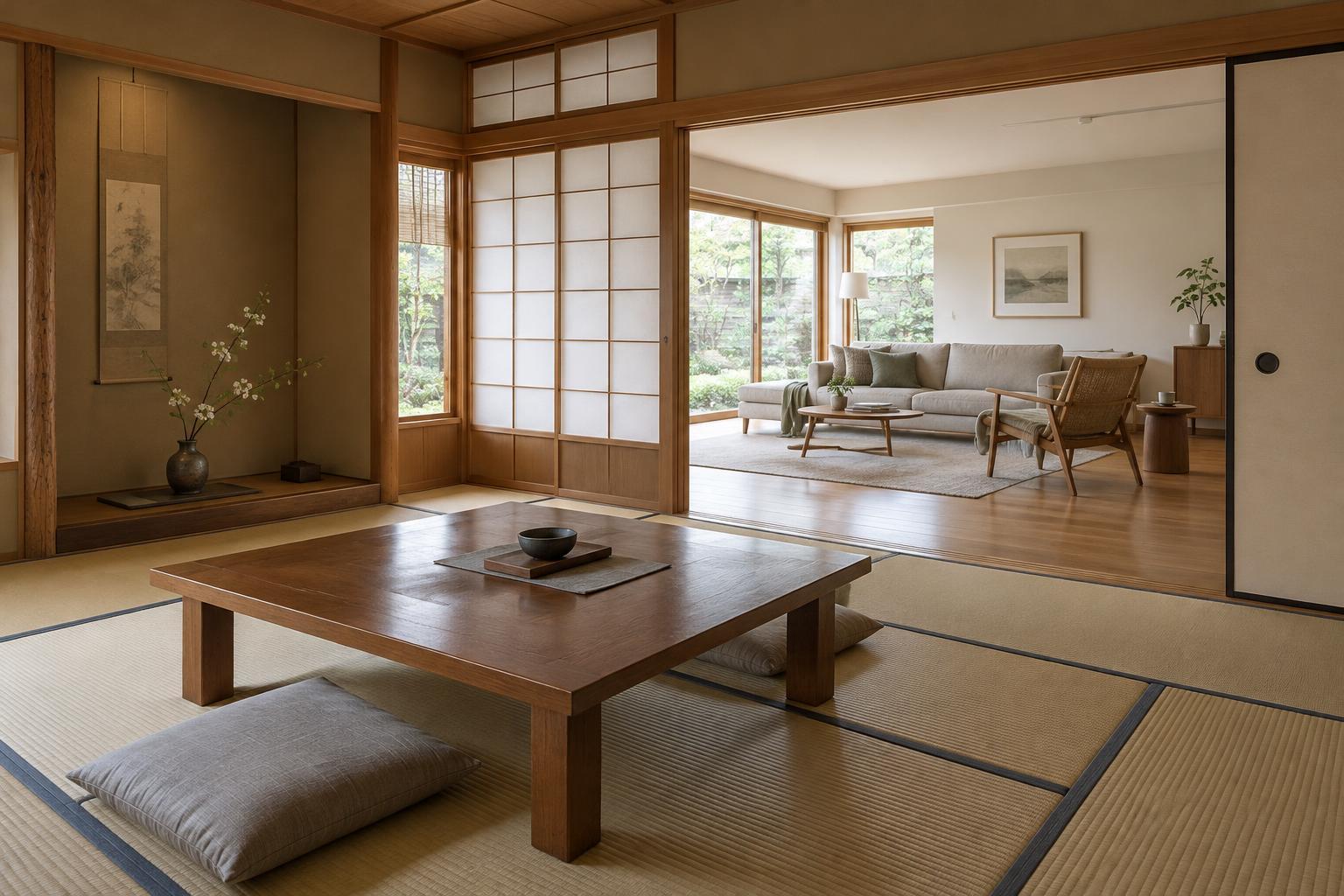
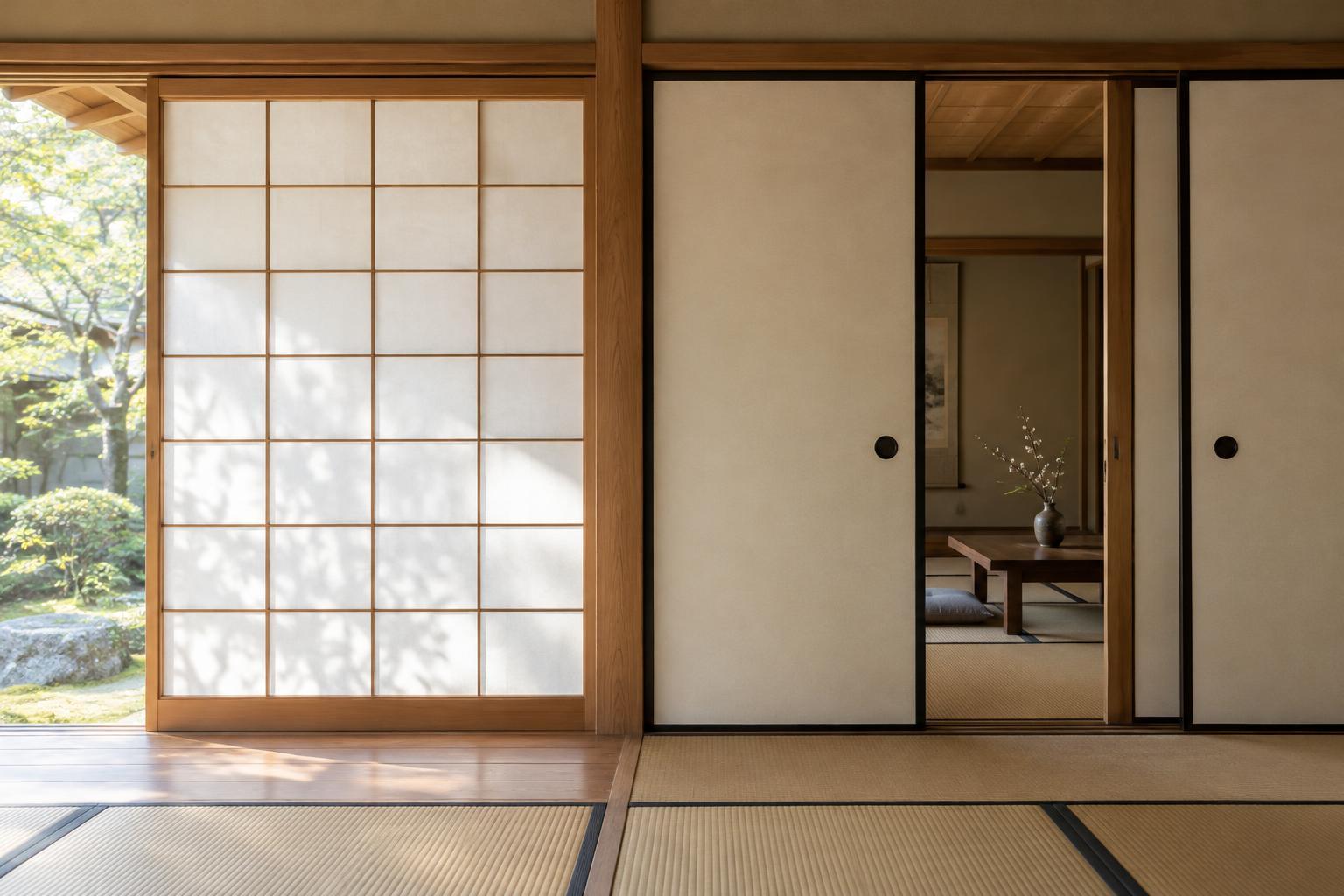
Shoji and fusuma are both familiar features of traditional Japanese interiors, but they are not interchangeable. Shoji are light-transmitting panels: a wooden lattice supports translucent paper, allowing daylight to pass through while softening its glare. They often sit between a room and a veranda or window. Fusuma are opaque sliding panels commonly used to divide rooms or close storage spaces. Their broad surfaces may be plain or decorated, making them part of a room’s visual character.
The easiest way to tell them apart is to consider what happens when the panel is closed. Shoji change the quality of light without fully blocking it. Fusuma conceal what is behind them and create a more definite visual boundary. Both move sideways on tracks, saving the swing space a hinged door would need. Their dimensions, materials and details vary, especially in contemporary homes, but this distinction is a useful starting point.
How they shape daylight
Shoji are valuable when a room benefits from gentle, even light. Paper diffuses a bright window, reducing harsh patches of sun while keeping the space luminous. The lattice remains visible as a quiet geometric pattern. Because shoji admit light, they can help adjoining areas feel connected even when the panels are shut. They are less useful where a room needs darkness, such as a bedroom during a bright morning.
Fusuma usually block much more light. Close a set between two rooms and each space feels more separate; slide them aside and the spaces can work together again. If you are deciding where either belongs, think about the activities on both sides of the opening. A living area might welcome the filtered glow of shoji, while a storage alcove calls for the visual concealment of fusuma. Neither choice has to be permanent: curtains, blinds or other layers can address needs a paper panel alone cannot meet.
Privacy is more than opacity
Shoji obscure detail, but they do not provide complete visual privacy. A person close to the panel may appear as a silhouette, particularly when the room behind it is brighter than the space in front. At night, interior lighting can make this effect more noticeable from outside. If a shoji panel faces a street or neighboring window, consider the view after dark as well as during the day. A separate curtain or shade may be helpful where privacy matters most.
Fusuma offer stronger visual privacy because they are opaque, though gaps around the edges can still admit light. Neither type should be treated as a soundproof wall: voices and household noise may carry between spaces. That flexibility is part of the appeal of sliding partitions, but it also makes them better suited to adaptable rooms than to situations demanding strong acoustic separation.
Everyday care without fuss
Paper surfaces reward a light touch. Open and close panels by their pulls or frames rather than pressing on the paper, and keep bags, furniture corners and damp hands away from them. For routine cleaning, use a soft, dry brush or duster to lift dust from the lattice, frame and panel surface. Avoid soaking paper or rubbing a mark aggressively; moisture and friction can leave stains, weaken fibers or distort the surface. Follow any care guidance supplied with a modern or specially treated panel, as finishes differ.
Smooth movement also depends on the tracks. Remove loose dust and grit gently so the panels do not scrape or catch. If one begins to stick, check for visible debris first rather than forcing it or adding a lubricant without knowing what the track requires. Persistent sticking may come from wear, a shifted panel or changes in humidity. Paper can be repaired or replaced, but a large tear, decorated fusuma or an unfamiliar frame is a good reason to ask someone experienced with that construction for help.
Choosing the right idea for your space
You do not need a traditional room to learn from these panels. Shoji suggest a way to soften daylight and create a light visual boundary; fusuma show how an opaque sliding surface can let one area serve several purposes. When planning a new installation, consider the opening, available track space, exposure to moisture and the amount of daily handling. Paper near a busy doorway may need more protection than paper in a quiet corner.
If you rent or cannot alter a room, a freestanding translucent screen or a removable window covering can evoke some of the same effects without pretending to be a built-in shoji. Likewise, a plain sliding divider can borrow fusuma’s flexible approach to space. The most thoughtful choice begins with a practical question: do you want to share light, conceal a view, or change how a room is used? Let that answer guide the material and form.