Start with the purpose of the threshold
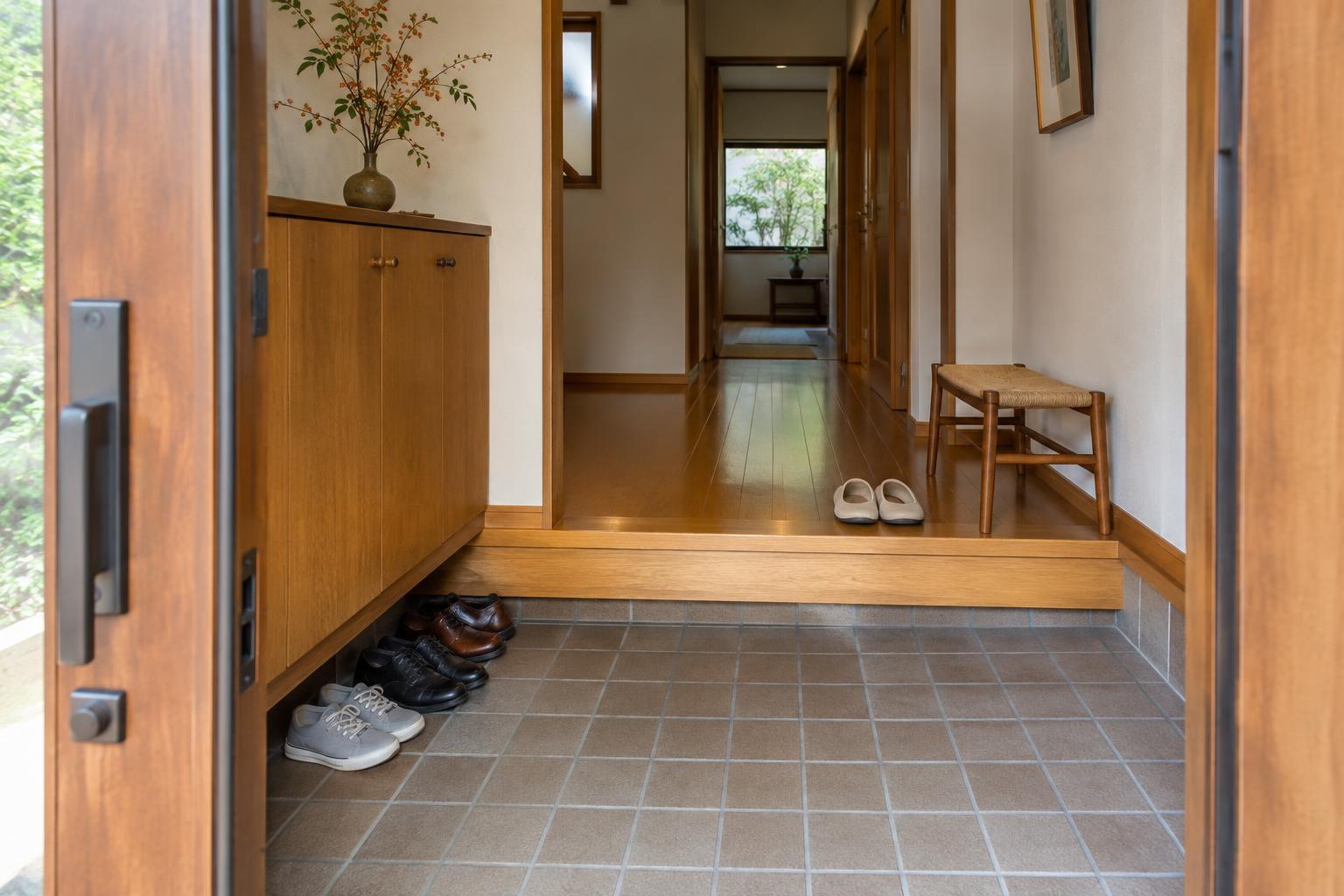
In many Japanese homes, the genkan is the entry area where people remove outdoor shoes before stepping into the living space. A traditional arrangement often has a lower floor for shoes and a raised interior floor, making the boundary easy to see. Homes vary, though: a compact apartment may have only a narrow strip by the door, while another entrance has room for a cabinet and a place to sit. The useful design principle is the same in either setting. Give arriving people a clear place to pause, take off shoes and move indoors without tracking in dirt.
If you are planning an entrance from scratch, think of the threshold as a sequence rather than a decorative feature. Someone opens the door, sets down a bag, removes footwear, stores it and steps onto the clean floor. Try walking through those movements before deciding where furniture belongs. A beautiful cabinet is less helpful if its door blocks the entrance or forces someone to balance on one foot in a cramped corner.
Keep shoe storage close and easy to use
Place everyday shoe storage within reach of the spot where shoes come off. A slim cabinet, open shelf or set of washable trays can all work; the best choice depends on available space and how many pairs the household uses regularly. Closed storage gives a calmer appearance but needs enough room for doors to open. Open storage makes pairs easy to grab and can help damp footwear dry, though it asks for more frequent tidying. A small mat or tray for wet shoes can protect the floor without turning the whole entrance into a storage zone.
Avoid designing around the maximum number of shoes the household owns. Keep frequently worn pairs accessible and move occasional footwear elsewhere if space allows. Allow room to turn around and carry groceries through the door. Hooks for umbrellas or bags can be useful, but place them where hanging items will not brush against someone changing shoes. If the entry feels crowded, improving the path through it will usually do more than adding another organizer.
Make the clean side unmistakable
The central distinction in a genkan is between the area for outdoor shoes and the interior floor. A change in floor level can express it, but it is not essential. Different, easy-to-clean flooring or a clearly placed mat can also help define the boundary. Choose materials with real use in mind: the entry surface should tolerate grit and moisture, while the indoor side should be comfortable to step onto in socks or indoor footwear. Good lighting matters as much as the finish; guests should be able to see where to stand and where their shoes belong.
A raised step may suit some homes, but it can be inconvenient for people who have difficulty stepping up or balancing while removing shoes. A stable seat, a nearby handhold or sufficient space for someone to change footwear seated can make the entrance more welcoming. There is no need to reproduce a particular architectural detail if it makes daily life harder. What matters is a boundary people can understand and use comfortably.
Plan for guests without making etiquette feel like a test
In a home that follows a shoes-off custom, let visitors know what to expect before they have to guess. A simple invitation to leave shoes at the entrance is kinder than waiting for someone to notice an unspoken rule. Leave a clear spot for their footwear and avoid filling the entire genkan with household pairs. Some hosts offer indoor slippers, while others invite guests to remain in socks; either approach can feel welcoming when explained plainly. Clean, appropriately sized slippers are more useful than a large collection that gets in the way.
If you offer slippers, show guests where to put them on after removing outdoor shoes. Some households also use separate slippers for the toilet area, but arrangements differ, so a brief explanation is better than assuming visitors will know. Be ready to adapt when a guest cannot easily remove their shoes. Thoughtful hospitality means finding a workable option together, not treating the entrance as an etiquette examination.
Let daily habits guide the finishing touches
Once the basic route is working, add only what supports it. A small dish for keys, a mirror positioned where it does not crowd the doorway, or a seasonal branch can make the entry feel cared for. None should compete with the space needed to arrive and leave. Keep a cloth or brush nearby for quick cleanups, and check periodically whether unused shoes or bags have accumulated.
A functional genkan does not have to look like a formal Japanese interior. Its quiet appeal comes from an orderly transition: outdoor things have a place, the indoor floor stays distinct, and people have room to move. Design for the entrance you have and the people who use it, and the aesthetic will follow from that care.