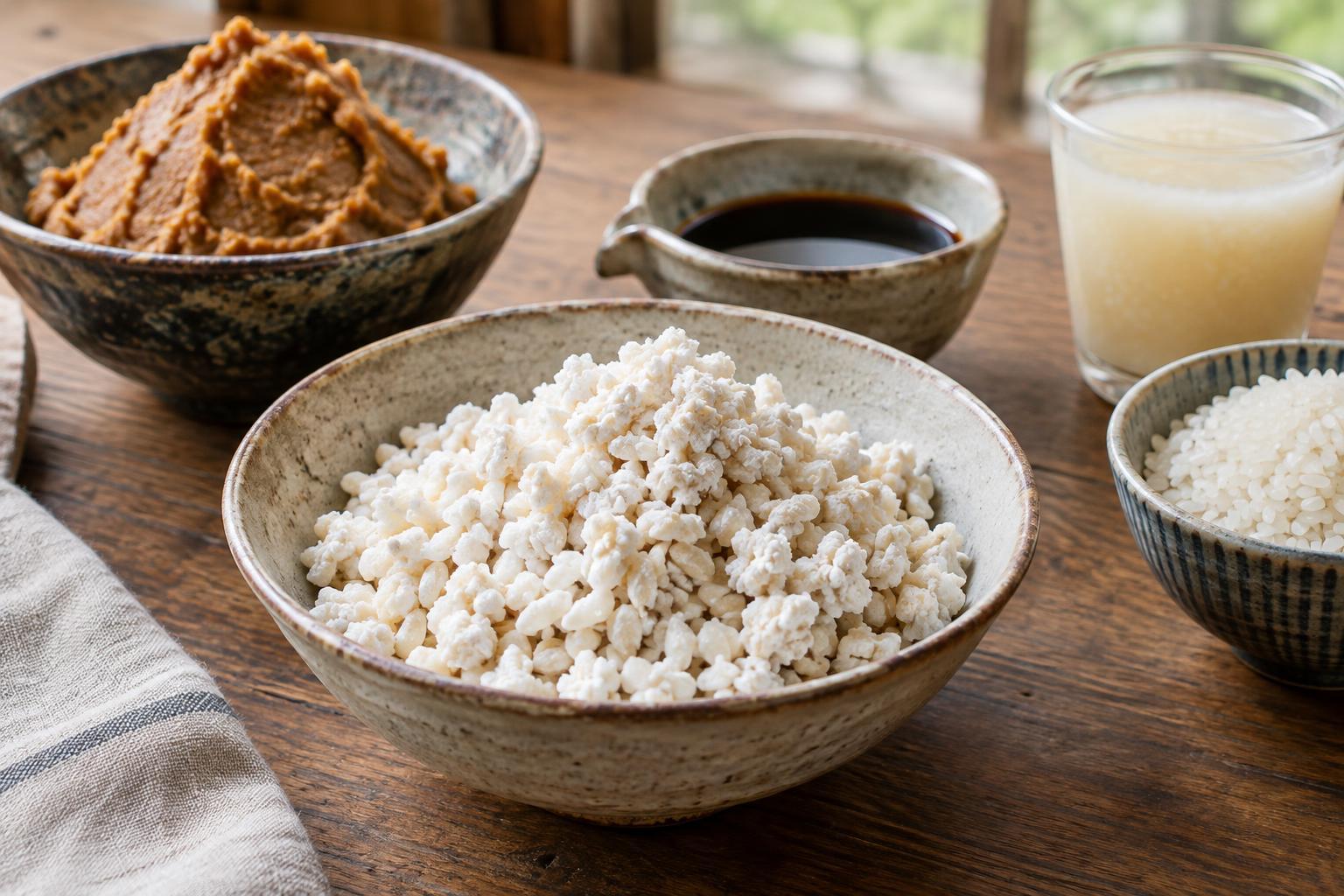
Koji is an ingredient in progress
Koji often appears in descriptions of Japanese food as if it were a single flavor. It is better understood as a way of preparing an ingredient for transformation. To make it, a producer grows the cultivated mold Aspergillus oryzae on cooked rice, barley, or soybeans under carefully managed conditions. The resulting rice koji, barley koji, or soybean koji becomes a starting material for other foods.
The grains or beans provide a place for the mold to grow. As it grows, it produces enzymes that help break down the ingredient’s larger molecules. This is why koji matters even when it is not easy to identify in a finished dish: it helps make starches and proteins available for further changes, whether the goal is a sweet drink, a savory paste, or a brewed seasoning.
Enzymes create the building blocks of flavor
Two useful groups of enzymes explain much of koji’s work. Amylases break starches into smaller sugars, which can taste sweet or provide food for yeast. Proteases break proteins into smaller pieces, including amino acids that contribute to a food’s savory character. Koji does not add an identical flavor to everything it touches; it opens different paths depending on the main ingredient and what happens next.
That distinction is especially helpful when reading about fermentation. Koji is the cultivated mold and the ingredient on which it has grown. Yeasts and bacteria may also participate in a particular food’s production, but they are not the same thing as koji. Time, salt, water, temperature, and the choice of grains or beans all influence the result. Understanding koji as one part of a process makes the variety of Japanese fermented foods less mysterious.
Why miso, soy sauce, and sake turn out differently
Miso typically brings koji together with cooked soybeans and salt, then allows the mixture to mature. The enzymes help develop sweetness and savoriness while the ingredients change over time. The balance varies: a rice-koji miso can feel quite different from a barley-koji miso, and the amount of koji is only one reason. Color alone does not tell the whole story of how a miso will taste.
Soy sauce follows another route. Its koji is commonly made with soybeans and wheat before being mixed with a salty liquid for a long fermentation and maturation. The liquid is eventually separated and processed into the seasoning poured at the table. Sake takes a different advantage of koji: enzymes turn rice starch into sugars, and yeast converts those sugars into alcohol. Koji’s role is essential in each case, but it does not act alone or produce the same outcome.
Sweet amazake and the gentle utility of shio koji
Koji’s ability to release sugars is easy to appreciate in koji-based amazake. Made by combining rice koji with rice or water and holding it warm, this style of amazake develops sweetness without needing added sugar. Not every product labeled amazake is made the same way, so it is worth checking the label if you are curious about its ingredients or alcohol content. Koji-based amazake is distinct from versions made using sake lees.
Shio koji shows another everyday use. It is a mixture of rice koji, salt, and water that becomes a spoonable seasoning. A little can add sweetness and savoriness to vegetables, fish, or meat. It is often used as a marinade, but its salt content varies between products; tasting a small amount before seasoning the rest of a dish helps avoid making it too salty. These two preparations offer accessible ways to notice what koji can do before exploring more complex ferments.
How to explore koji thoughtfully
Start by comparing foods you already know. Taste a small amount of two different misos diluted in warm water, noticing sweetness, saltiness, aroma, and depth rather than trying to name a single “koji taste.” Or compare a koji-based amazake with an unsweetened cooked-rice drink: the sweetness helps illustrate how enzymes can change starch. Product labels can tell you which grain was used for the koji and what other ingredients are present.
For home cooking, commercially prepared rice koji or shio koji is a practical entry point. Follow the maker’s storage directions and a reliable recipe rather than improvising the conditions for growing mold or storing a homemade ferment. Koji is both an old culinary technique and a useful reminder that Japanese food culture is built through careful choices: a particular ingredient, a particular process, and patience with the changes that follow.