What does washoku mean?
Washoku broadly refers to Japanese food traditions and ways of composing a meal. It includes familiar dishes such as rice, soup and simmered vegetables, but it is not a fixed menu or a single style of cooking. A quick meal at home, a carefully prepared set meal and a celebratory feast can all express different aspects of washoku. Recipes and customs also vary by region, household and occasion.
One useful way to approach washoku is to notice relationships: how ingredients reflect the time of year, how dishes complement one another, and how serving vessels help make the food inviting. These ideas offer a way to appreciate a meal without treating every plate as a rule to follow.
Seasonality begins with what is available
Seasonality in Japanese cooking often starts with an ingredient at a pleasing point in its growing or harvesting cycle. Spring greens, summer vegetables, autumn mushrooms and winter roots can each suggest different preparations. A delicate ingredient might be cooked simply so its flavor remains clear; a sturdier one might suit simmering or roasting. Seasonal eating also appears in small details, such as a garnish, a pickle or the colors chosen for the table.
You do not need access to ingredients grown in Japan to explore this principle. Look at what is available where you live, then choose a preparation that suits it. Crisp local greens could be briefly blanched and dressed; a winter squash could be simmered until tender. The point is not to recreate a particular Japanese season from afar, but to pay attention to the season in front of you.
Balance is about variety, not a formula
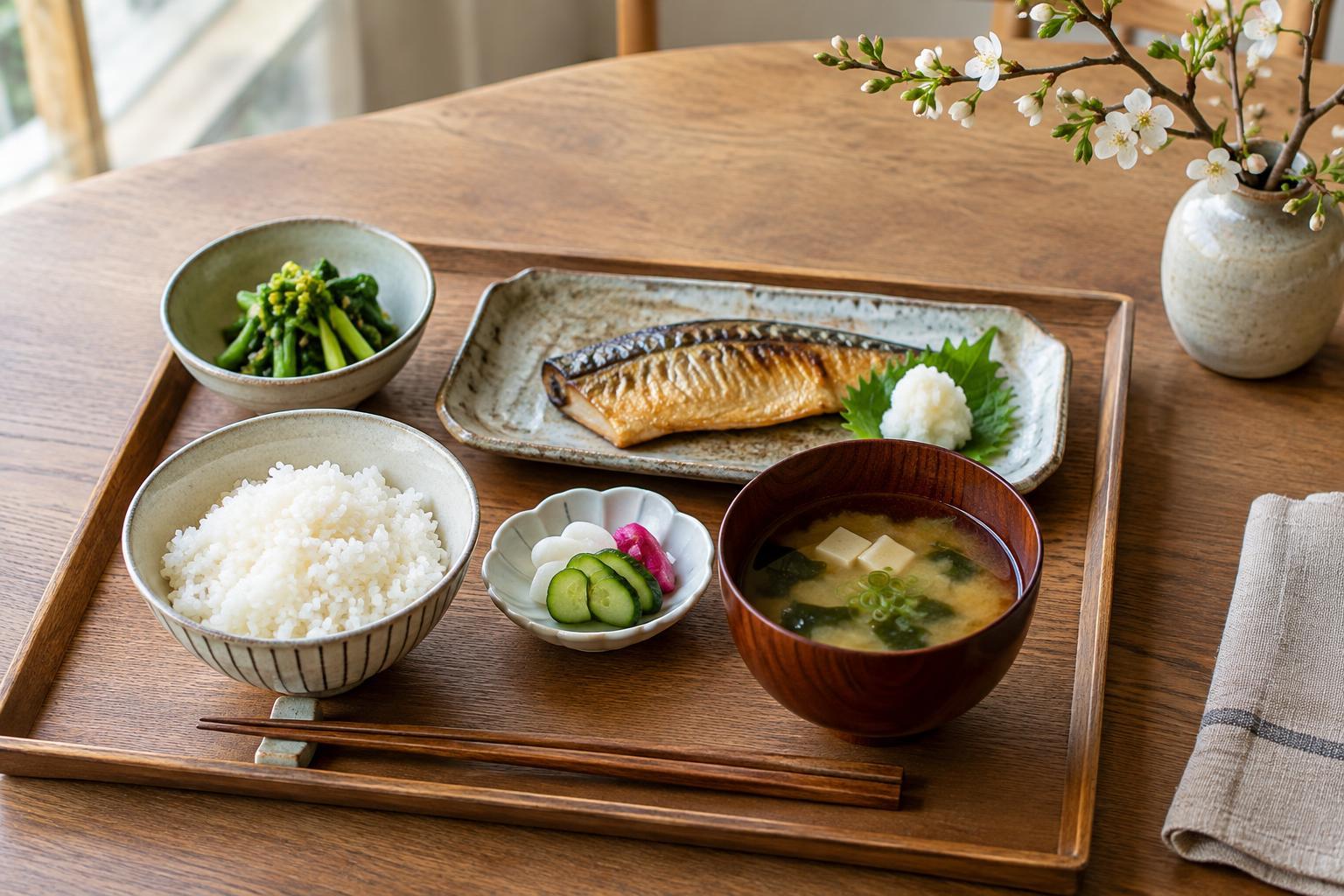
A common reference point for an everyday Japanese meal is ichiju sansai: one soup and three accompanying dishes, usually served with rice and often pickles. It is a useful model for thinking about variety, not a requirement for every meal. The accompanying dishes might bring together a main ingredient, vegetables and a small contrasting preparation. Portions, ingredients and the number of dishes can change with appetite and circumstance.
Balance can be felt through texture, flavor and cooking method. A bowl of rice offers a gentle base beside a savory grilled or simmered dish. Soup adds warmth, while a crisp pickle or lightly dressed vegetable offers contrast. A broth made with dashi can bring depth without making every dish taste the same. Because dashi is often made with fish, people avoiding it can look for versions based on kombu or mushrooms.
For a simple meal, try choosing one anchor dish and adding contrasts around it. If the anchor is rich, make a side that tastes fresh or sharp. If it is soft, include something with a little crunch. Leftover vegetables can become a small side rather than requiring a new recipe. Thinking in contrasts makes the meal feel considered while keeping the cooking manageable.
Presentation invites attention
In washoku, presentation is often closely tied to the food itself. A bowl can frame a portion of soup; a plate can leave room for the shape of a grilled ingredient to show. Color and texture matter too. A bright vegetable beside a pale one, or a small garnish on a plain dish, can make the ingredients easier to notice. Different vessels may be chosen for different foods rather than using identical plates for everything.
This does not require a collection of special tableware or elaborate decoration. Serve a modest portion in a bowl that is comfortable to hold, keep a crisp side separate from a warm simmered dish, or leave a little open space on a plate. Before adding a garnish, ask whether it suits the food and can be eaten. Thoughtful presentation should make the meal clearer and more welcoming, not more difficult to enjoy.
Putting the ideas together at home
Begin with a seasonal ingredient you want to use. Build a meal around it with rice or another simple staple, a soup if time allows, and one or two complementary dishes. For example, a bowl of rice, mushroom and vegetable soup, pan-cooked fish or tofu, and lightly dressed greens offers several flavors and textures without demanding an elaborate spread. Serve each part so it can be appreciated on its own and alongside the others.
As you cook, let the ingredients and the occasion guide your choices. Some days, balance may mean a full set of small dishes; on others, a bowl of rice with vegetables and a little soup may be enough. Washoku offers a way to notice season, contrast and care in an everyday meal. Its most useful lesson for a home cook may be to work attentively with what is at hand.