What does wagashi mean?
Wagashi is a broad term for Japanese sweets. It does not describe one recipe or even one texture: wagashi may be chewy, smooth, crumbly, soft or firm enough to slice. Some are everyday snacks, while others are carefully shaped for a tea gathering. Thinking of wagashi as a family of sweets, rather than a single dessert, makes a shop display much easier to explore.
Many wagashi pair sweetness with a drink, especially Japanese tea. Their portions are often modest, and their appeal can lie as much in aroma, texture and appearance as in sweetness. You do not need to identify every variety to enjoy one. Start by noticing what it is made from, how it feels when you bite into it and whether its shape suggests a season.
The ingredients behind the sweets
Sweet bean paste, called anko, is a common filling and base. Red azuki beans can be cooked and sweetened into a smooth paste or left with some of their texture intact. White bean paste, often called shiro-an, provides a pale base that can be tinted and shaped. These pastes taste different from chocolate or cream fillings: their flavor is gentle and earthy, with sweetness that varies by sweet and maker.
Rice ingredients bring another set of possibilities. Mochigome, or glutinous rice, is used for the stretchy softness associated with mochi; despite its name in English, “glutinous” refers to its sticky quality, not to gluten. Other rice flours can produce softer or more substantial doughs. Kanten, a setting agent made from seaweed, gives some sweets a clean, firm gel, while starches such as kudzu can create a tender, translucent finish. Sugar helps sweeten these ingredients and contributes to their texture.
A small guide to textures and forms
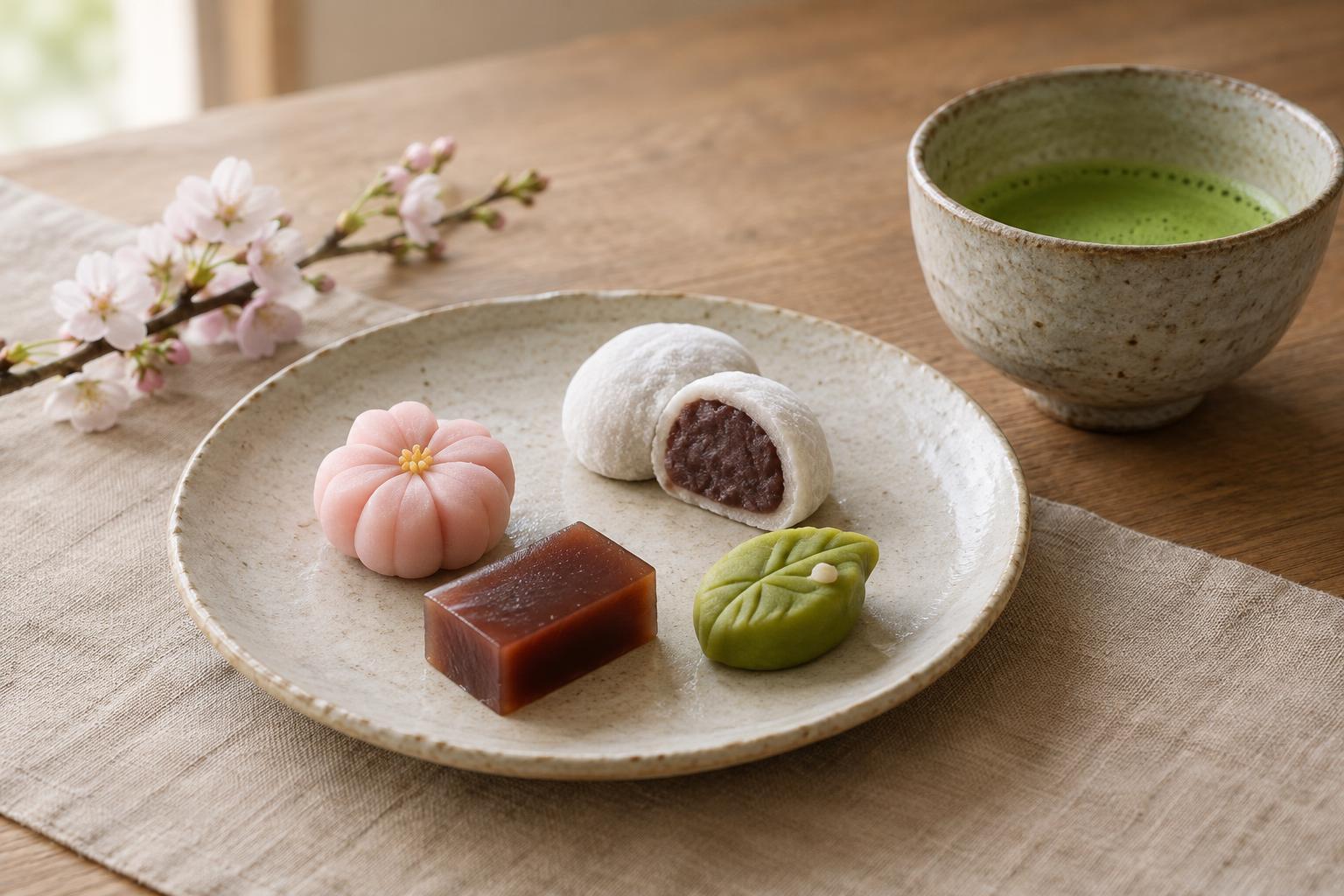
If you like a chewy bite, look for daifuku: a soft mochi wrapper around a filling, often anko. If you prefer something smooth and sliceable, try yōkan, a sweet commonly made with bean paste, sugar and kanten. Each has many variations, so its name is a starting point rather than a promise of one exact flavor or feel.
Nerikiri offers a different experience. Its soft, pliable paste is shaped into small forms, often with colored details suggesting flowers, leaves or other seasonal motifs. Higashi, by contrast, is a broad name for dry sweets; some are molded into delicate shapes and have a fine, crumbly texture. Moisture makes a useful first clue when choosing: do you want something pillowy and fresh, gently yielding, or dry enough to dissolve gradually with tea?
Why seasonal designs matter
Wagashi can reflect the time of year through shape, color, name or ingredient. A sweet might evoke a bud before it opens, the shade of a young leaf, falling autumn foliage or the quiet look of snow. These references need not be literal. A subtle change in color or a few lines pressed into the surface may be enough to suggest a familiar scene.
Seasonal design invites a moment of attention before eating. In a tea setting, a sweet can help express hospitality and a sense of the occasion; at a shop counter, it can offer a small connection to what is changing outdoors. Not every wagashi follows a seasonal theme, and designs can vary among makers and regions. Rather than searching for a fixed code to decode, ask what a sweet calls to mind and enjoy the craft involved in making it.
How to choose and enjoy wagashi
For a first tasting, choose two contrasting sweets instead of several similar ones: perhaps a soft daifuku and a firm piece of yōkan. Notice the aroma before taking a bite, then pay attention to how the texture changes as you eat. Unsweetened tea can provide a pleasant contrast, but there is no need for a formal pairing. Water also lets the sweet’s flavor come through.
If you are buying wagashi to take away, ask about storage and when it is best eaten. Some soft varieties are intended to be enjoyed soon, while drier or set sweets may keep differently; follow the maker’s guidance rather than assuming all wagashi have the same shelf life. Above all, allow room for preference. Appreciating wagashi does not require finding every sweet beautiful or loving every texture. Curiosity is enough to begin.