Begin with the festival in front of you
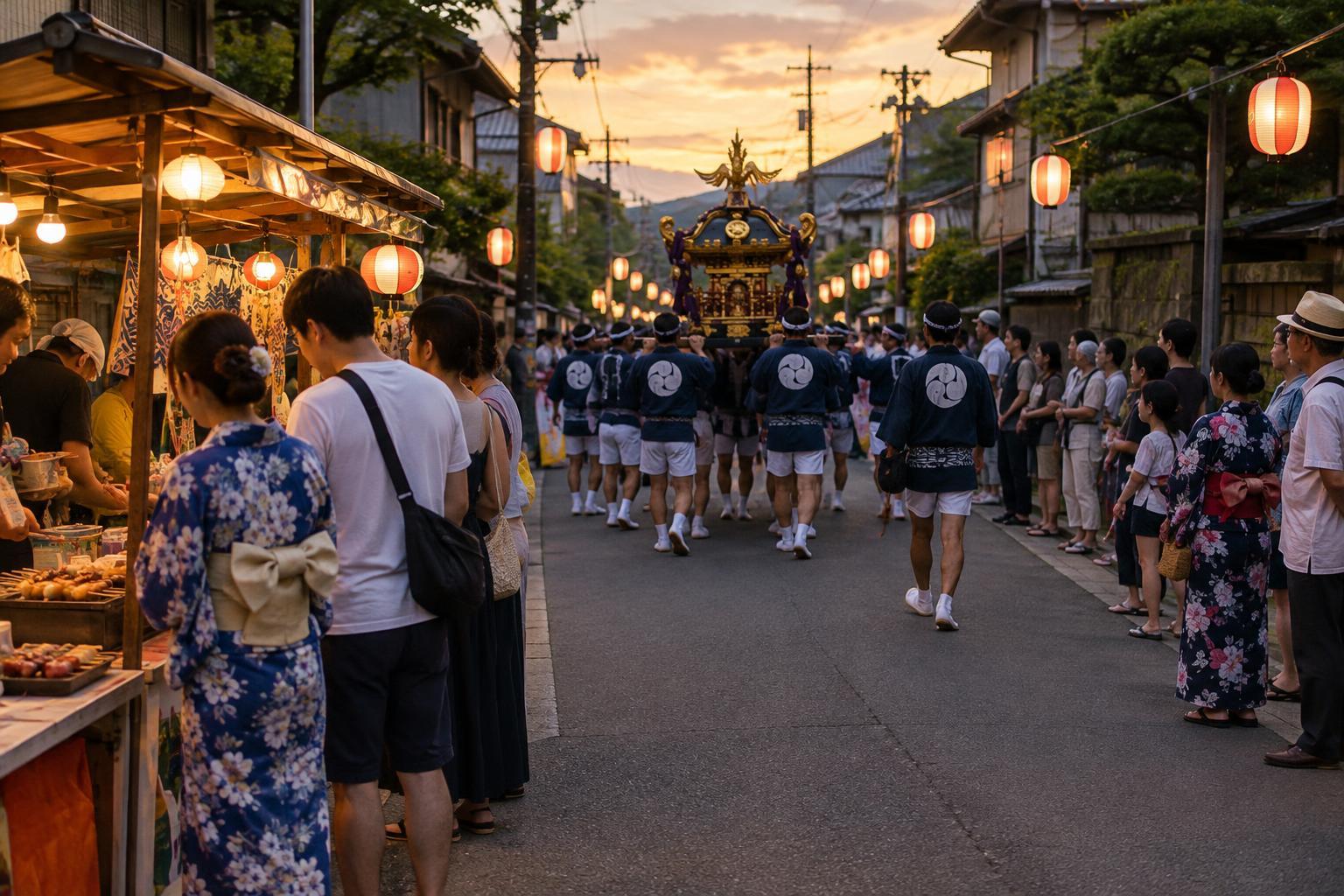
A summer matsuri is not one fixed kind of event. One neighborhood may gather around a shrine procession; another may center its evening on dancing, music or a row of food stalls. Some celebrations are closely tied to religious observances, while others feel more like community gatherings. Rather than arriving with a checklist of sights to see, take a moment to notice what the people around you are doing. A stall-lined street, a shrine entrance and a procession route may each call for a different pace.
If you can find a posted program or map, look for the main gathering area, procession route and any spaces marked for participants. Times and access arrangements vary, so check local information before setting out and follow signs and directions on the day. You do not need to understand every detail to enjoy a matsuri. Standing back, watching carefully and making room for those taking part are good ways to begin.
Enjoy the stalls without holding up the street
Festival stalls, often called yatai, can be part of the pleasure of an evening out. Depending on the event, you might find grilled snacks, sweets, cold drinks or simple games. Offerings differ from place to place, and not every matsuri has an extensive stall area. Browse first, then join the queue for something that appeals to you. Keeping small purchases straightforward is especially helpful when a vendor is serving a steady line of customers.
Look for a designated place to eat if there is one. If not, step out of the flow of pedestrians before stopping with your food. Rubbish arrangements also vary: a stall may have a bin for its own packaging, while public bins may be scarce. Ask where an item should go rather than leaving it beside an overflowing container. A small bag for wrappers can be useful until you find an appropriate place to dispose of them.
Give processions room to move
At some matsuri, participants carry a mikoshi, a portable shrine, through nearby streets. Others feature large decorated floats, often called dashi, although names and forms differ by region. These are not simply displays set up for photographs. Moving them can require coordination, room to turn and the attention of everyone involved. A rope, barrier or line of festival staff is a practical boundary even when the procession appears to have paused.
Choose a viewing spot where you can stay without blocking a doorway, crossing or narrow route. Resist the temptation to step into an open space for a better picture; it may be needed moments later by carriers, musicians or staff. If a group asks spectators to move, do so promptly. Be mindful of children and people who need a clearer path through the crowd. Watching from a little farther back often makes it easier to appreciate the rhythm of the whole procession.
Know when to watch and when to join in
Music and dancing may invite a different kind of attention. Bon odori, for example, is associated with the Obon season, but its setting and participation customs vary. At an open dance, you may see newcomers follow the movements of those around them. At another event, a dance or performance may be intended for a particular group. Look for signs, announcements or a clear invitation before joining, and leave space for performers to enter and exit.
The same care applies to photographs. A wide view of a public street is different from a close-up of one child, vendor or participant. Ask before taking a personal portrait, and accept a refusal without pressing. Avoid flash when it could distract performers or people handling a float. If a ceremony is under way, putting the camera down for a few minutes can help you notice its quieter details as well as show consideration for those taking part.
Plan for a comfortable departure
Summer evenings can still feel hot and crowded. Wear shoes you can stand and walk in, bring water, and consider a light layer if you expect to stay late. A compact bag is easier to manage than one that brushes against other spectators. If you are meeting someone, agree on a spot away from the busiest stretch of street; mobile conversations can be difficult to hear over festival music and crowds.
Before heading home, think about how you will leave rather than waiting until everyone else does. Nearby stations and streets may be busy after a major event, and some routes may be temporarily restricted. Follow local guidance and allow extra time. A rewarding matsuri visit does not depend on reaching the front of every crowd or trying every stall. It can be as simple as tasting one snack, hearing a procession pass and leaving the neighborhood as welcoming as you found it.