A harvest marked with gratitude
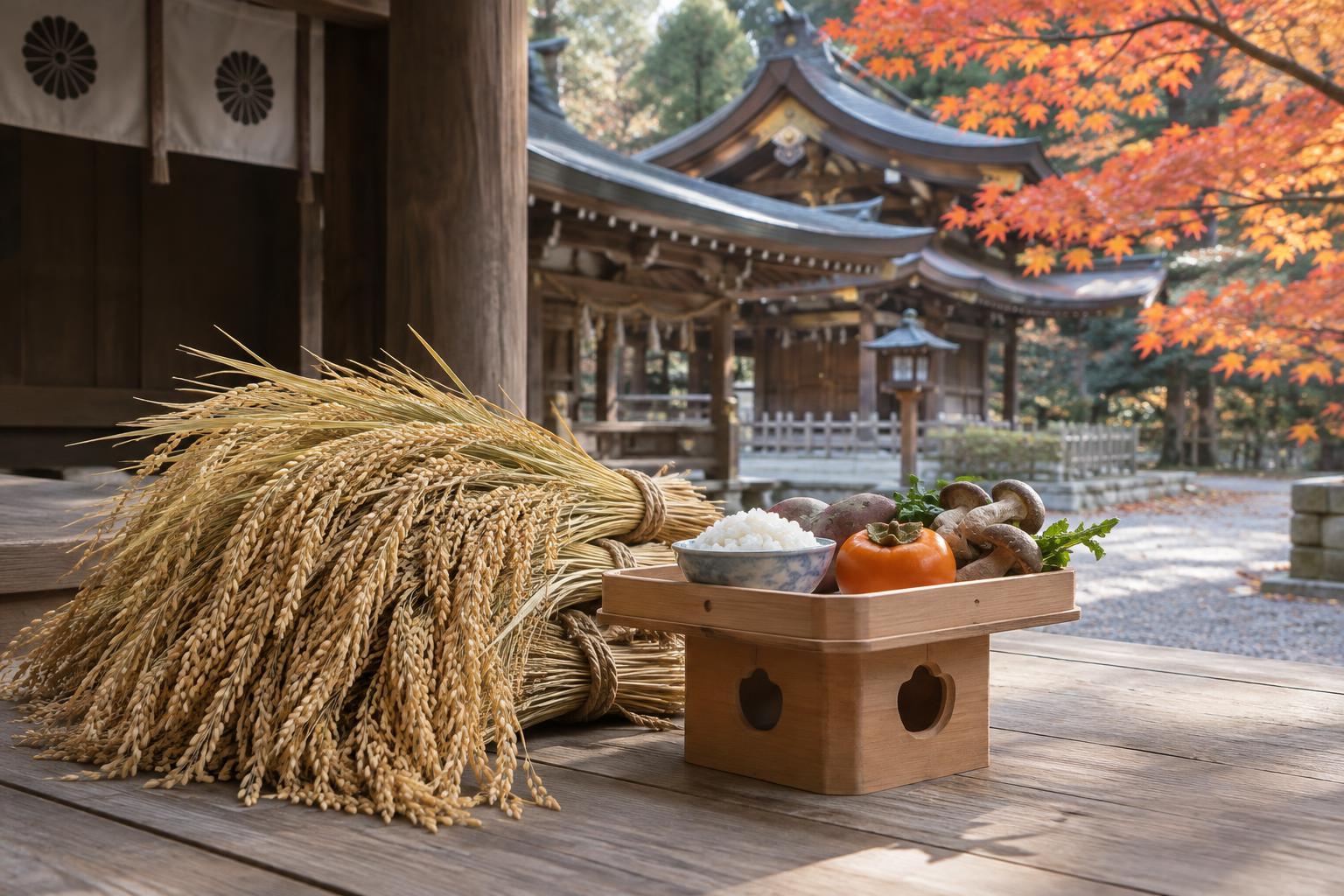
Niinamesai is a Japanese Shinto rite in which newly harvested food, especially rice, is offered to the kami, or deities. The name is often rendered as “festival of new food.” At its heart is a sequence of offering and partaking: the harvest is presented in thanks, then shared as nourishment. It is a ritual expression of gratitude rather than a public harvest party.
Rice has a particular place in the rite because of its long importance in Japanese agriculture and daily life. Yet Niinamesai is not simply a celebration of one crop. It offers a way to acknowledge the work, conditions and relationships on which a harvest depends. For someone encountering it for the first time, that idea may be easier to grasp than the details of any single ceremony.
Where Niinamesai falls in the annual calendar
Niinamesai is observed on November 23. Its late-autumn timing gives it a place after the growing season, when the year’s new rice has been gathered in many parts of Japan. Harvest schedules vary by region, crop and weather, so the date should not be read as the moment every field is finished. Rather, it is a shared point in the ritual calendar for giving thanks for what has been received.
Japan’s seasonal calendar includes many ways of noticing transitions: spring celebrations, summer festivals, autumn foods and observances that prepare for winter. Niinamesai belongs to this broader rhythm, but it has a distinct religious purpose. A household meal featuring new rice can be a personal way to appreciate the season; it is not, by itself, the Niinamesai rite.
The imperial rite and shrine observances
The imperial observance is a central part of Niinamesai. In its ceremonial setting, the emperor offers newly harvested rice and other produce to the kami and partakes of the food. The acts of offering and eating matter together: they express thanks for sustenance rather than treating the harvest only as something to possess.
Shinto shrines may also hold Niinamesai ceremonies, with practices that differ from place to place. This does not mean every shrine offers the same visitor experience. Some observances are chiefly ritual occasions, and access to particular spaces or ceremonies may be limited. If you hope to visit a shrine on November 23, check its own visitor information and follow any guidance given there.
Niinamesai is also distinct from Daijōsai. Both involve an imperial offering of newly harvested food, but Daijōsai is associated with an emperor’s accession, while Niinamesai is an annual observance. Keeping the two names separate helps make sense of references to imperial harvest rites.
Why November 23 has another name
November 23 is also Labor Thanksgiving Day, a national holiday in Japan. The shared date can be confusing, particularly when the holiday’s English name suggests the harvest thanksgiving familiar in other countries. Labor Thanksgiving Day is a civic holiday concerned with work and production; Niinamesai is a Shinto harvest rite. Their histories are connected through the date, but they are not interchangeable celebrations.
That distinction is useful when reading a calendar or planning a visit. A notice about a shrine’s Niinamesai ceremony refers to a religious observance. A notice about Labor Thanksgiving Day may refer to a public holiday or activities with no ritual connection at all. Neither label tells you, on its own, what will be open to visitors.
A thoughtful way to encounter the tradition
You do not need to witness a ceremony to take something meaningful from Niinamesai. When new rice is available, you might prepare it simply and pay attention to its aroma, texture and the care involved in bringing it to the table. Learning what was grown locally, wasting less food, or thanking the person who prepared a meal are modest ways to reflect on the season. They are personal responses, not substitutes for the rite.
If you do attend a shrine observance, approach it as a guest rather than as a performance arranged for an audience. Watch for signs about photography and restricted areas, and leave room for worshippers and participants. Niinamesai’s enduring idea is quiet but substantial: before enjoying the fruits of a year’s work, pause to acknowledge what made them possible.