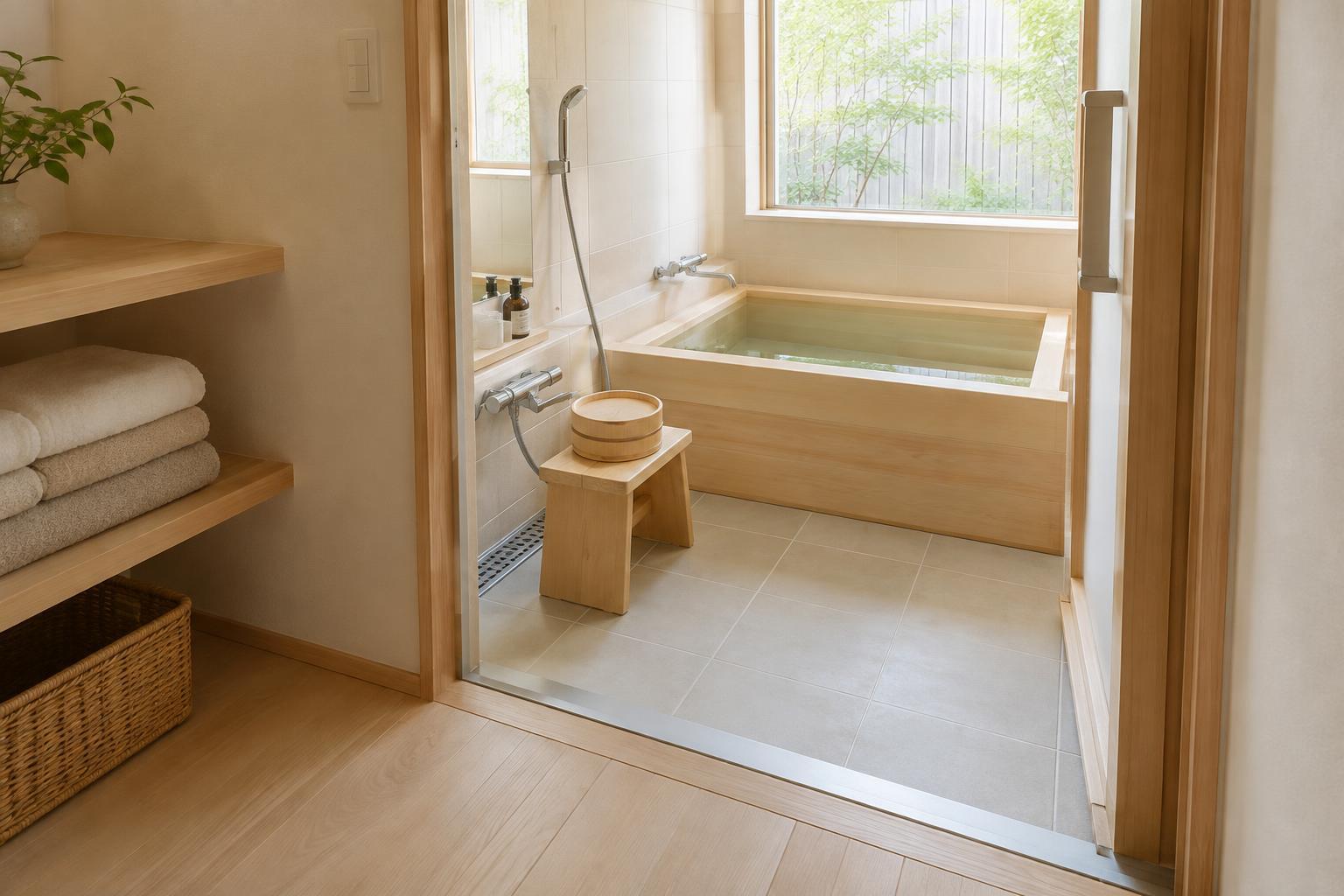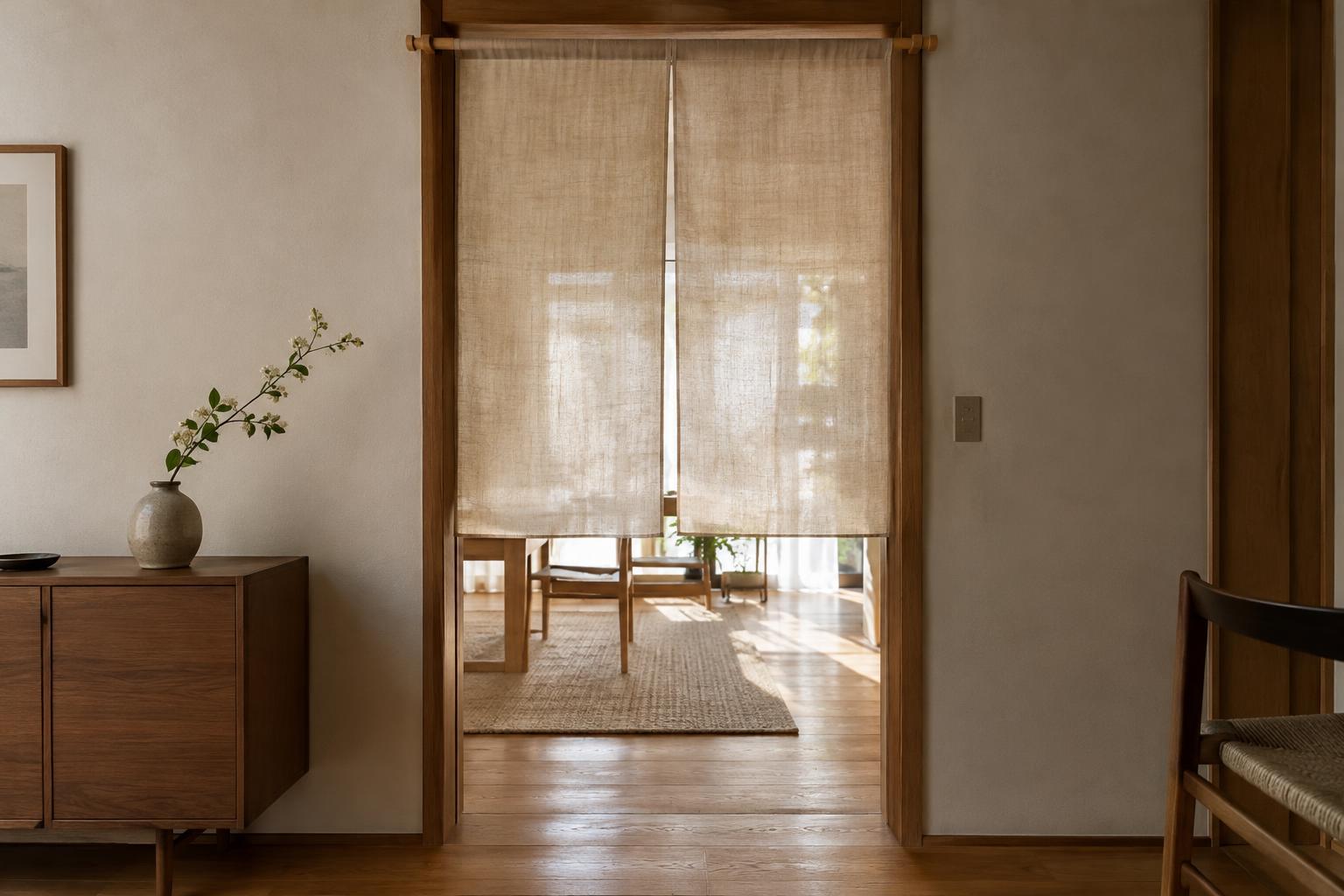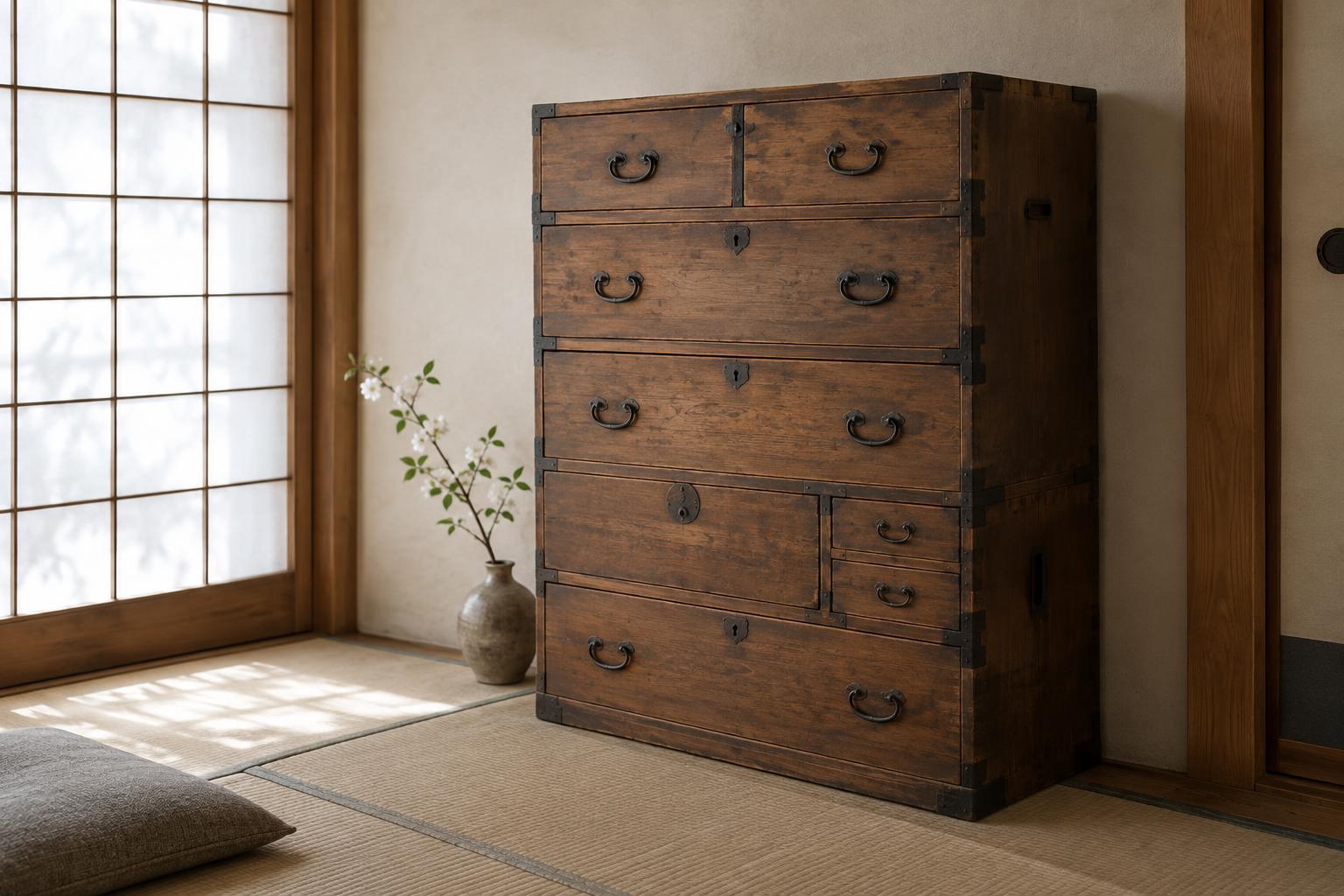
Start with the space you want to keep open
One useful lesson from Japanese interiors is to think of open floor space as something worth protecting. In some homes, a room serves several purposes over the course of a day, so bulky storage can make it harder to adapt. Not every Japanese home works this way, and layouts differ widely, but the principle travels well: decide what you want the room to do before deciding where everything will go.
Notice where you walk, sit, open doors and pull out furniture. Those areas need clearance, even if they look like tempting places for a cabinet. A clear patch of floor can make room for exercise, guests or a change in furniture arrangement. Storage is most successful when it supports those possibilities instead of filling every available gap.
Treat the closet as a small room
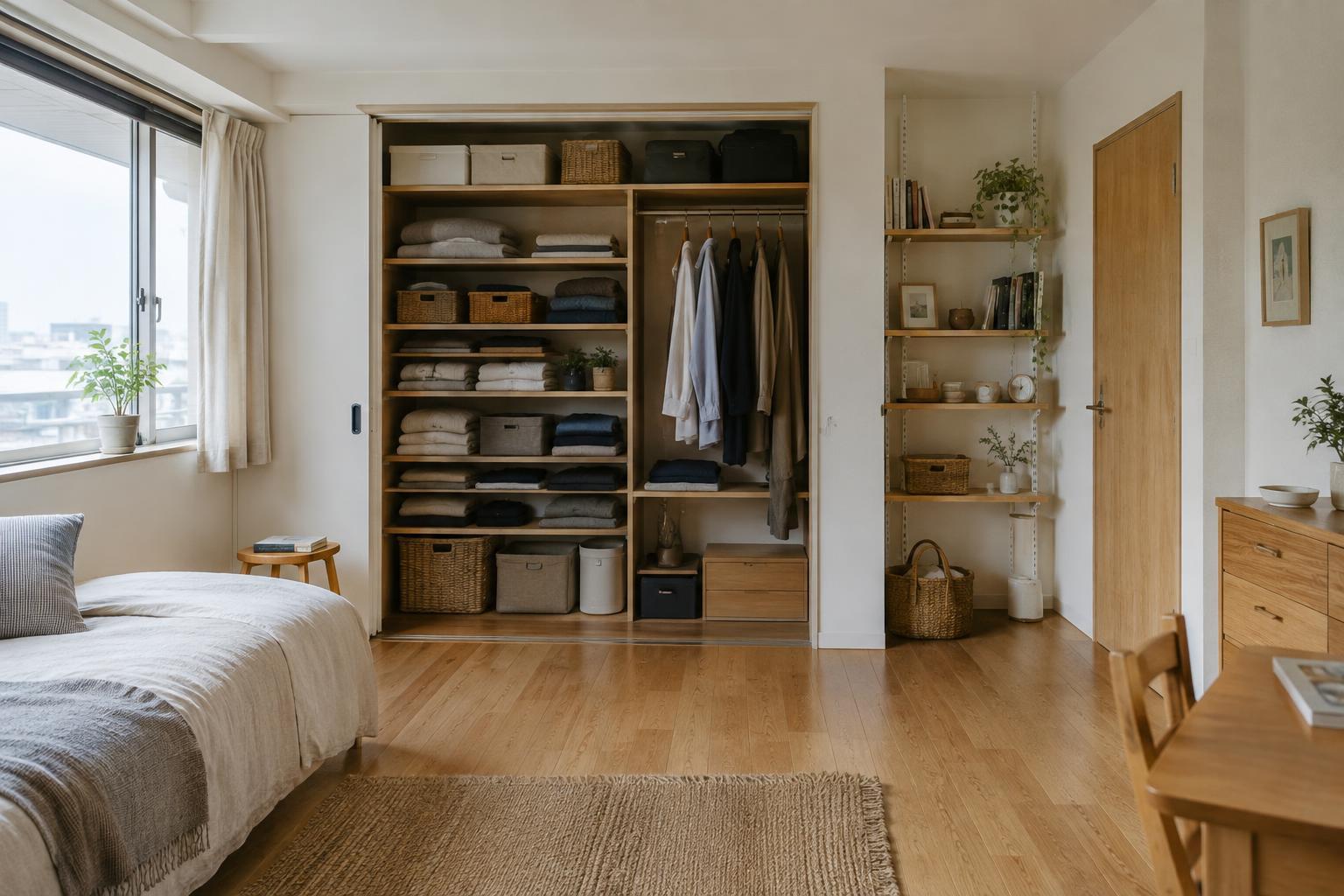
A traditional Japanese oshiire is a deep closet often associated with storing bedding, including futons. Many contemporary homes use different kinds of closets, but the oshiire offers a helpful way to think about capacity: divide the interior into zones rather than treating it as one large hiding place. A deep closet can hold a surprising amount while still being frustrating to use if everyday items end up behind rarely needed ones.
Begin by measuring the width, depth and height, along with the space a door needs to open. Put frequently used belongings at an easy-to-reach height and seasonal items higher up or farther back. In a deep closet, trays or sturdy bins can bring smaller objects forward; labels help you identify a container without opening several. Leave enough room to lift things out comfortably. A perfectly full shelf may look efficient, but it can make a simple task awkward.
Use height with a purpose
Vertical storage can free floor space, but height alone is not the goal. Place heavier or frequently used items lower, where they are easier to retrieve. Reserve upper shelves for lightweight things you need less often, such as spare linens or off-season accessories. If you need a step stool every day to reach an item, that item probably belongs somewhere else.
Look for overlooked vertical surfaces before adding a tall bookcase. Hooks inside a closet door might hold bags or cleaning tools, provided they do not interfere with the door. A narrow shelf above a desk can hold a few supplies without taking up another footprint on the floor. Use suitable fixings for the wall and respect the weight limits of shelves and rails. In a rental, a freestanding unit may be more practical than a permanent installation.
Open shelves are useful when you can see and reach what they hold, yet too many visible items can make a small room feel busy. Consider a mix: display a few objects you enjoy looking at and place less attractive necessities in closed storage.
Make seasonal changeovers manageable
Seasonal living does not require a complete room makeover. A modest changeover might mean swapping a light throw for a warmer one or moving a few frequently used items to the front of a closet. Keeping the rest nearby, rather than spread across the home, makes the next change easier.
Group stored items by how they will be used again: bedding with bedding, travel gear together, and decorations in clearly marked containers. Check that textiles are clean and fully dry before storing them, and avoid forcing them into a space where they cannot be retrieved easily. If your closet is damp or poorly ventilated, choose a storage approach suited to those conditions rather than sealing everything away without checking it.
Let routines decide what stays
A tidy-looking room is not necessarily an easy room to live in. The best place for an object is often close to the activity it supports: keys near the exit, reading materials near a chair, and extra bedding where it can be reached when guests arrive. Give each category a home, then test whether putting things away is as simple as taking them out.
Start with one closet or one wall instead of reorganizing the entire home. Remove what is there, sort belongings by use, and return only what fits the space and your routine. You may find that a shelf needs moving, a container is too deep or a hook is in the wrong place. Those small adjustments matter more than copying a particular interior style. The lasting lesson is to make storage serve everyday life while leaving space for the room to breathe.