What is a tokonoma?
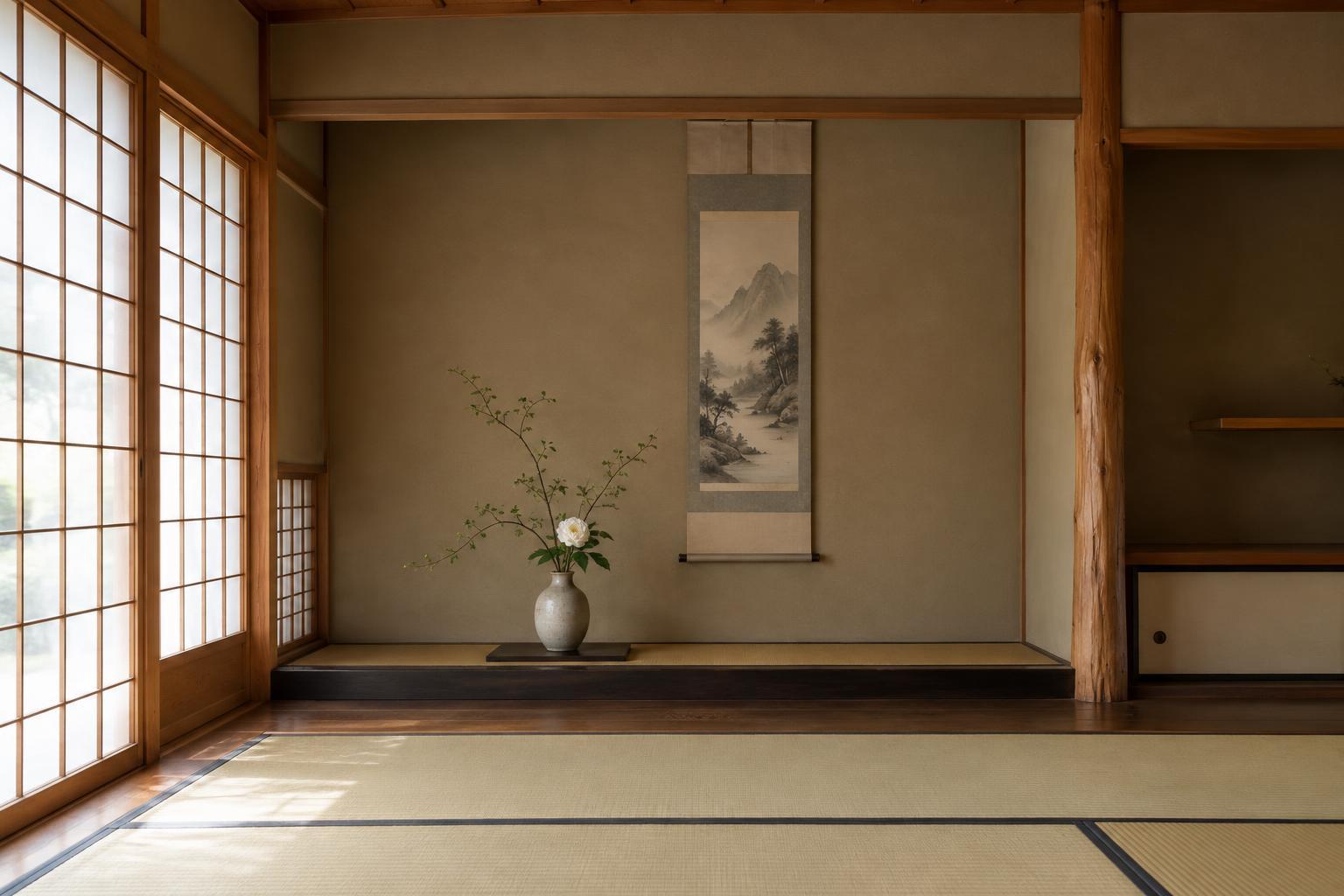
A tokonoma is a recessed alcove found in some traditional Japanese rooms, particularly rooms with tatami flooring. It often has a slightly raised floor and a wall suitable for hanging a scroll. Rather than serving as storage or an everyday shelf, it gives a small number of chosen objects their own place within the room.
Its effect depends as much on the space around the objects as on the objects themselves. In a room where furniture may be low and surfaces relatively uncluttered, the alcove draws the eye without needing to be crowded. It offers a point of attention: a place to notice a season, a gesture of welcome, or the taste of the person who arranged it. Not every Japanese home has a tokonoma, and its use can vary from one household or setting to another.
Why the display changes
A hanging scroll, or kakejiku, and a flower arrangement are familiar tokonoma displays. Depending on the room and occasion, there might instead be a ceramic object or another carefully chosen piece. The aim is not to fill every available surface. A display often works through the relationship between its elements: the lines of a branch, the shape of a vessel, the image or writing on a scroll, and the open space that lets each be seen.
Changing the display can help a room acknowledge the time of year or the people who will spend time there. Flowers may suggest what is growing nearby; a scroll may set a reflective mood. These are possibilities, not a code that every visitor is expected to decode. If you are unfamiliar with an object, it is better to look with curiosity than to assign it a definite symbolic meaning.
How to behave as a guest
When entering a room with a tokonoma, treat the alcove as a display space rather than a convenient spot for your bag, coat, or phone. Do not step onto its raised base or move the objects to get a closer look. A scroll, vessel, or arrangement may be delicate, and the placement itself may be part of what your host wants guests to appreciate.
You can take a moment to look at the display without making a performance of it. A simple observation or sincere question is often more welcome than a confident interpretation. If seating has been arranged, follow your host’s lead: the relationship between seats and the tokonoma can matter in formal settings, but guessing at a rule is less useful than accepting the guidance offered. In a museum, inn, or other shared space, follow its particular rules about access and photography.
Choosing objects with restraint
If you care for a room with a tokonoma, begin with the space rather than a shopping list. Consider what can be viewed comfortably from where people sit. One scroll and one modest arrangement may be enough; at another time, a single object might feel right. Leaving part of the alcove empty allows the display to breathe and makes a change more noticeable.
Pay attention to scale and condition. A vessel should sit securely, flowers should be tended, and hanging objects should be handled and displayed with care. Think, too, about whether the items belong together in mood without insisting that they match. A display does not need to make a grand statement. It can simply mark a quiet shift in season or offer guests something pleasant to contemplate.
Taking inspiration beyond the alcove
You do not need to build a tokonoma to learn from its approach to interiors. A clear surface, a single picture, or a vase placed where it can be appreciated can create a similar moment of attention. Rotating a few objects instead of showing everything at once can also help you notice what you own more closely.
It is worth keeping the distinction clear: an ordinary shelf or corner is not a tokonoma simply because it holds Japanese objects. The alcove belongs to a particular architectural and social context. Taking inspiration respectfully means understanding that context while adapting the underlying ideas—space, care, and thoughtful selection—to the room you actually live in.