Start with the room, not the fixture
Japanese-inspired interiors are often associated with soft light, but there is no single Japanese way to illuminate a room. A bright kitchen, a quiet reading corner and a room used for gatherings all ask different things of light. Rather than trying to copy a particular look, start by noticing what happens in your space: where daylight enters, where people sit, and which activities need a clear view.
Make a simple evening inventory. Sit in each usual spot and look toward the lamps, windows and reflective surfaces. Can you see an exposed bulb? Is a tabletop too dark to use? Does a ceiling light flatten every surface equally? These observations give you a better plan than choosing a shade on appearance alone. The aim is a room that feels restful while still working for the people who use it.
Build light in layers
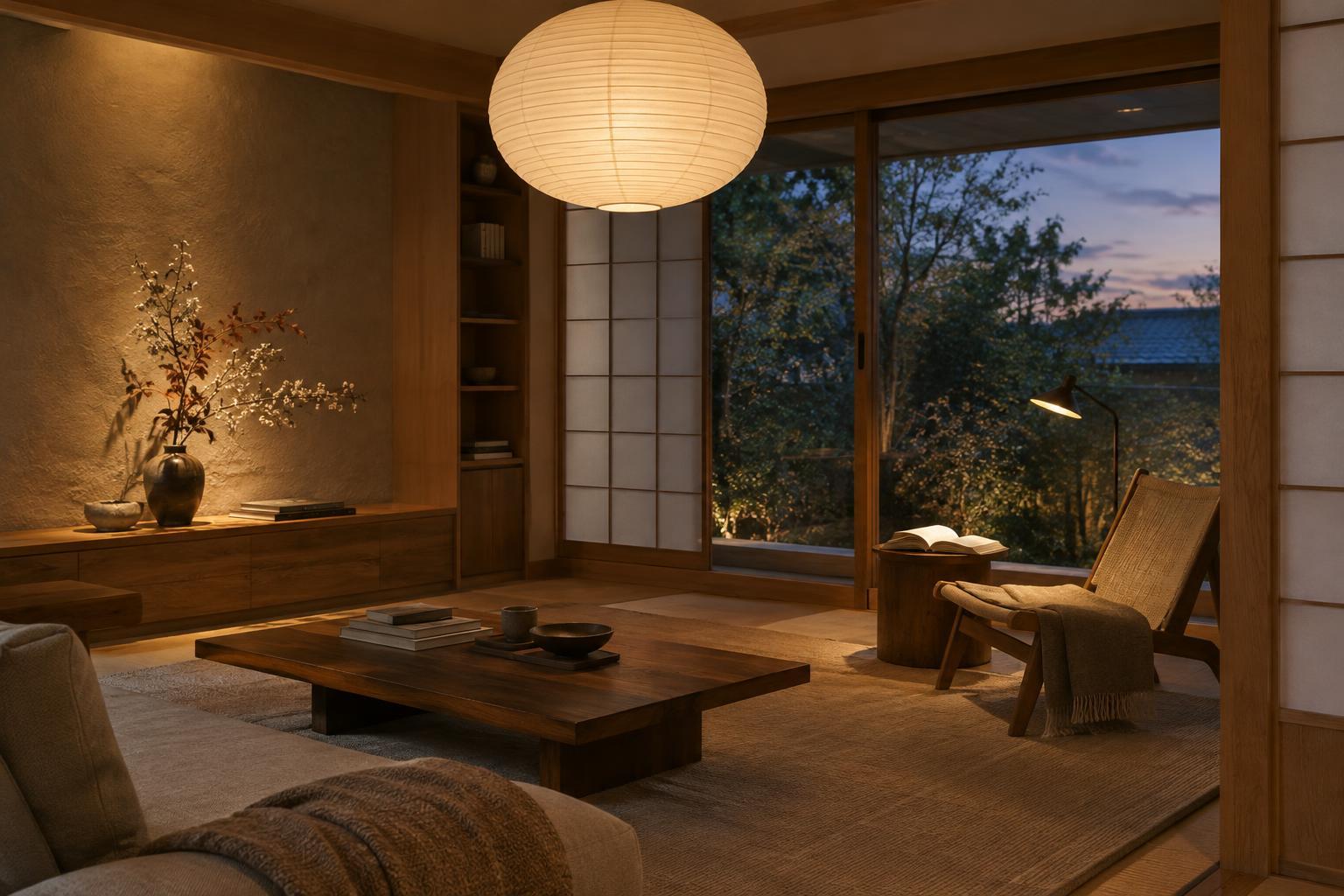
Think in three layers: ambient light to move around by, task light for focused activities, and accent light to bring attention to a wall, plant or object. One fixture can serve more than one purpose, but relying on a single bright ceiling light often leaves little room to adjust the mood. A softly shaded pendant might provide general illumination, while a reading lamp makes a chair genuinely useful after dark.
Place light where it helps rather than distributing identical lamps around the room. A low lamp near a shelf can give a gentle sense of depth; a lamp beside a sofa can illuminate a book without filling the whole room with brightness. Separate switches or dimmers make the layers easier to adapt. Before buying new fixtures, try moving the lamps you already own and turning them on in different combinations.
Choose paper shades for their effect, not just their shape
Paper shades can soften the appearance of a light source and give a room an inviting glow. Their effect depends on the paper, the bulb and the shade’s position. A pale, thin shade may reveal the outline of a bulb; a denser or layered shade may hide it more fully but provide less light for tasks. If possible, view a shade illuminated before deciding where it belongs.
Scale matters too. A small shade hung high may read as a bright point rather than a soft presence. A larger shade, positioned with sightlines in mind, can feel calmer without needing to dominate the room. Leave appropriate clearance around bulbs and follow the fixture maker’s guidance on compatible bulbs and wattage. Paper is a combustible material, so it should never touch a bulb or be draped over an improvised light source.
Control glare while keeping useful contrast
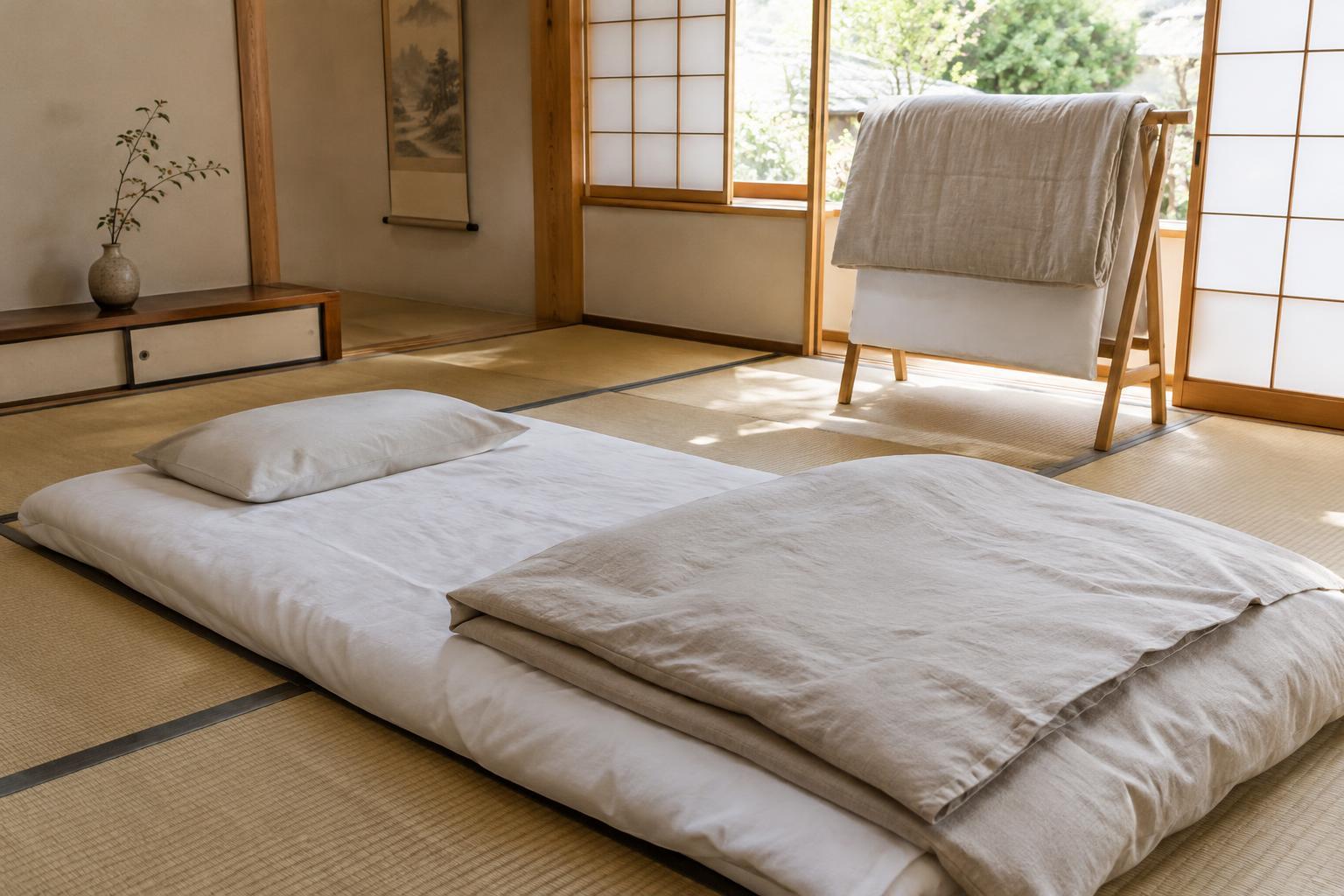
Glare is often a question of where the bright part of a lamp sits relative to your eyes. Check the view from a chair, a floor cushion and the doorway: each reveals a different sightline. A shade that looks gentle from across the room may expose its bulb to someone sitting beneath it. Moving the fixture, lowering its brightness or choosing a shade that shields the bulb can make a noticeable difference.
Do not mistake glare control for making everything equally dim. A reading surface should be brighter than its surroundings so your eyes can find the task comfortably. Matte finishes on nearby tables and walls can help reduce distracting reflections. If a television or glossy picture frame catches a lamp’s reflection, adjust the lamp’s angle before replacing it. Small changes in placement are often more effective than adding another source of light.
Let materials and evening routines guide the final choices
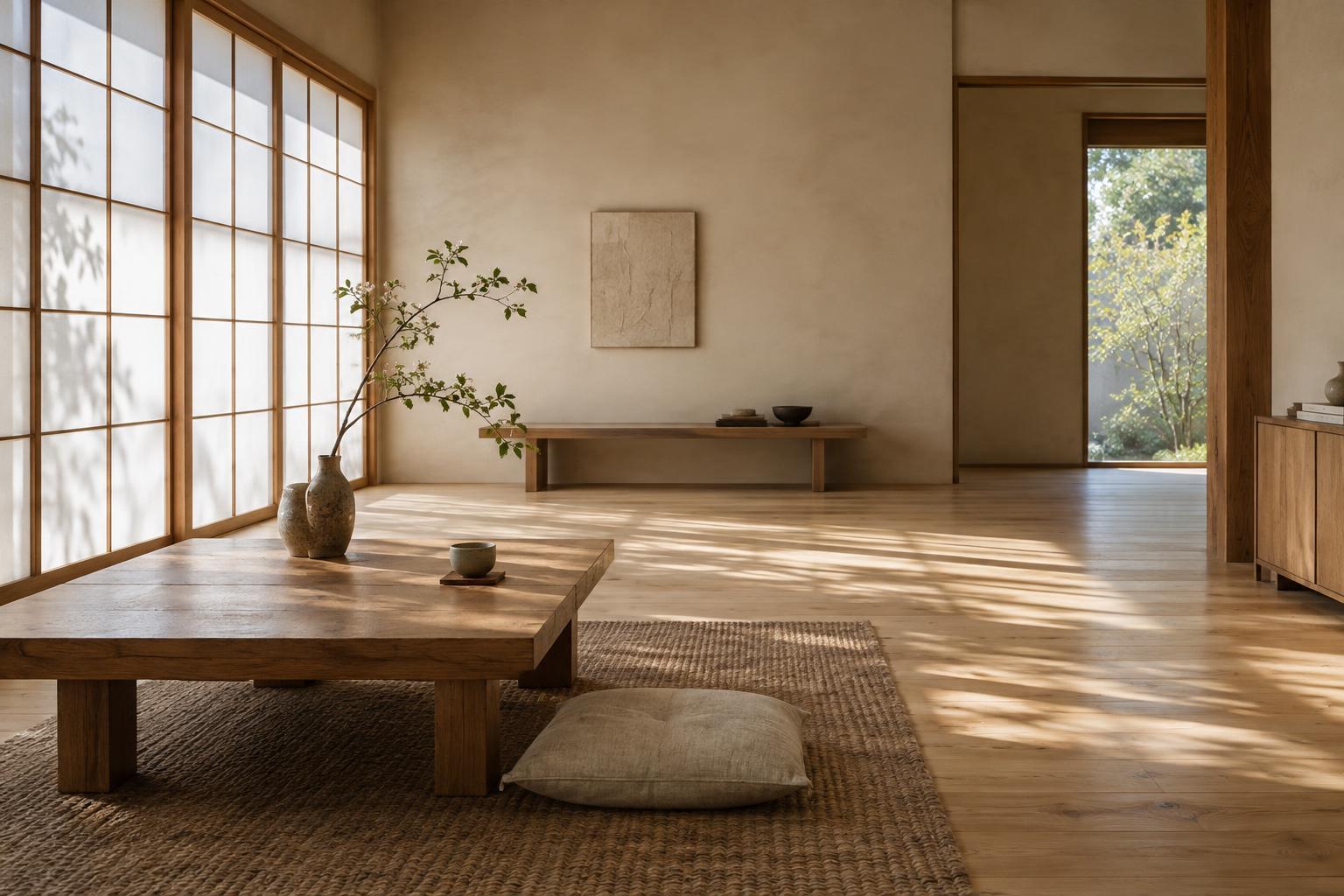
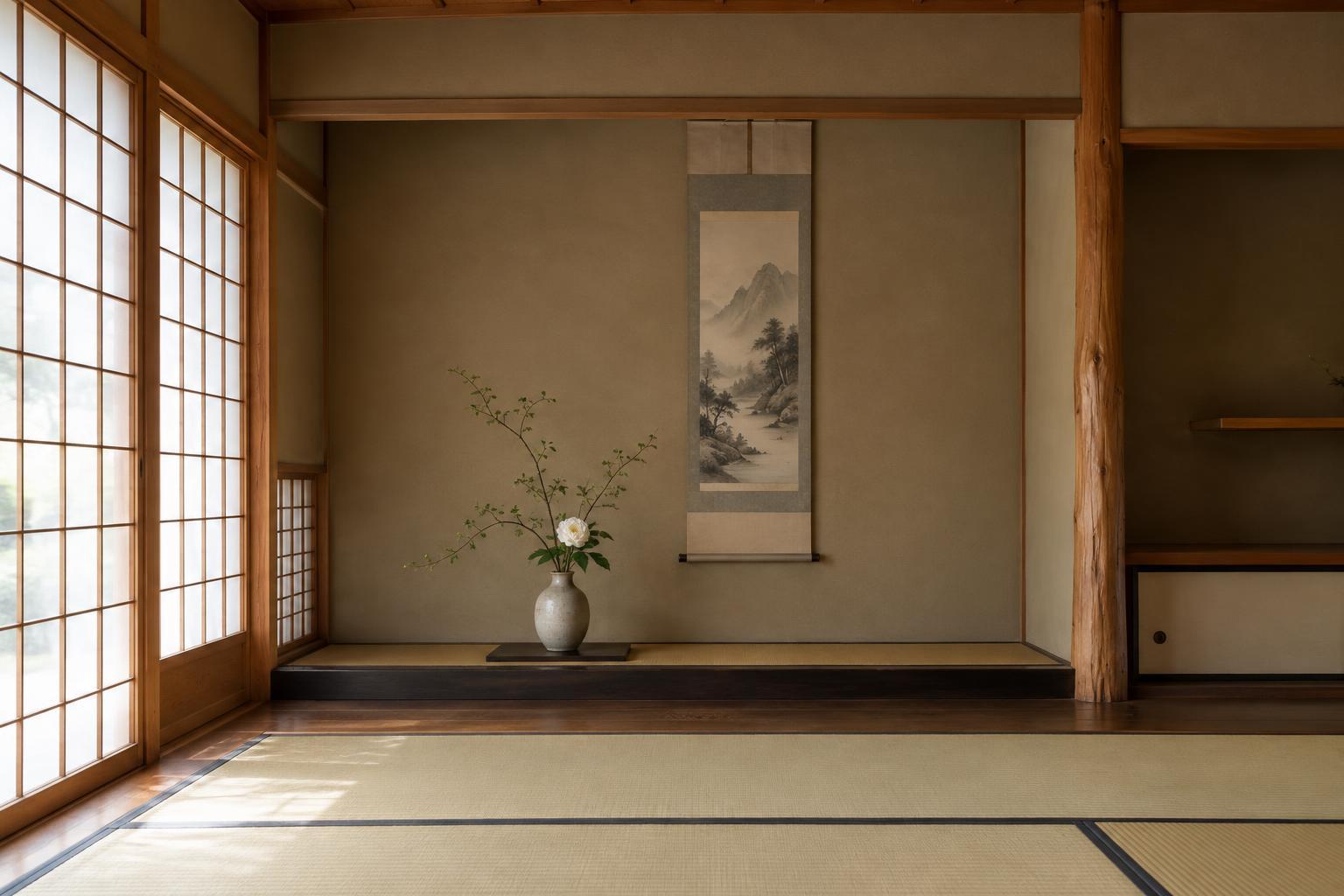
Light changes how a room’s materials feel. Wood grain, woven textiles, ceramics and paper can gain depth when lit from the side rather than washed evenly from above. Leave some areas quieter so the eye has somewhere to rest, but keep steps, thresholds and frequently used work surfaces easy to see. A comfortable room balances atmosphere with the ordinary need to move safely and find things.
For a starting arrangement, try one shaded source for general light, one focused lamp where you read or work, and one modest light that draws attention to a textured surface. Spend a few evenings with that setup before adding more. Notice what you switch on first, what you leave off, and where shadows cause inconvenience. A Japanese-inspired room need not depend on a particular fixture: the more lasting lesson is to use light deliberately.