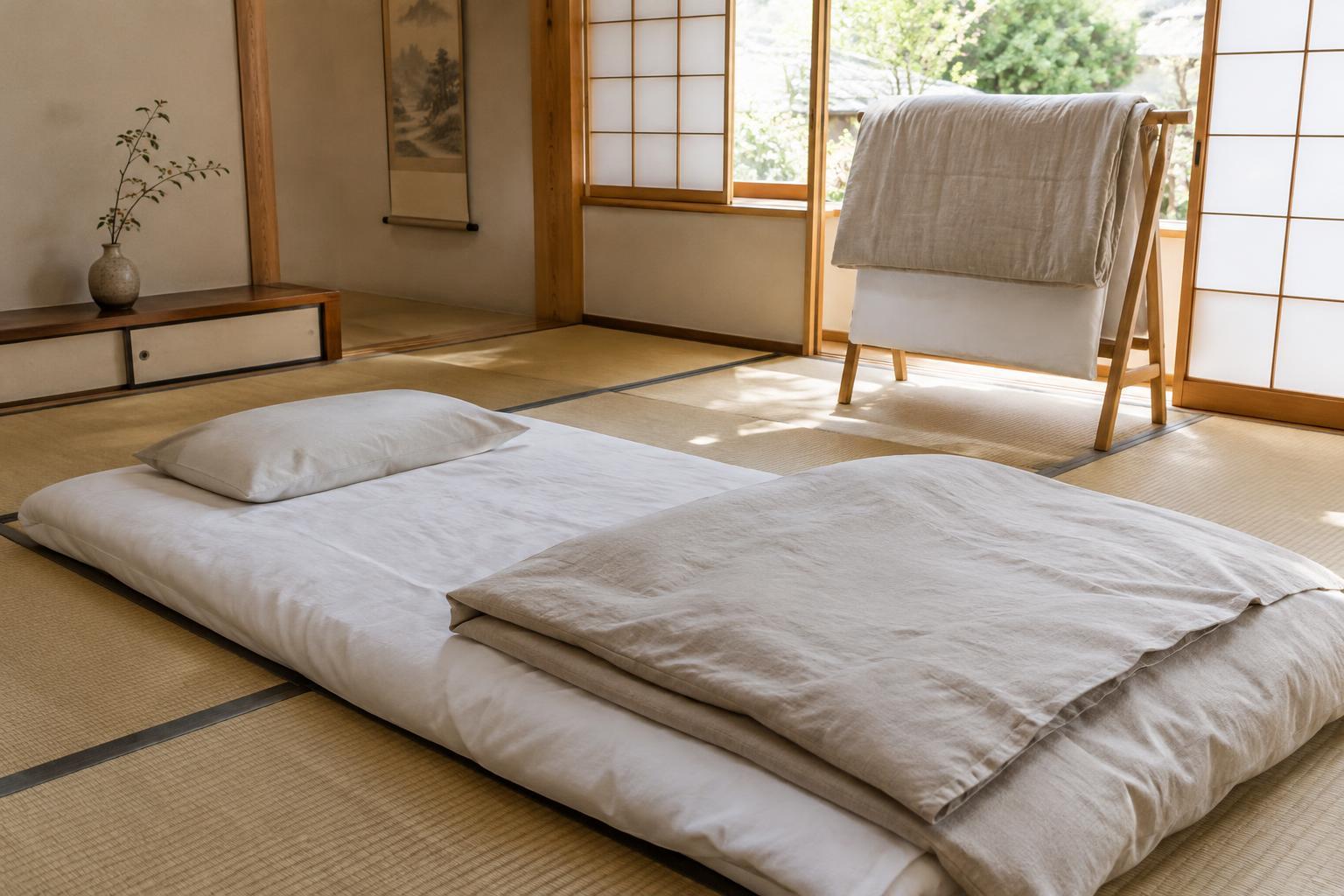
Start with the room, not the bedding
A Japanese-style futon is designed to be laid out for sleep and moved afterward. That flexibility can free up a room during the day, but it also means the surface beneath the bedding needs attention. Warmth and moisture from the body can collect where a futon meets the floor, especially when it stays in one spot night after night. Making room for airflow is therefore part of the setup, not an optional finishing touch.
Tatami is a familiar surface for a futon, but it is not the only one. On a clean, dry hard floor, a suitable underlay can add comfort and help separate bedding from a cold surface. On carpet, check carefully for trapped dampness: a soft surface may feel inviting while making moisture harder to notice. If you use a breathable mat or raised slatted base, choose one intended to support your bedding, and follow its care instructions. Whatever the surface, keep the area beneath and around the futon clean and give it regular time uncovered.
Build comfortable, manageable layers
The shikibuton, or sleeping futon, forms the main cushion. Its thickness and firmness vary, so the right choice depends on the floor and on what feels comfortable to you. A protective sheet over it is easier to wash than the futon itself. Add a pillow and a top layer suited to the room temperature: a light blanket may be enough in warm weather, while colder nights may call for a thicker cover or a kakebuton, a Japanese-style duvet.
Resist the temptation to solve every comfort problem by piling on more layers. Bedding that is too heavy to lift or fold can make daily airing difficult. If the floor feels hard, consider a supportive underlay or a different futon thickness; if it feels cold, look at insulation and room temperature as well as blankets. Washable covers and sheets make the routine simpler, particularly when the futon is used every night.
Give the futon a morning pause
It is tempting to fold a futon as soon as you get up, especially in a small room. Instead, pull back the top bedding and let the sleeping surface release some of the warmth and moisture left overnight. When practical, turn the futon over or stand it in a way that lets air reach its underside. You can then put it away once it feels dry, following the maker’s guidance for folding or rolling.
The best routine is one you can actually keep. Opening a window when outdoor conditions allow, using ordinary room ventilation, and leaving space around stored bedding all help air move. If the room is humid, drying may take longer; if the futon or floor feels damp, do not shut it tightly into storage. Check beneath the futon regularly rather than judging only by the top sheet. A musty smell or visible discoloration is a reason to stop and address the moisture before continuing to use the setup.
Air and clean each piece with care
Sheets and covers can usually be cleaned more often than the futon core, but always check their labels. The futon itself may need periodic airing according to its materials and the conditions in your home. Some people air bedding outdoors when the weather is suitable; others use a well-ventilated indoor space. Keep it away from rain and avoid assuming that direct sun is appropriate for every fabric or filling. A futon should be fully dry before it is stored or remade.
While the bedding is lifted, clean the floor or tatami gently using methods appropriate to that surface. Pay attention to edges and the spot where the futon usually lies. Rotating the sleeping position or changing which side faces up, when the futon’s design permits it, may help wear feel more even. Manufacturer instructions take priority: not every futon can be washed, folded tightly, or treated in the same way.
Make the routine fit your home
A nightly futon setup does not have to look identical in every home. Some people fold bedding into a closet each morning; others keep it on a breathable base and move it regularly for cleaning and airing. The important question is whether the arrangement lets you sleep comfortably and lets moisture escape. Leave enough clear space to lift and handle the futon without straining, and choose storage that does not compress damp bedding.
The appeal of a futon is partly its adaptability: the same room can serve different purposes across the day. That changeover works best when morning care is treated as a small, ordinary habit rather than a chore saved for later. A few minutes to uncover, check and air the bedding can make a nightly futon feel at home in the room you actually have.