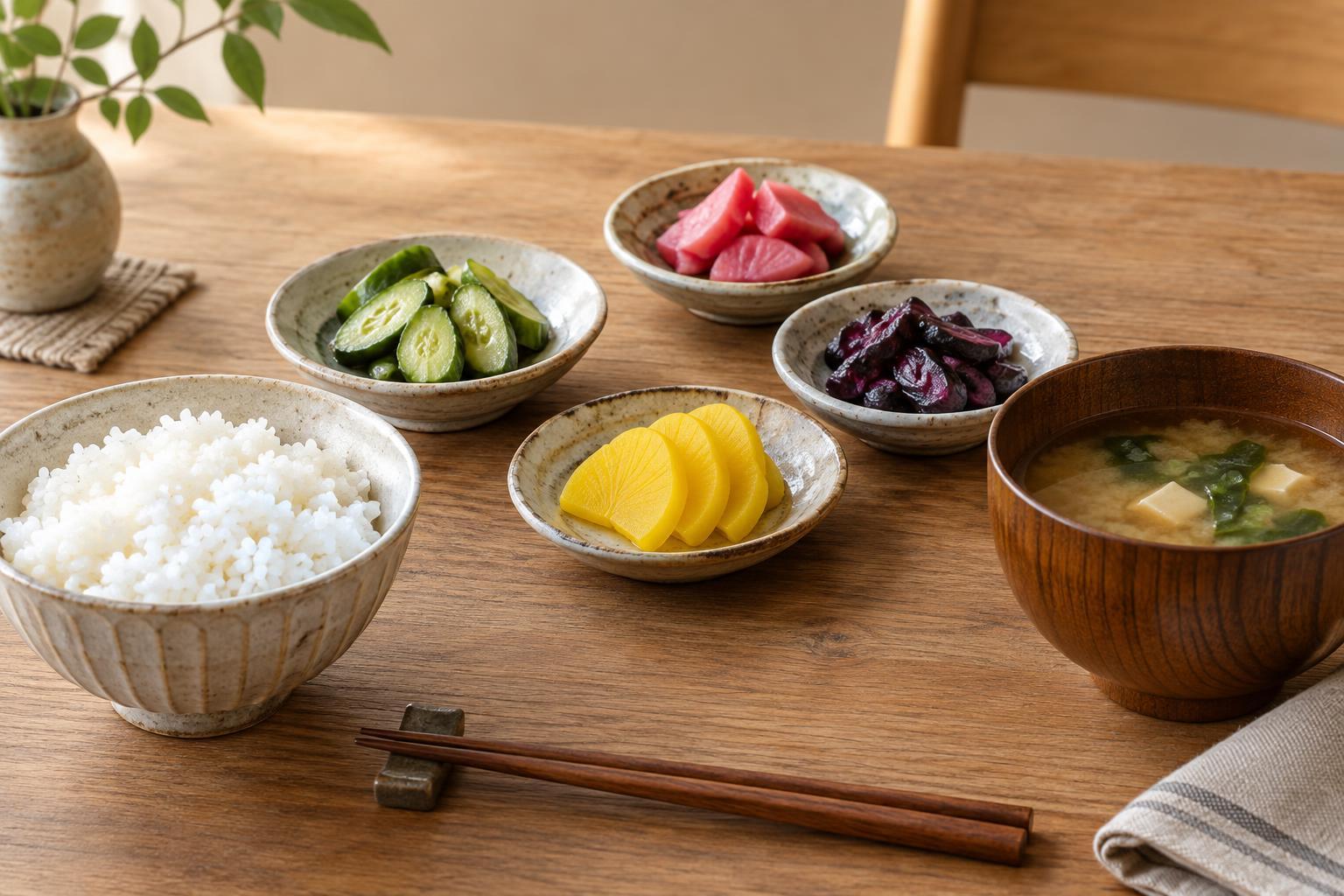
What makes a pickle tsukemono?
Tsukemono is a broad name for Japanese pickled foods, most often vegetables preserved or seasoned with salt, vinegar, rice bran, miso or other ingredients. The word covers a wide range of flavors and textures. One pickle may be crisp and lightly salted; another may be soft, sour and intensely savory. Not all tsukemono are fermented, and they are not all meant to taste sharp or vinegary.
At a meal, tsukemono usually appears in a small portion rather than as a large side dish. A few slices can add contrast to plain rice, rich grilled food or a gently seasoned soup. Pickles can also provide a change of texture between bites. There is no single rule for when to eat them: try a little with rice, then see how their flavor changes your next bite of the main dish.
Start with lighter, crunchy pickles
Asazuke is a useful introduction. The name generally refers to vegetables pickled for a short time, often with salt or a lightly seasoned liquid. Cucumber, cabbage and daikon radish are common choices. Because the vegetables retain much of their fresh character, asazuke can taste more like a lively accompaniment than a strongly preserved food. It works especially well when the rest of the meal is warm or rich.
Another familiar category is shiozuke, or salt pickles. The taste and texture depend on the vegetable and how it is prepared, so the name alone will not tell you exactly what to expect. For a simple tasting plate, put a little cucumber pickle next to a little pickled daikon. Notice how the cucumber’s watery crunch differs from the denser bite of the radish. Small portions make it easier to appreciate those differences without letting saltiness dominate the meal.
Get to know stronger flavors
Takuan, a yellow pickled daikon, is often served in slices. Traditional preparations commonly involve drying and pickling the radish, though recipes and commercial versions vary. Its firm crunch and sweet-salty flavor make it easy to recognize. It is pleasant with rice or as a crisp accent beside a sandwich-style meal, but its flavor can be pronounced, so begin with a slice or two.
Nukazuke are vegetables pickled in a seasoned bed of rice bran, called a nukadoko. They can develop a distinctive tang and earthy aroma as the bed is maintained over time. Cucumber and eggplant are familiar examples, but taste and texture vary from one preparation to another. If you are curious, buying a small serving from a shop is an easier first step than maintaining a rice-bran bed at home.
Umeboshi brings a different kind of intensity. Made from salted ume fruit, it is often very sour and salty; some versions are sweeter than others. A small piece with plain rice can be plenty. You may also encounter fukujinzuke, a chopped vegetable pickle with a sweet-savory taste, served with Japanese curry rice. These two accompaniments show how widely the word tsukemono can range: one offers a sharp burst of flavor, while the other complements a hearty sauce.
How to serve tsukemono with a meal
For an uncomplicated meal, serve rice, a main dish and one small dish of pickles. Choose a pickle that adds something the plate lacks: crisp cucumber with a soft dish, for example, or a more assertive daikon pickle with plain rice. If you have two or three kinds, offer just a few pieces of each. This keeps their flavors distinct and lets everyone choose how much they want.
Presentation can be simple. A small plate or bowl gives the pickles their own place without suggesting that they are the main event. If you are serving a purchased assortment, taste each variety before putting it out; sweetness, saltiness and acidity can differ considerably. Leftovers should be stored according to the package directions, since different pickles have different storage needs.
A gentle way to explore
Begin with one mild pickle and one stronger one, such as asazuke cucumber and takuan. Eat each on its own, then with a bite of rice. On another occasion, try a small amount of nukazuke or umeboshi. You do not need to like every variety to enjoy tsukemono; part of the appeal is discovering which contrasts suit your meals.
Pay attention to the specific vegetable and preparation rather than treating Japanese pickles as one flavor. A crisp, fresh-tasting cucumber and a concentrated, sour umeboshi play very different roles. Taken in small bites alongside food, tsukemono offer an approachable way to notice the balance of an everyday meal.