There is no single Japanese breakfast
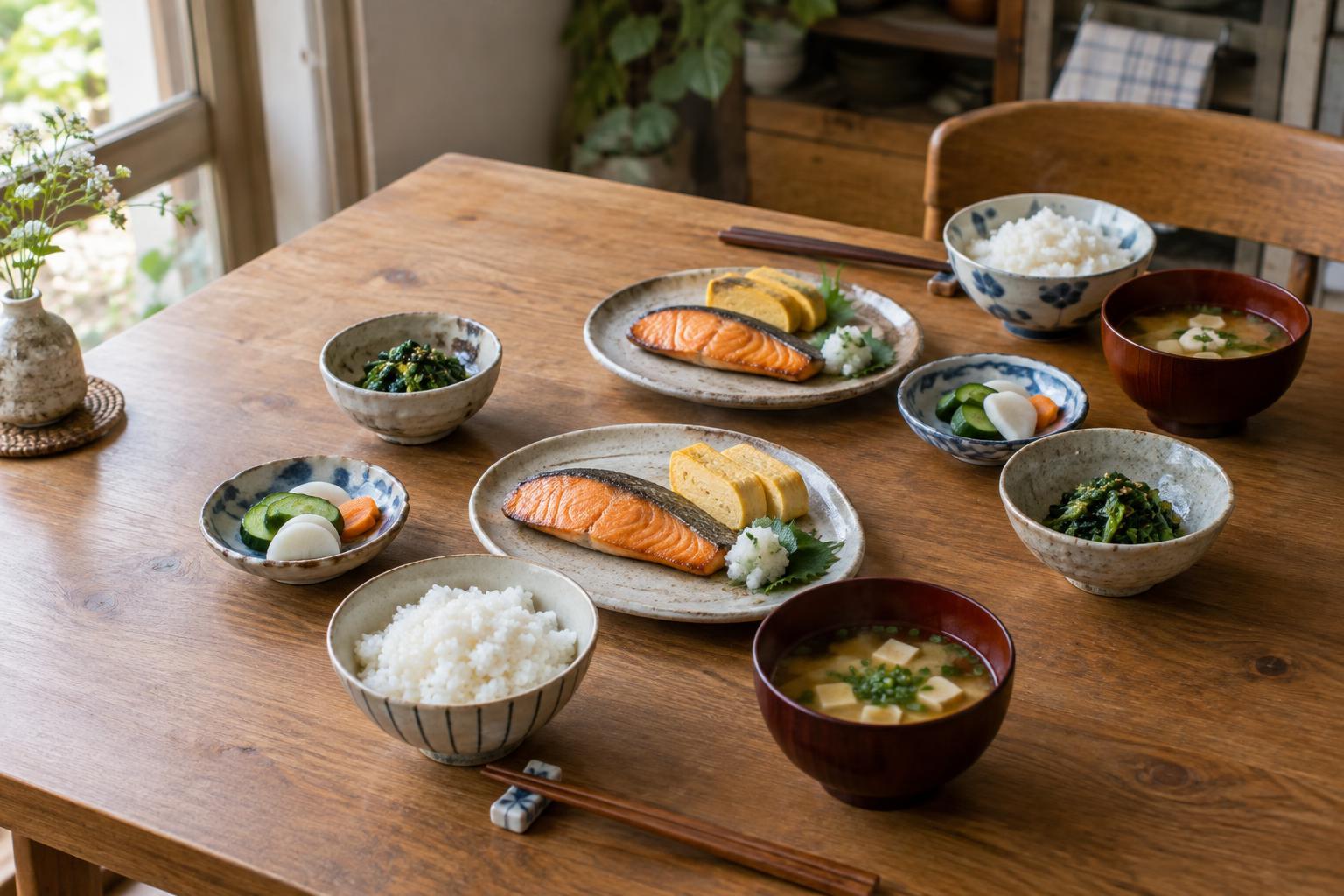
An image of a traditional Japanese breakfast often shows a bowl of rice, soup and several small dishes arranged on a tray. It is an inviting picture, but it is not a rule for how everyone in Japan eats each morning. A weekday breakfast might be toast and coffee, a rice ball on the way out, leftovers from dinner or something assembled in a few minutes. Habits vary by household, schedule and preference.
The rice-and-soup arrangement is still a useful way to understand a familiar style of meal. Rather than centering everything on one large plate, it brings together a staple, something warm and a few contrasting flavors. You do not need an elaborate spread to try it. Rice, miso soup and one or two sides give you the basic experience while keeping the morning manageable.
What you might find on the table
Steamed short-grain rice is a common starting point. Miso soup often accompanies it; the soup might contain tofu, wakame seaweed, mushrooms or seasonal vegetables. A piece of grilled fish, such as salmon, is one possible main dish, but eggs are also familiar. Rolled omelet, a simply cooked egg or natto—fermented soybeans often eaten over rice—can each fill a different place on the table.
Small additions bring variety without requiring large portions. Pickled vegetables add a sharp or salty note, while nori can be wrapped around a bite of rice. Leftover cooked vegetables or a little tofu also fit comfortably beside the bowls. Green tea is a natural choice, though the drink is entirely up to you. These are examples to choose from, not a checklist to complete.
Build a simple breakfast for two
For an approachable version, plan on enough rice for two bowls, two bowls of miso soup, two eggs or portions of tofu, and a small dish of vegetables or pickles. Cook the rice according to its package directions. If you have leftover rice, reheat it thoroughly; if mornings are rushed, preparing rice ahead can make this meal much easier. While the rice cooks, slice a cucumber or set out a modest amount of store-bought pickles.
For the soup, warm about two bowls’ worth of water or broth with sliced mushrooms and small cubes of tofu until the mushrooms are cooked. Turn off the heat. Loosen miso paste in a ladle with a little hot liquid, then stir it into the pot, tasting as you go. Miso varies in saltiness, so starting with less is easier than correcting a strong soup. Add wakame if you have it, following the package directions. If you want a vegetarian soup, check the broth and miso-soup ingredients: some prepared dashi contains fish.
Cook the eggs in a style you enjoy, or briefly warm tofu for a plant-based option. Divide the rice, pour the soup into bowls and place the side dishes where everyone can reach them. A few strips of nori are an easy extra. This is a complete, practical breakfast without attempting to reproduce a restaurant tray.
Make the meal work with your routine
A little preparation does more than an ambitious morning recipe. Wash or cut vegetables the night before, portion leftover rice and decide on your main dish in advance. If you would like fish, a previously cooked portion can be served with freshly made rice and soup; handle and reheat leftovers appropriately. If you are new to natto, try a small serving separately rather than treating it as an essential ingredient.
Keep the flavors balanced to your taste. Miso, pickles, nori and seasoned fish can all contribute saltiness, so there is no need to use every one of them at once. A lightly dressed vegetable or plain cooked greens can offer contrast. You can also scale the meal down: on a busy morning, rice and soup with one side still follow the same simple idea.
Enjoy the pattern, not a perfect presentation
Part of the pleasure of this breakfast is moving between warm rice, savory soup and small bites with different textures. Separate bowls let each element remain distinct, but matching tableware is unnecessary. Use the dishes you already own and serve portions that suit the people eating.
Treat the traditional-looking breakfast table as a source of ideas rather than a standard to meet. Once rice and soup feel familiar, change one side according to the season, what is in your refrigerator or how much time you have. That flexibility makes the meal easier to return to—and leaves room to appreciate its everyday character.