A calendar of turning points
A season rarely changes all at once. The light shifts, a familiar breeze feels different, and a flower appears before the weather seems ready for it. Japan’s 24 solar terms, called nijūshi sekki, offer a vocabulary for these gradual changes. Rather than dividing the year into only spring, summer, autumn and winter, they mark 24 points along its course.
The system originated in China and became part of Japanese calendar culture. Each term corresponds to a 15-degree step in the sun’s apparent annual path, so the terms fall roughly two weeks apart. Their dates can vary slightly from year to year. Sekki remain familiar through seasonal writing, food and conversation, even though daily schedules follow the modern calendar.
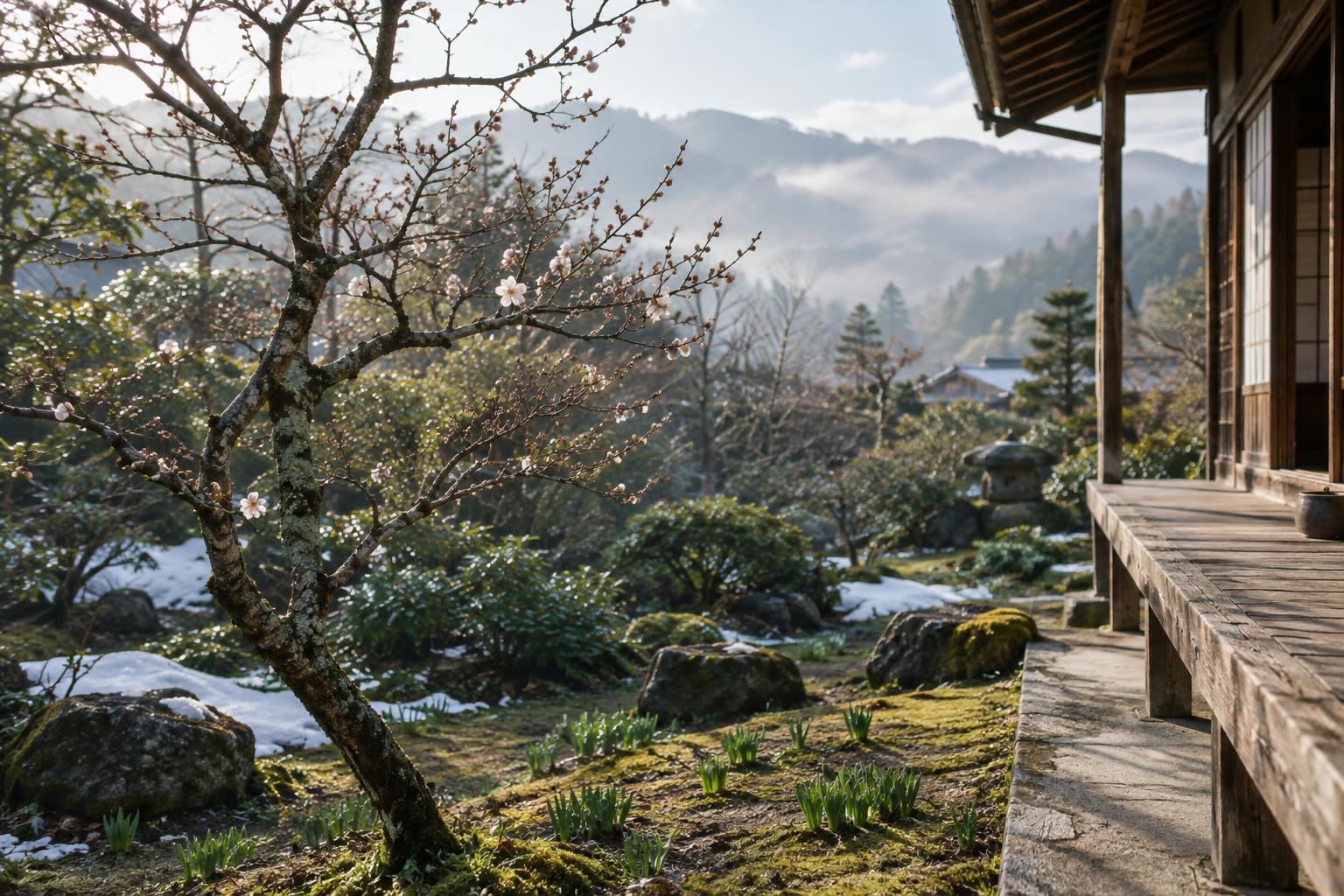
The names describe an idealized progression, not conditions guaranteed across Japan. Snow may linger when the calendar says spring has begun, while an island in the south may feel warm long before a northern one does. It helps to read each term as an invitation to look outside, not as a forecast.
Spring and summer: from first warmth to deep heat
The sequence begins around early February with Risshun, the start of spring. It continues through Usui, rain water; Keichitsu, the awakening of insects; Shunbun, the spring equinox; Seimei, clear and bright; and Kokuu, grain rain. These names move from tentative warmth toward the light and moisture associated with growth. Risshun can feel surprisingly early if the air is still cold, but it marks a change in the calendar rather than the end of winter weather.
Around early May comes Rikka, the start of summer. The following terms are Shōman, lesser fullness; Bōshu, grain in ear; Geshi, the summer solstice; Shōsho, lesser heat; and Taisho, greater heat. Some names point toward cultivation, while others describe longer days and rising warmth. The sequence makes room for summer to develop gradually instead of arriving as a single event.
English translations are useful guides, but they cannot capture every association carried by the Japanese names. A term such as “grain rain” is best understood as a seasonal image, not an instruction to expect rain on a particular day.
Autumn and winter: cooling air and returning light
Autumn begins in the sekki sequence around early August with Risshū, the start of autumn. Next come Shosho, the easing of heat; Hakuro, white dew; Shūbun, the autumn equinox; Kanro, cold dew; and Sōkō, the descent of frost. These names trace a cooling season, even if the first autumn term arrives while summer heat is still noticeable. Dew and frost are especially vivid examples of how a calendar name can direct attention to small changes close to the ground.
Around early November, Rittō marks the start of winter. Shōsetsu, light snow; Taisetsu, heavy snow; Tōji, the winter solstice; Shōkan, lesser cold; and Daikan, greater cold complete the cycle before Risshun returns. Not every place will see snow, but the names convey a progression toward colder, shorter days and then toward spring.
Two terms can look alike when rendered without Japanese characters: summer’s Shōsho means “lesser heat,” while autumn’s Shosho refers to heat easing. Their different meanings are a reminder that short English glosses are only starting points.
How sekki relate to other seasonal calendars
Sekki are sometimes discussed alongside Japan’s 72 microseasons, or shichijūni kō. They are related but not interchangeable: each solar term is divided into three shorter periods, traditionally named for a particular sign of change. Where a sekki might evoke the arrival of spring, a microseason may draw attention to a more specific natural detail.
You may also encounter lunar-calendar references in accounts of Japanese seasonal customs. The 24 solar terms, however, are based on the sun’s annual path. Keeping that distinction in mind helps explain why different seasonal expressions do not always line up neatly on a modern date. Calendars are ways of organizing experience; landscapes, plants and weather follow their own pace.
A simple way to live with the terms
You do not need to memorize all 24 names to enjoy them. Begin with the next term on the calendar and notice one thing near you: the time it gets dark, the feel of the morning air, a change at a market, or a plant you pass regularly. Return to the same spot two weeks later. The comparison often reveals more than the calendar name alone.
For an international reader, sekki can be a thoughtful lens on Japanese seasonal language without becoming a checklist of supposedly universal customs. Their most useful lesson is modest: seasons have transitions within transitions. A name gives you a moment to pause, while the place you are in tells you what is actually happening.