What hatsumode means
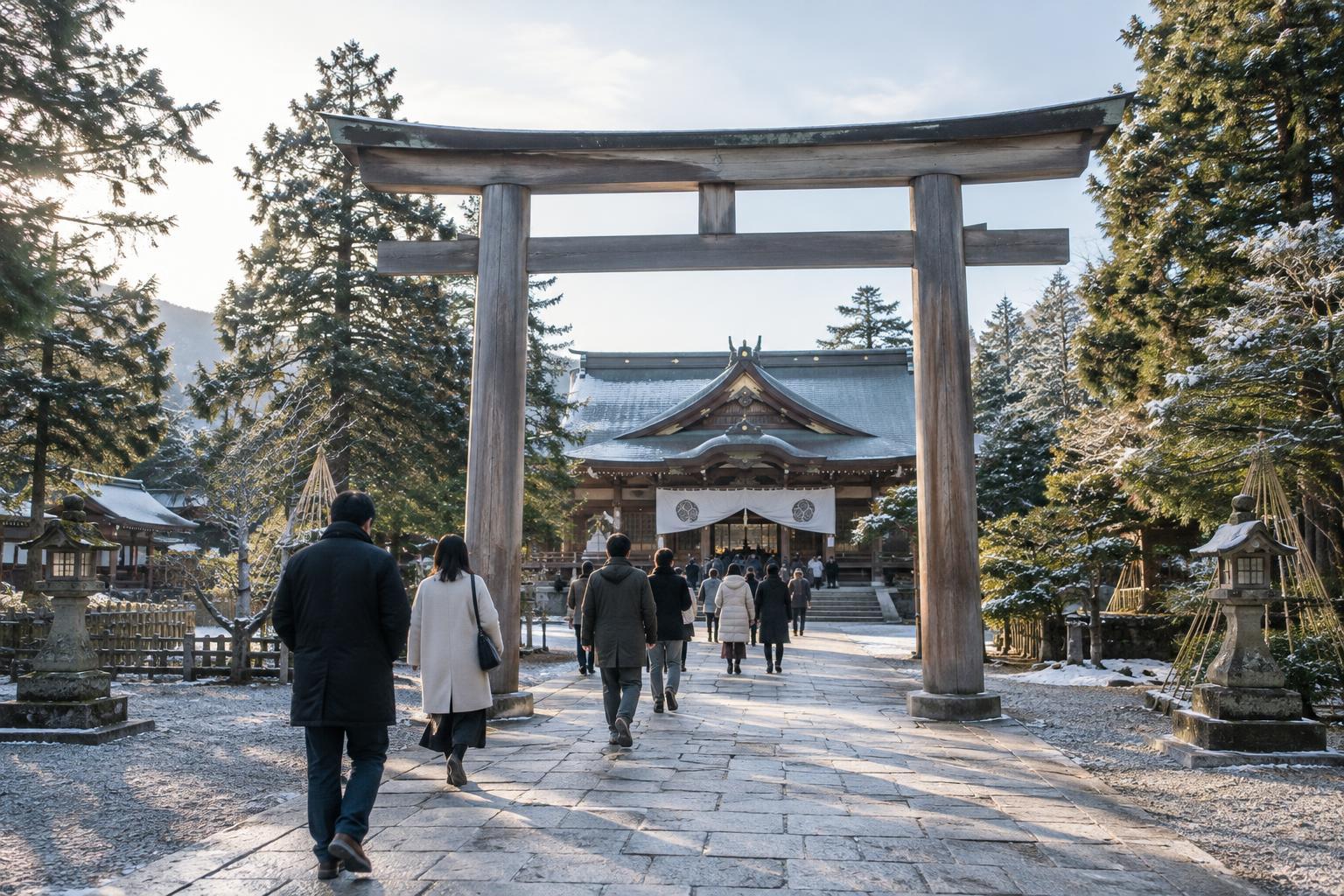
Hatsumode is the first visit to a shrine or temple in the new year. Many people go in the first few days of January to offer thanks, make a wish or simply mark a fresh beginning. Some visit a familiar neighborhood place; others travel to a larger site with a festive atmosphere. There is no need to treat it as a test of religious knowledge. For a first-time visitor, the most useful approach is to move calmly, watch for posted guidance and make room for people who have come to pray.
Both Shinto shrines and Buddhist temples may welcome hatsumode visitors. A torii gate commonly marks a shrine entrance, while a temple may have a larger entrance gate and an incense burner. These are helpful clues, but individual sites differ. If you are unsure where to go or what to do, follow the marked route rather than assuming every place has the same layout.
Plan for the pace of the New Year
Popular sites can be busy, especially around midnight and during the first days of January. Expect queues, temporary walking routes and a slower visit than you might make at another time of year. Dress for standing outdoors, and keep bags manageable so you can move easily through a crowd. If a quieter experience matters more to you than the holiday bustle, consider a smaller local site or a visit later in the season. It will still be your first visit of the year.
Food stalls, fortune slips and charms may be part of the experience, but they are not guaranteed at every location. Check signs before joining a line: one queue may lead to the main place of worship, while another serves charms or fortunes. Keep walkways clear when deciding where to go next.
Entering and purifying, if facilities are available
At a shrine, some visitors pause and make a small bow before passing through the torii gate. This is a courteous gesture, not a reason to hold up a crowded entrance. At either a shrine or temple, avoid walking into roped-off areas and follow any one-way routes or staff directions. A calm, unhurried manner matters more than copying every movement around you.
You may see a water basin for cleansing your hands and mouth before worship. Its arrangement can vary, and some places may not offer it at all. If a basin is open for use, follow its posted instructions. Where a ladle is provided, visitors commonly rinse each hand and pour a little water into one hand to rinse the mouth; the ladle itself should not touch the mouth. If you would rather not rinse your mouth, or if the process is unclear, you can simply step aside and continue.
Offering a prayer at a shrine or temple
At a Shinto shrine, wait your turn at the offering box. Visitors commonly place a coin in the box, bow twice, clap twice, offer a silent prayer or thanks, and bow once more. A bell or rope may be present, but not every shrine has one. The amount of the offering is your choice; there is no special coin you must use. Keep the line moving when it is busy, and avoid filming someone else's private moment of prayer.
At a Buddhist temple, the usual gesture is to put your hands together quietly rather than clap. You may also see visitors bow or offer incense where it is provided. Follow any instructions at the site, as practices vary. If you do not wish to pray, you can still visit respectfully: let others approach the worship area and take time to appreciate the setting from an appropriate distance.
Fortunes, charms and thoughtful observation
Omikuji are paper fortunes, omamori are small protective charms, and ema are wooden plaques on which visitors may write wishes. These are optional parts of a visit, not steps required to complete hatsumode. If you draw a fortune, look for instructions about whether to keep it or tie it at a designated spot. Do not tie paper to trees or railings unless signs explicitly permit it. Likewise, old charms are generally returned only where a site has made provision to receive them.
Photography rules differ by site and even by building. Check signs, avoid blocking a queue for a picture, and ask before photographing a ceremony or people at close range. Hatsumode can feel lively and contemplative at once. Give the visit enough time to notice both: the shared excitement of a new year and the quiet attention people bring to their own hopes.