What makes sushi sushi?
The common thread in sushi is rice seasoned with vinegar, usually with sugar and salt—not raw fish. Fish is a familiar topping, but sushi can also feature cooked seafood, egg, vegetables or tofu. Once you look at how the rice and other ingredients are arranged, the names on a menu become much easier to understand.
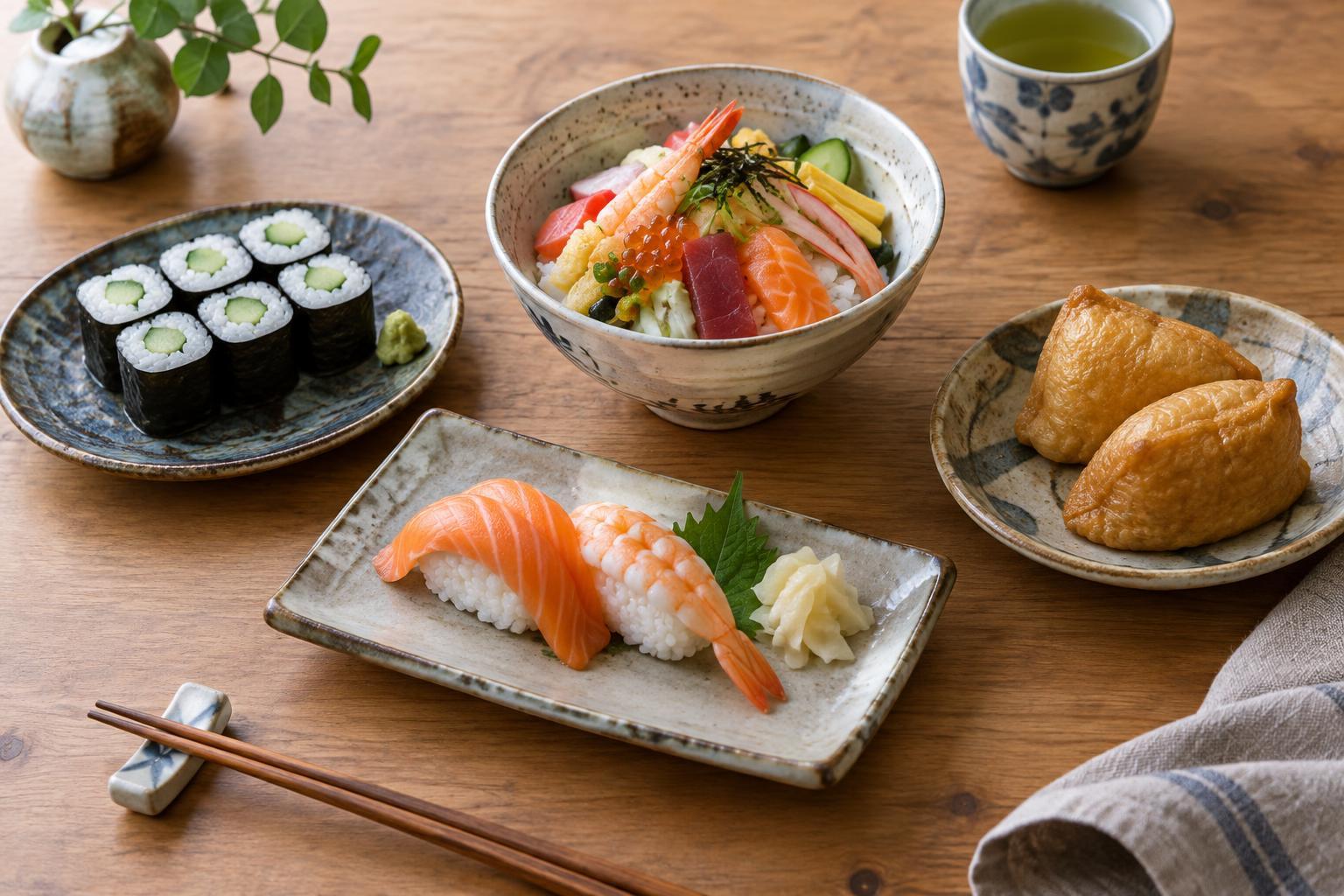
Nigiri is shaped by hand, maki is rolled, chirashi is served as a bowl, and inari is tucked into a tofu pouch. These are broad descriptions rather than fixed recipes. Fillings, toppings and presentation can vary between homes, shops and regions, so use the names as a starting point rather than a promise of particular ingredients.
Nigiri: a topping on hand-shaped rice
Nigiri is a small, gently pressed mound of sushi rice with a topping laid over it. The topping might be a slice of fish, cooked shrimp, egg omelet or another ingredient. A little wasabi may be placed between the topping and rice, depending on how it is made. Some pieces have a narrow band of nori, or dried seaweed, to hold an ingredient in place.
Because each piece has relatively few components, nigiri makes it easy to notice the balance between rice and topping. It is commonly served in pairs or as part of an assortment. If you prefer cooked toppings, ask what is available rather than assuming that all nigiri contains raw fish. It is best eaten soon after it is made, while the rice retains its intended texture.
Maki: sushi rolled and sliced
Maki brings rice and fillings together in a roll, often wrapped in nori and cut into bite-size pieces. A slim roll may contain one main filling, such as cucumber or tuna, while a thicker roll can hold several. In an inside-out roll, rice forms the outside and nori sits closer to the filling. These arrangements change the feel of a bite as much as its appearance.
Rolls are a useful way to explore contrasting textures: crisp vegetables beside soft rice, for example, or egg alongside seafood. Names and combinations differ widely, especially outside Japan, so read the ingredient description if a particular filling matters to you. Nori softens as it touches moist rice; freshly made rolls may feel crisper than ones that have been sitting for a while.
Chirashi: a bowl with room for variety
Chirashi, sometimes called chirashizushi, serves sushi rice in a bowl or shallow dish with ingredients arranged over or mixed through it. A version topped with slices of seafood can look quite different from one scattered with cooked vegetables, egg and other prepared ingredients. Both express the basic idea: seasoned rice served with a varied selection rather than formed into individual pieces.
The bowl format lets you decide how to combine flavors as you eat. One spoonful or bite might emphasize rice and egg; another might include several toppings. Chirashi is also a welcoming choice for a meal at home because the ingredients need not be rolled or shaped into matching pieces. Keep any raw seafood properly chilled and follow appropriate food-safety guidance when preparing it.
Inari: rice inside a tofu pouch
Inari sushi, or inarizushi, is made by filling a pocket of fried tofu, called aburaage, with sushi rice. The pouch is typically simmered or seasoned to give it a gentle sweet-salty flavor. Its tender, slightly chewy wrapper makes inari distinct from nori-wrapped maki, and its compact shape makes it easy to pack or serve alongside other sushi.
Some inari contain plain seasoned rice; others include sesame seeds, vegetables or other additions. Although it is often a convenient meat-free choice, the seasoning used for prepared tofu pouches may contain fish-based dashi. If you avoid animal products or have dietary restrictions, check the ingredients rather than relying on the name alone.
Choosing what to try
For a focused taste of a topping, start with nigiri. Choose maki if you enjoy several ingredients in a neat, shared portion; chirashi if you want a varied bowl; or inari if you like the contrast of savory rice and a sweet-salty tofu wrapper. A mixed selection can show how the same seasoned rice changes character with each format.
There is no need to master a set of rules before ordering. Look at the ingredients, ask about anything unfamiliar, and choose what sounds appealing. Paying attention to the rice, texture and balance of each bite is a simple way to appreciate the care behind these different forms of sushi.