Start with the noodle
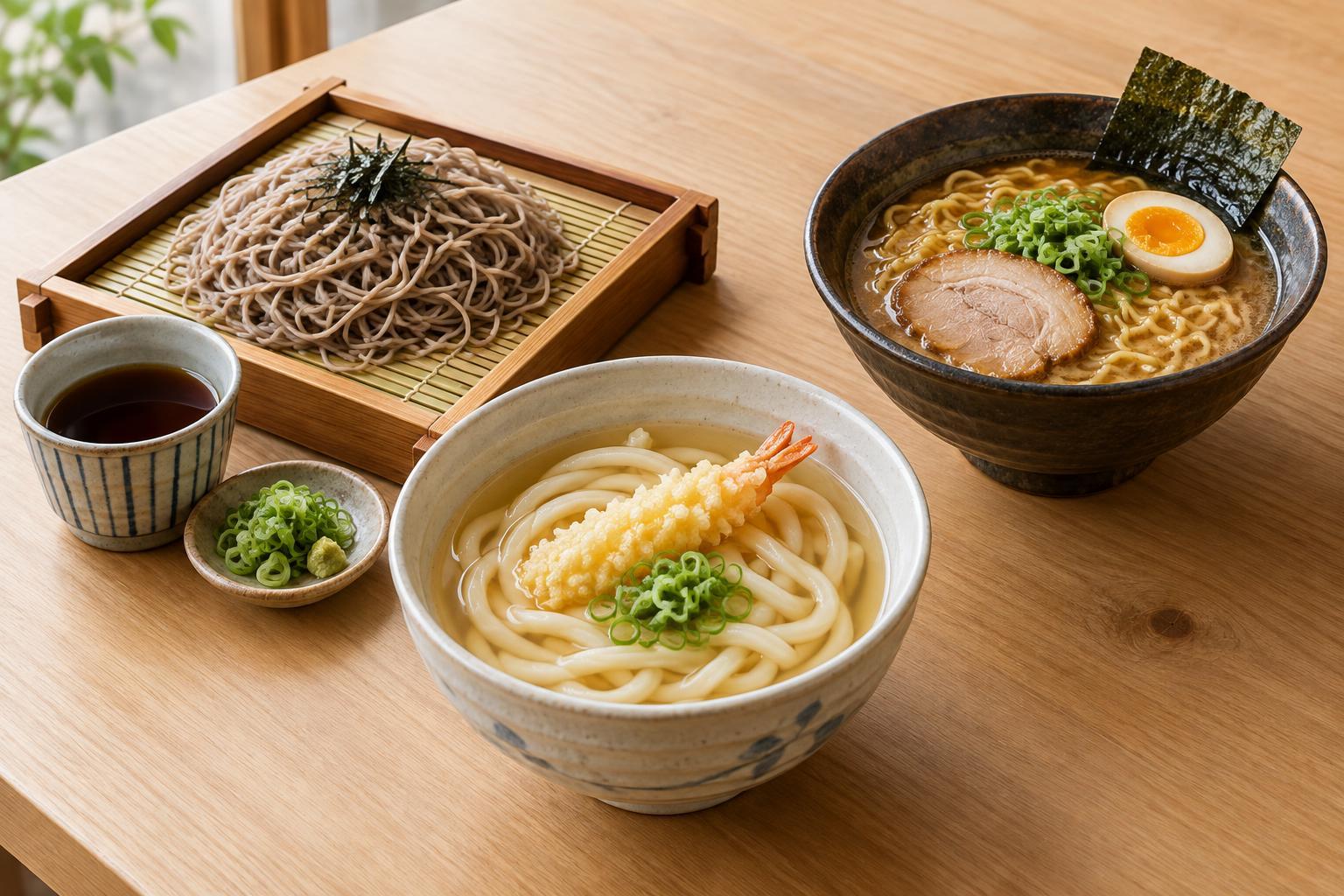
The clearest distinction between soba, udon and ramen is the noodle itself. Soba is associated with buckwheat, which gives many varieties a subdued, earthy flavor and a texture that can be pleasantly firm. Soba is not always made entirely from buckwheat: many noodles combine it with wheat flour to make the strands easier to handle. The balance varies, so two bowls of soba can taste and feel quite different.
Udon is usually made from wheat flour, water and salt. Its strands are typically thick and pale, with a smooth surface and a satisfying chew. Ramen noodles are also generally wheat-based, but their dough usually contains alkaline salts, often called kansui. These help give ramen its characteristic springiness and can contribute to its yellowish color. Ramen noodles range from thin and straight to thick and wavy, depending on the dish.
What is in the bowl?
Soba and udon are often served with a broth built on dashi, a Japanese stock commonly made with kombu, dried bonito or both. Soy sauce and mirin may add saltiness and sweetness. The result can be delicate enough to let the noodles remain the focus, though recipes vary by restaurant and region. A simple hot bowl might have little more than noodles, broth and sliced green onion; another might include tempura, mushrooms or seasoned fried tofu.
Ramen broth tends to be more varied and can be richer. A bowl may draw flavor from chicken, pork, seafood, vegetables or a combination. Its seasoning is often described separately from the stock: shoyu refers to soy sauce seasoning, shio to salt, and miso to fermented soybean paste. Tonkotsu, by contrast, names a broth made from pork bones rather than a seasoning. Aromatic oil and toppings such as sliced meat, egg, bamboo shoots or green onion add further layers.
These descriptions are guides, not fixed rules. A light ramen can feel less rich than a generously topped udon, and a vegetarian-looking soba dish may contain fish-based dashi. If an ingredient matters to you, it is worth checking rather than relying on the noodle’s name.
Hot bowls and cold plates
Soba is particularly enjoyable cold. In one familiar style, drained noodles arrive on a tray with a small cup of concentrated dipping sauce, or tsuyu. Pick up a modest portion of noodles, dip it, and eat. Hot soba is served in broth and makes a different impression: the noodles soften as they sit, while the warm liquid brings the seasonings forward.
Udon works well both hot and cold. Hot udon may come in a clear broth, while chilled udon may be paired with dipping sauce or served with sauce and toppings to mix through. The noodle’s substantial chew remains central either way. Ramen is most often served hot, with the noodles placed in a prepared soup shortly before serving. Tsukemen offers a related but distinct experience: noodles and a concentrated dipping broth arrive separately, so each bite can be dipped before eating.
How to choose what to order
If you want to notice the flavor of the noodle itself, try a simple cold soba dish first. For a soft-looking but chewy wheat noodle in a relatively gentle broth, udon is a welcoming choice. If you are drawn to a layered soup with seasoning, aromatic oil and several toppings, start with ramen. None is inherently the heavier or more elaborate choice; preparation makes the difference.
Menus can offer clues beyond the noodle name. Words such as zaru often point to cold noodles served separately from dipping sauce, while kake commonly indicates noodles in a simple hot broth. Toppings change the character of a dish as much as the base does. Tempura adds crispness, for example, while seasoned fried tofu contributes a sweeter, savory note. If you are unsure, a plainly prepared version makes it easier to appreciate what defines each noodle.
Enjoying them with curiosity
Noodle meals need not involve complicated etiquette. It is fine to use chopsticks to lift a manageable amount, taste the broth or sauce, and adjust your pace. Slurping is common in Japan, but it is not a test you must pass. With dipping noodles, the sauce may be more concentrated than a soup, so begin with a small dip.
Keep dietary needs in mind: soba can contain wheat as well as buckwheat, udon and ramen generally contain wheat, and broths or sauces may include fish or meat. Recipes and preparation spaces vary. Asking about ingredients when you order is more reliable than assuming a simple-looking bowl is suitable. Once those practical questions are settled, the best comparison is your own: notice the noodle’s texture, how it meets the broth, and which combination you would happily return to.