A small object with a practical job
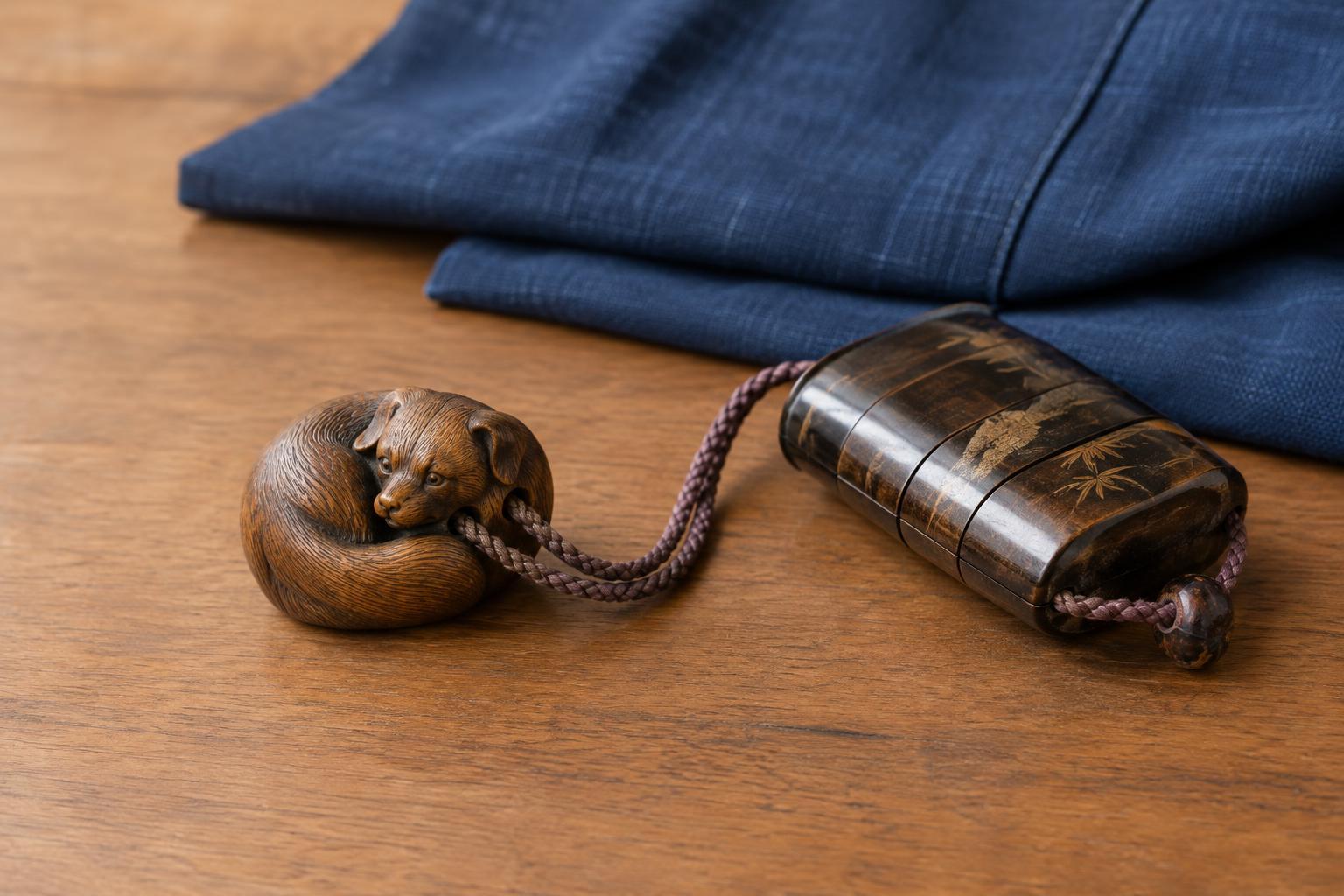
A netsuke is a small fastening toggle, often carved as a figure or compact shape. Its original purpose is easier to understand if you picture clothing without a built-in pocket. An object such as an inro, a small tiered container, could hang from a cord tucked behind the sash, or obi, of a kimono. The netsuke sat above the obi, keeping the cord from slipping through. Other hanging accessories could be secured in a similar way.
Netsuke are sometimes described simply as miniature sculptures, but their size and form grew from this everyday use. A useful netsuke needed to be comfortable against the body, sturdy enough for handling, and shaped so the cord could hold it securely. Many have two cord holes, called himotoshi; on others, the cord passes through an opening incorporated into the design. An ojime, a separate sliding bead, could help keep the sections of an inro closed.
Why their details invite a closer look
Makers transformed this functional object into an opportunity for invention. Netsuke can depict animals, people, plants, foods, household objects, and figures drawn from stories or beliefs. Some are playful; others rely on an economical curve or a quiet texture rather than an elaborate scene. They were made in materials including wood, ivory, horn, and ceramic. Material matters to appearance and touch, but it is only one part of the work’s character.
The best way to look is slowly and from more than one angle. A seated animal may be composed so its paws, tail, and back make a rounded, wearable shape. A carving that seems simple from the front may reveal an expression, inscription, or carefully resolved surface on the reverse. Look for where the cord would pass, then imagine the piece against an obi. That small exercise reconnects the carving with the purpose that influenced its design.
Reading a netsuke without overreading it
A recognizable subject does not always have one fixed meaning. An animal might refer to a familiar tale, suggest a seasonal association, serve as a joke, or simply appeal to its owner. Museum labels and collection notes can offer useful context, especially when a figure draws on a story unfamiliar to you. Without that context, it is better to describe what you can see than to assign a definite symbolic meaning.
Surfaces also deserve careful attention. Repeated handling can soften edges and bring out the texture of a material, though an apparently worn surface is not, by itself, proof of age. Consider how the carving balances detail with durability: fine lines can enliven a face or garment, while broader forms make the object pleasant to hold and less vulnerable in daily use. Viewing netsuke as both designed objects and works of carving makes their ingenuity easier to appreciate.
Appreciating netsuke today
Most visitors encounter netsuke in a display case rather than attached to an inro. If the display includes the cord, ojime, and container, take a moment to follow how they connect. If it shows only the netsuke, look for images of its other sides in the exhibition or catalogue. Handle an example only when a museum, gallery, or owner explicitly invites you to do so; otherwise, changing your viewing angle is the safer way to explore its form.
Netsuke also raise questions about materials and collecting. Historical examples may include ivory, while makers have worked in many other materials. If you are considering a purchase, ask what the piece is made from, whether its maker and history are known, and how it is described. Rules governing some materials can vary by location, so check the requirements that apply before buying or transporting an object. You can also enjoy the craft without owning it, through museum collections and the work of contemporary carvers.
What makes netsuke memorable is the close relationship between use and imagination. A carving could perform a modest task while rewarding attention from every side. Seeing that relationship—rather than treating each piece as an isolated curiosity—offers a richer way to understand these small works and the people who made, wore, and kept them.