What does koromogae mean?
Koromogae means changing clothing for a new season. In Japan, the word can describe a visible switch in school or workplace uniforms, as well as the quieter work of putting away heavy coats or bringing lighter garments within reach. It treats the change of season as something to prepare for, not just something to notice when you step outside.
The custom is often associated with a move toward summer clothing and another toward winter clothing. Some schools and workplaces set dates for uniform changes, though their rules may differ. Outside those settings, there is no need to treat a particular day as a deadline. Temperatures vary by region and from year to year, and a practical wardrobe should respond to the weather you actually experience.
A seasonal change you can see
A uniform change makes koromogae unusually visible. Lighter shirts or different layers can appear across a classroom or workplace at roughly the same time. That shared transition is one reason the custom feels like more than a private closet task: it gives a small, everyday shape to the passage from one part of the year to another.
At home, the change may be less clear-cut. A person might keep a light jacket available during early summer or leave a breathable shirt near the front of the closet well into autumn. Seasonal dressing is not a test of how closely someone follows a calendar. It is a way to make daily choices easier while paying attention to comfort, activity and local conditions.
A gentle way to change over your closet
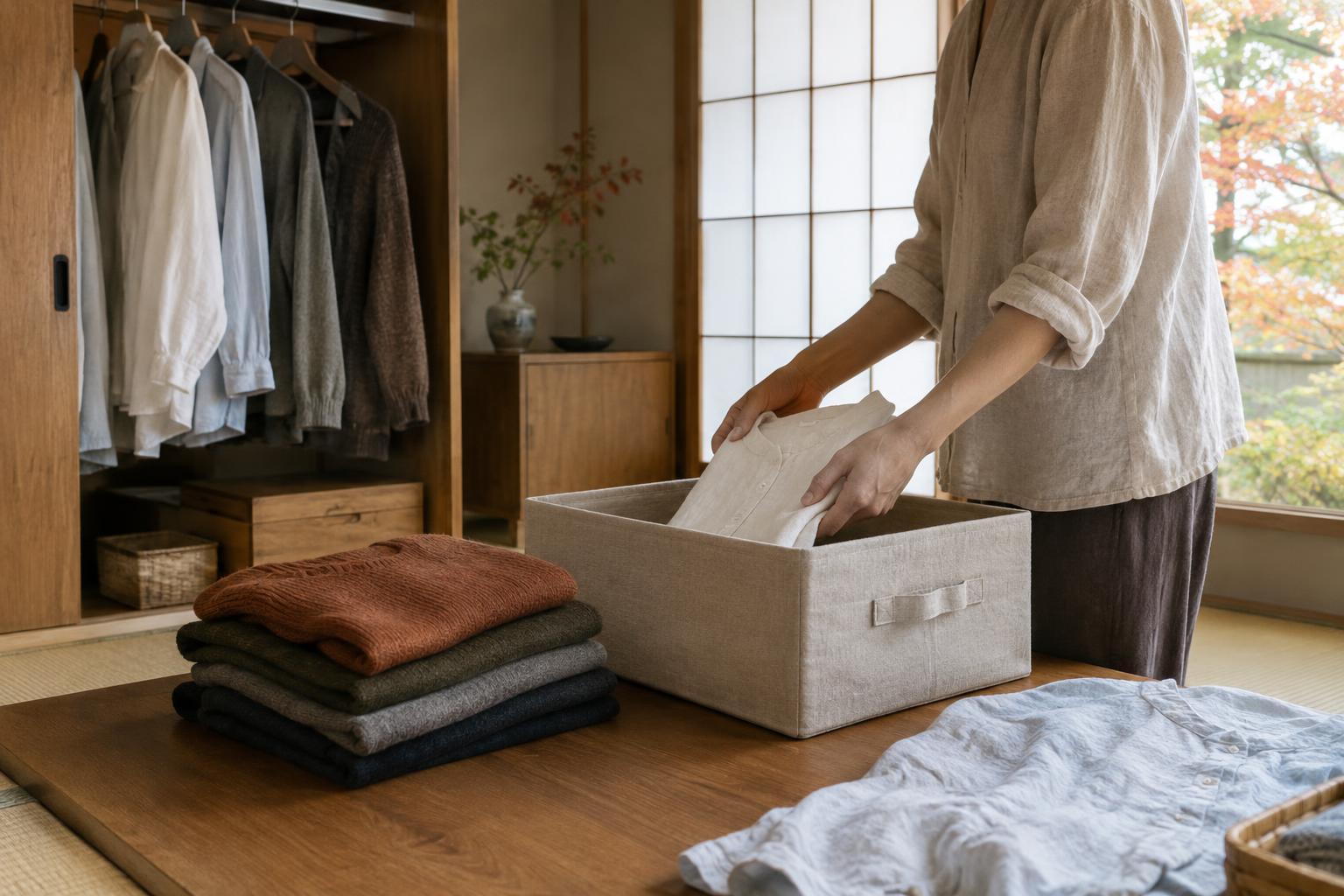
Begin by looking at what you wore during the season that is ending. Set aside items that need washing, mending or a decision about whether they still suit you. Then bring the next season’s clothes into an easy-to-reach place. You do not have to empty the entire closet: changing one drawer, shelf or section of hangers can be enough to make mornings simpler.
Before storing clothes, check their care labels and make sure they are clean and fully dry. Fold or hang them according to the fabric and the space you have, without packing them so tightly that they are hard to inspect later. A simple note on a box or bag can save you from searching for a scarf or lightweight layer when the weather turns unexpectedly.
Keep a small group of transitional pieces accessible. A cardigan, overshirt or rain layer can bridge days that do not feel distinctly like either season. This flexibility is particularly useful if you travel between regions, spend long hours in cooled or heated spaces, or live somewhere with changeable weather.
Making the ritual meaningful without making it rigid
Koromogae offers a reason to pause and consider how clothing serves daily life. As you move garments, notice what is comfortable, what needs care and what you seldom reach for. Repairing a loose button before storage, for example, is a small favor to your future self. So is placing the clothes you use most where you can find them without disturbing everything else.
The practice can also be modest. You do not need a new wardrobe each season or a separate set of clothes for every month. Rewearing, layering and caring for what you own fit naturally with the idea of preparing for change. If closet space is limited, rotating just a few bulky items may have the greatest effect.
What makes koromogae an appealing seasonal tradition is the attention behind it. A brief wardrobe reset connects a practical household task to shifts in light, temperature and routine. Adapt it to your climate and circumstances, and let the calendar serve as a reminder to check in—not as a rule that overrides the day outside your door.