Start with the trip you will actually take
Before comparing hotels, list the places you expect to visit and group them by day. Mark any early departures, late returns, or days when you will carry luggage. A neighborhood that works beautifully for a slow city visit may be awkward if you plan several day trips. Conversely, staying beside a major terminal may offer little benefit if most of your time will be spent walking around one part of town.
Look for a base that makes your most frequent journeys easy, rather than trying to minimize every journey. If you are visiting more than one city, consider each stay separately. The best location for a short stop with an onward train may differ from the best location for several unhurried days.
Read transit maps with the last stretch in mind
A station name alone does not tell you how convenient a hotel will be. Check which lines serve the station, whether your likely journeys require transfers, and which entrance is closest to the accommodation. Large stations can take time to cross, while a smaller station with a straightforward connection may feel easier to use. If step-free access matters, check the route from platform to street as well as the route shown on the map.
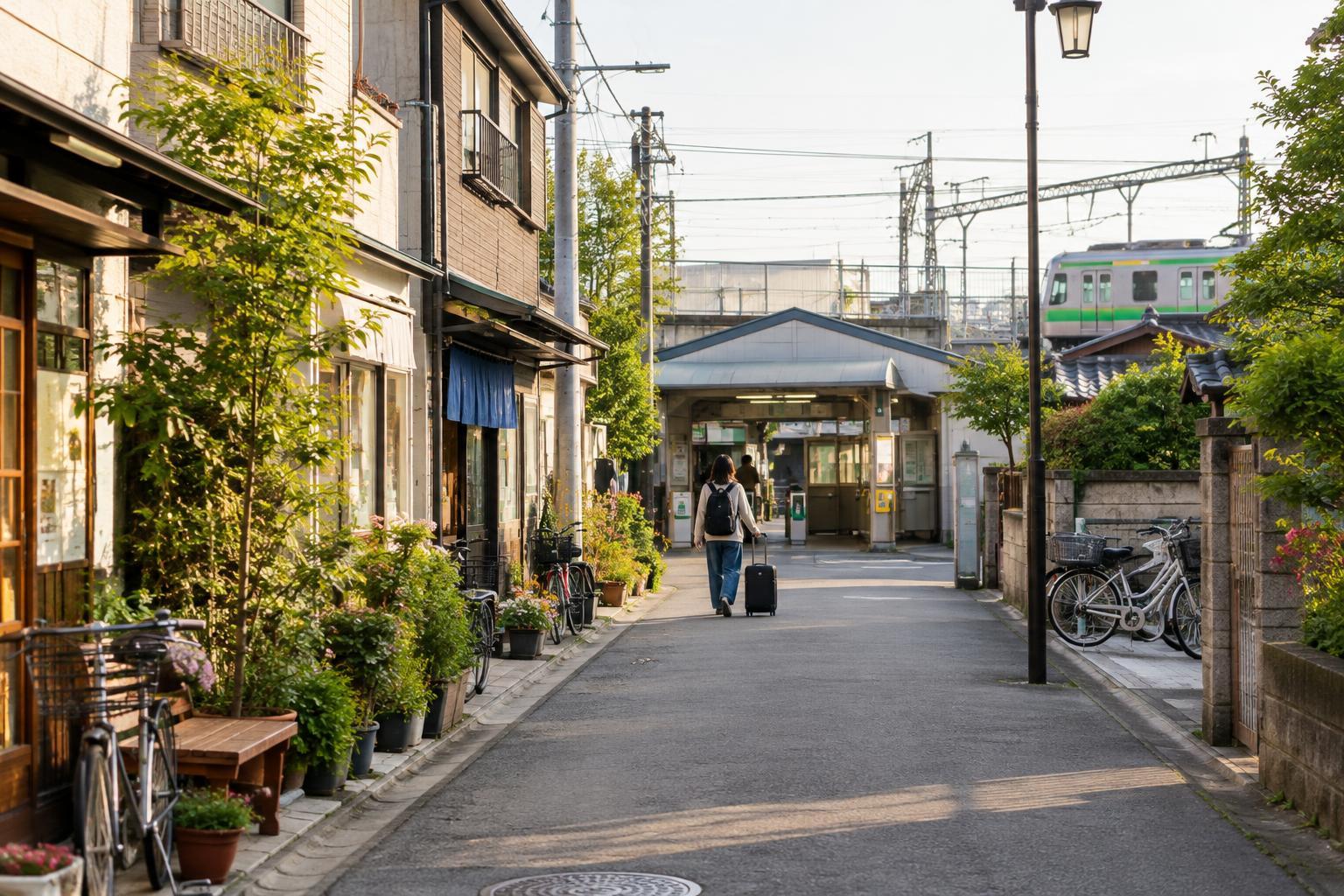
Then trace the walk from the station to the front door. A short distance can feel longer with a suitcase, after a full day out, or in uncomfortable weather. Note whether you would need to cross wide roads, climb a slope, or navigate narrow streets. If you expect to return after dinner, consider whether the route is one you would be comfortable finding at night.
Choose an atmosphere, not just an address
Neighborhoods offer different ways to begin and end a day. A busy commercial area may make meals and transport choices easy, but its lights and crowds may not suit someone seeking a quiet evening. A residential area can offer a gentler pace and ordinary street scenes, though shops and restaurants may be less concentrated. Neither is inherently more authentic; both are part of everyday life.
Think about the moments you will spend near your room. Would you like to find breakfast close by, browse small shops, or take an evening walk? Do you prefer a lively street outside, or a quieter side street a little farther from the station? Read accommodation descriptions and recent guest comments for clues about noise and the immediate surroundings, while remembering that individual experiences vary.
Estimate door-to-door time realistically
A train journey is only one part of a trip across a city. Add the walk to the station, time spent finding the correct entrance and platform, a possible wait, transfers, and the walk at the other end. Build in more room when traveling with luggage or navigating an unfamiliar station for the first time. An itinerary that looks effortless when measured in train minutes can become tiring if it repeats these small steps several times a day.
Compare a few representative journeys rather than checking every attraction. Try your likely first outing, a return from dinner, and any departure with a fixed arrival time. For an early train or flight, check the relevant service and transfer options for that particular journey before booking. If two areas have similar travel times, the simpler route may be more pleasant than the one with a slightly shorter estimate and several changes.
Make a balanced final choice
Narrow your options to a few neighborhoods, then compare actual accommodations within each one. Price, room size, access to laundry, and proximity to a suitable station entrance can matter more than a neighborhood’s reputation. Keep your budget for the whole stay in view: a lower room rate may be worth a longer ride, but not if the extra travel would routinely cut into the kind of trip you want.
There is no single best neighborhood for every visitor to Japan. Choose a place that supports your daily rhythm and leaves some space to notice what is nearby. A convenient base is not only a launch point for major sights; it is also where you might discover a favorite bakery, a quiet street, or an evening routine that makes the visit feel your own.