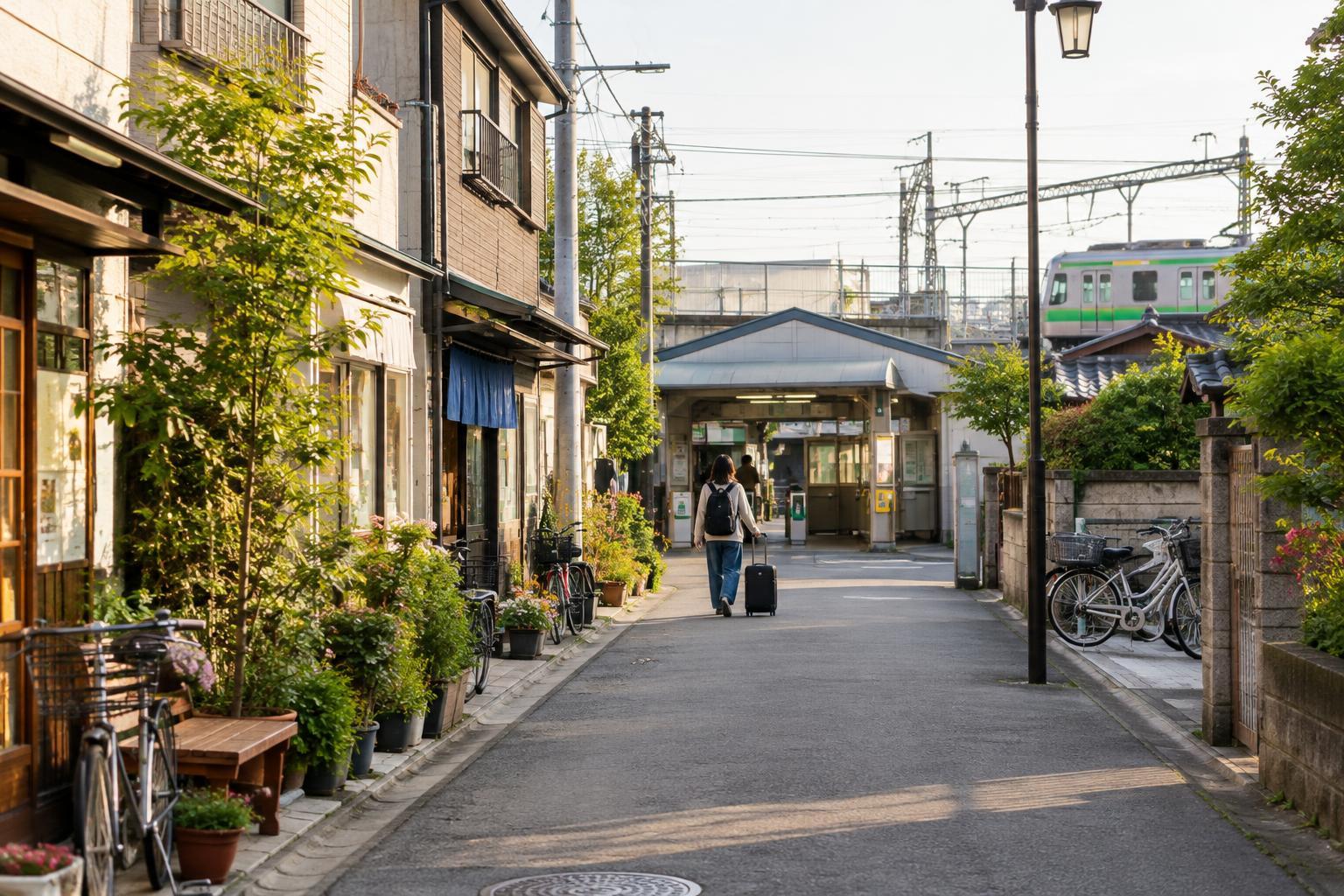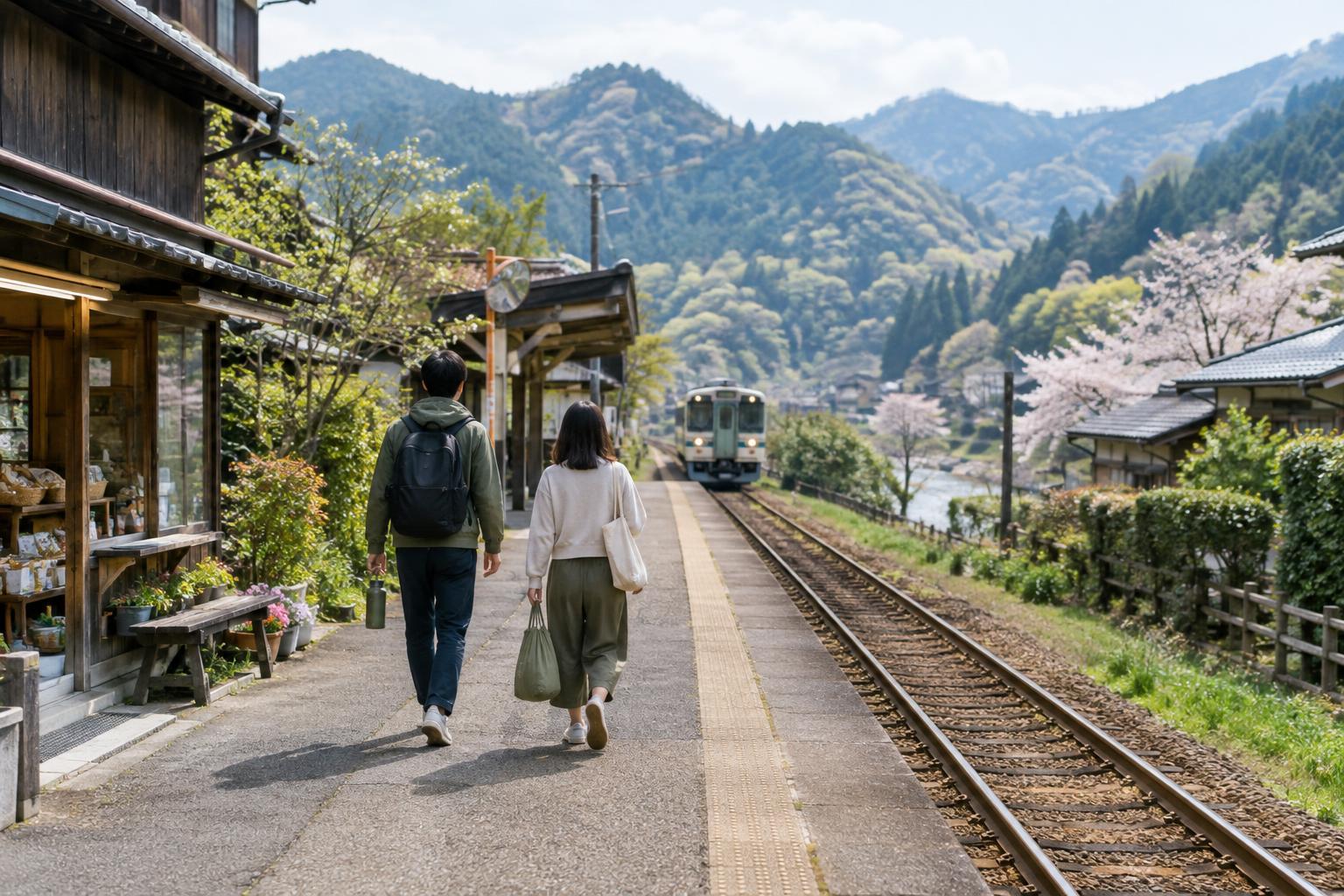
Begin with fewer stops, not a longer checklist
A lighter trip often begins before you leave home. It can be tempting to fit several distant cities into a short visit, especially when trains make travel feel easy. But each transfer takes time and energy, and a packed schedule can leave little room to notice where you are. Consider choosing one region as a base and adding nearby day trips rather than moving accommodation every night.
Slowing down does not mean seeing less of Japan. An extra morning in one town might let you visit a neighborhood market, return to a small café or walk a route you would otherwise pass through in a hurry. Build in unplanned time, and group sights by area so you are not crossing a city repeatedly. If a place is especially busy, a quieter nearby destination may offer a more relaxed visit without treating the town as a substitute for something famous.
Choose routes for the whole journey
When comparing ways to travel between places, look beyond the headline journey time. A train may take you from one city center to another, while a flight can also involve airport transfers and waiting. For some routes, rail or a bus is a practical alternative to flying; for others, distance, accessibility or available time may change the decision. The useful habit is to compare the full route rather than assume one mode always fits.
Within a destination, walking and public transport can make it easier to travel at the pace of everyday life. Check the last service before an evening outing, and remember that rural areas may have infrequent connections. If you need a car for part of a trip, plan several nearby visits together rather than making repeated long drives. A sensible route is one you can actually enjoy, not one that leaves you exhausted.
Spend in ways that connect you to a place
Local spending can support the people who make a destination worth visiting. Look for independent cafés, family-run lodgings, neighborhood shops and workshops where craftspeople explain their work. Buying directly from a maker can turn a souvenir into a reminder of an encounter, while paying a fair price respects the time and skill behind it. You do not need to buy something at every stop; an unhurried meal or a paid workshop can be just as meaningful.
Avoid assuming that every small business is automatically the most sustainable choice, or that every large one is careless. Instead, pay attention to what you can observe: useful products rather than disposable novelty, clear information about materials, and services that fit the community around them. Follow a shop’s photography rules, keep entrances clear and be considerate in residential streets. Supporting a place also means making it pleasant for residents to share with visitors.
Make low-waste habits easy to keep
A small daily kit can prevent many single-use purchases: a reusable bottle, a compact shopping bag and a pouch for wrappers until you find an appropriate place to dispose of them. Refill water where a refill point is available, and accept that you may occasionally need to buy a drink. The goal is a workable routine, not a perfect record.
Public bins may not be available when you need one, so plan to carry waste for a while. Follow posted sorting instructions rather than guessing, and never leave rubbish beside a full bin. When ordering food, take only the napkins, cutlery or condiments you will use, and decline extra packaging when that is practical. These small choices are easier to sustain when your bag has a designated spot for the things you carry.
Let care shape the pace of your visit
Your footprint includes more than transport and rubbish. It also includes the space you take up and the demands your visit places on others. Keep noise low near homes, respect signs and private property, and ask before photographing people or their work. At accommodation, use towels and room amenities thoughtfully, and follow the property’s guidance on cleaning and waste.
No itinerary will be impact-free. A missed connection, limited transport options or an accessibility need may call for a different choice than you planned. Treat a lighter footprint as a series of decisions you can revisit: stay a little longer, travel a little less between stops, buy with intention and leave shared spaces as you found them. That approach leaves room for both practical travel and genuine curiosity.