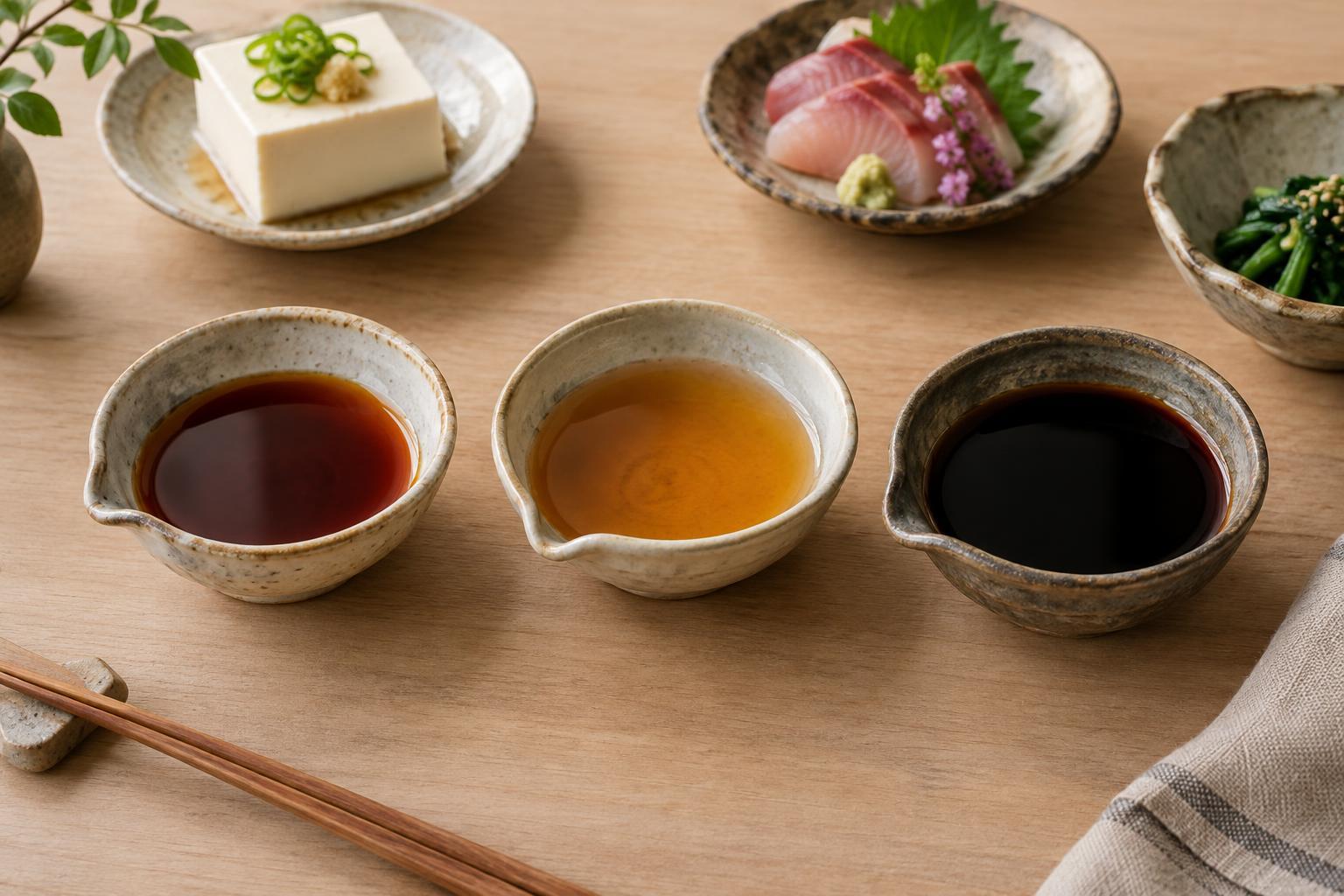
One ingredient, several distinct choices
Soy sauce, or shōyu, can seem like a single pantry staple until a recipe calls for a particular kind. In Japanese cooking, the choice can affect not only saltiness but also aroma, depth and the color of the finished dish. Koikuchi, usukuchi and tamari are three names worth knowing. They share a savory character, yet each brings a different balance to the table.
These names describe broad styles, not guarantees that every bottle will taste alike. Brewing methods and ingredients vary by maker, and products sold outside Japan may use the same labels in different ways. If a dish is new to you, taste a small amount of the sauce before adding it, then season gradually. That simple habit is more useful than treating any variety as a perfect one-for-one substitute.
Koikuchi: the versatile everyday sauce
Koikuchi is the dark-colored soy sauce many people picture when they think of Japanese shōyu. It is commonly made with soybeans and wheat, along with salt and water, and offers a balanced mix of savory depth, aroma and gentle sweetness. Its dark color can deepen a broth or glaze even when the quantity used is modest.
For a first Japanese soy sauce to keep at home, koikuchi is a flexible choice. It suits simmered vegetables, noodle dipping sauces, marinades and simple dressings. A little can also finish a dish at the table. Because it contributes both seasoning and color, add it in stages when preparing a pale soup or delicate vegetable dish. If a recipe says only “soy sauce” without further detail, koikuchi is often a practical starting point, though the intended style may depend on the dish.
Usukuchi: lighter color, not necessarily less salt
Usukuchi means “light mouth,” but the name refers chiefly to its lighter appearance and flavor profile, not to a promise of reduced sodium. It is often saltier than koikuchi. Its appeal is the way it seasons food while leaving ingredients’ colors more visible. In a clear broth, for example, it can provide savory structure without turning the liquid as dark as koikuchi would.
Try usukuchi when the appearance of pale tofu, seasonal vegetables or a light-colored broth matters to the dish. Its lighter color does not mean it should be poured freely: begin with less than you think you need and taste before adding more. If you substitute koikuchi, the food may turn darker and taste different, but it can still be delicious. To manage the change, use a small amount at first and adjust the rest of the seasoning after tasting.
Tamari: a fuller soy-forward character
Tamari has historical ties to the liquid produced during miso making. Today, tamari is also brewed and sold as its own soy sauce style. It is generally associated with a rich, rounded soy flavor and is often made with little or no wheat, although recipes differ. Compared with koikuchi, some tamari tastes less wheat-forward and feels especially substantial in a dipping sauce or glaze.
That depth makes tamari appealing alongside grilled foods, rice dishes and vegetables that can stand up to a strong savory accent. It can replace koikuchi in many home recipes, but expect the result to change: a sauce may taste rounder or look darker. Tamari is sometimes presented as a gluten-free option, but the name alone is not enough to establish that. If avoiding gluten is important, check the specific bottle’s ingredients and labeling rather than assuming all tamari is suitable.
Choosing a bottle and using it well
Start with the cooking you do most often. Choose koikuchi for an adaptable all-purpose bottle, usukuchi if you regularly make light-colored soups or gently seasoned dishes, and tamari if you want a soy-forward option for dipping and finishing. You do not need all three to cook thoughtfully. Learning the character of one bottle—and noticing what it does to a familiar dish—will teach you more than collecting varieties you rarely use.
When comparing bottles, look at the ingredient list and any storage guidance on the label. Different products may have different levels of salt and sweetness, so tasting remains the best guide to how much to add. Store an opened bottle as its maker recommends, with the cap closed to help preserve its aroma.
The most useful distinction is not that one style is “better” than another. Koikuchi brings balance and color, usukuchi offers seasoning with a lighter visual touch, and tamari can bring pronounced soy depth. Choose according to the food in front of you, then let a small taste guide the final adjustment.