What tsuyu means, and when to expect it
Tsuyu is Japan’s early-summer rainy season. For much of the country, it generally begins around June and eases around July, though the timing varies from year to year. It tends to arrive earlier in Okinawa and later farther north. Hokkaido usually does not experience a rainy season as clearly defined as the one in many other parts of Japan.
The season is associated with a weather front that can linger near the archipelago. That does not mean rain falls without pause: a week might include showers, overcast afternoons and occasional bright breaks. Rather than treating tsuyu as a fixed calendar event, it is more useful to expect changeable conditions. Humidity can be as noticeable as the rain itself, even on days when the sky stays dry.
A different rhythm outdoors
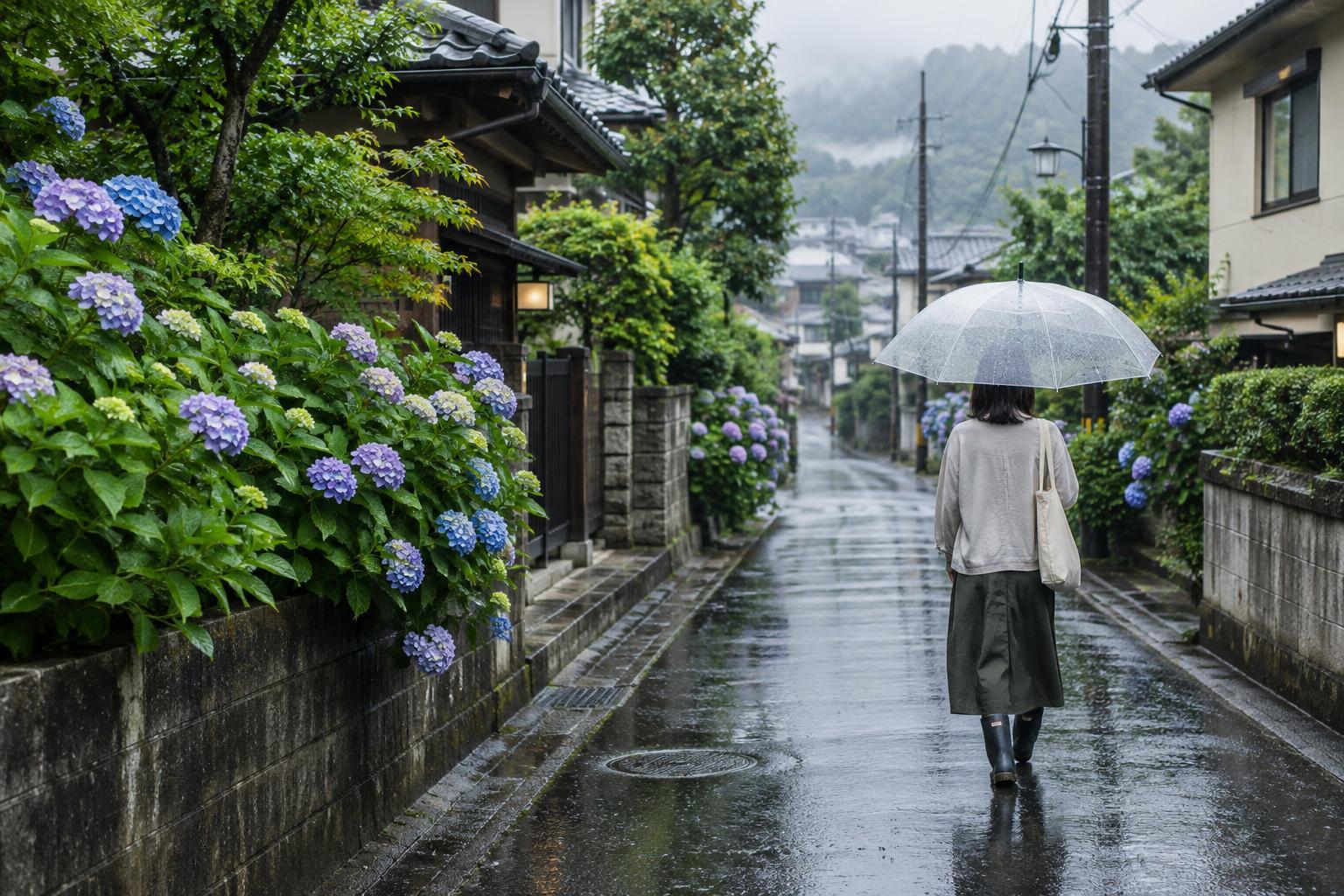
Rain changes the feel of familiar streets. Hydrangeas are often associated with tsuyu, their blooms adding color to gardens and neighborhood walks. Wet stone paths and darkened wood can be beautiful, but they may also be slippery. A slower pace makes sense, especially on steps, station entrances and narrow sidewalks shared with other pedestrians.
For an outing, a flexible plan is more comfortable than one that depends on clear skies. Keep an indoor option in mind, allow time to dry off between stops, and check the forecast close to departure. A compact umbrella is convenient to carry, while a sturdier one may feel better on a day with persistent rain. Neither solves every problem when wind picks up, so clothing and shoes that can tolerate a little water matter too.
The aim need not be to avoid the season altogether. A short walk between showers, followed by time in a café, gallery or covered shopping street, can offer a pleasant way to notice how a place feels in different weather.
Laundry, airflow and the humid home
The everyday challenge of tsuyu often begins indoors. Clothes and towels may dry more slowly, and items put away while still damp can develop an unpleasant smell. Many households adjust by doing smaller loads, leaving space between hanging garments and using a fan, ventilator or dehumidifying function where available. If you are staying somewhere unfamiliar, ask how its drying equipment works rather than assuming there will be an outdoor line or a tumble dryer.
Humidity also makes it worth paying attention to enclosed spaces. Let wet umbrellas, shoes and bags dry before storing them. Check closets, corners and other areas where air moves poorly, and follow the care instructions for delicate fabrics, paper and wood. A brief effort to improve airflow can be more helpful than masking a musty smell with fragrance. Because buildings and ventilation differ, the most useful routine is the one that keeps your own space dry without wasting energy.
Footwear and umbrella manners
On a rainy day, shoes need to be comfortable on wet pavement and easy to dry afterward. A spare pair of socks can make a long commute or sightseeing day more pleasant. At the entrance to a home or another space where shoes come off, pause to keep wet soles and dripping belongings away from clean floors. A small cloth for drying hands or wiping light splashes is useful, provided it can dry properly later.
Umbrellas also call for awareness of other people. Close yours before entering a crowded doorway, keep the wet canopy pointed down and take care not to brush it against someone nearby. Some venues provide umbrella stands or plastic covers; use what is offered and follow posted guidance. In a busy train or shop, holding a folded umbrella close to your body is usually more considerate than letting it drip into the shared space.
Making room for the season
Tsuyu can disrupt plans, especially if you expect each day to follow a clear-sky itinerary. It can also encourage a useful shift in attention: toward sheltered routes, the sound of rain from indoors, or the changing color of flowers along an ordinary street. That quieter perspective does not require romanticizing inconvenience or ignoring weather warnings. Heavy rain can create hazardous conditions, and local guidance should take priority when it does.
For residents and visitors alike, the simplest approach is to prepare without trying to control the weather. Leave a little extra travel time, keep dry essentials within reach, and give damp things a place to air out. With those habits in place, tsuyu becomes easier to navigate—not as an interruption to everyday life, but as one of the seasonal conditions that shape it.