Start with the food, not a rulebook
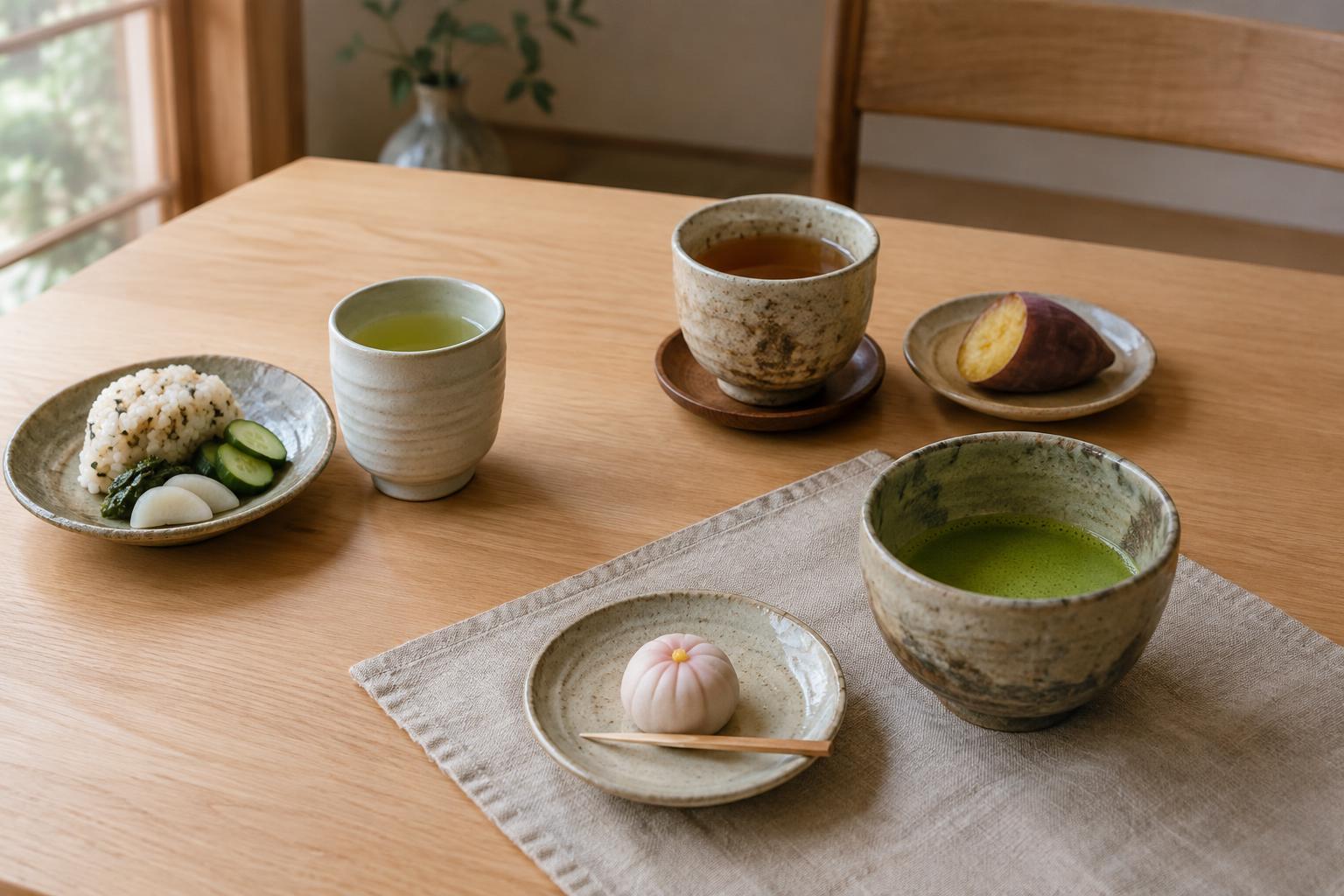
A cup of Japanese tea can refresh the palate, echo a flavor in a dish or provide a gentle contrast. The useful question is not “Which tea is correct?” but “What would make this food more enjoyable?” A light meal might welcome a clean, grassy tea; a toasted snack might feel at home beside a roasted one. Taste, brewing method and personal preference all matter more than a rigid pairing chart.
Sencha, hojicha and matcha make a helpful starting trio because they offer noticeably different experiences. Sencha is brewed from whole leaves and often tastes fresh and vegetal. Hojicha is roasted tea, typically mellow and nutty. Matcha is powdered green tea whisked into water, giving it a fuller texture and concentrated flavor. Individual products vary, so let these descriptions guide your first sip rather than define what every cup must taste like.
Sencha: a fresh counterpoint to savory food
Sencha’s bright character can be especially pleasant with rice, vegetables, fish or a simple lunch. Its freshness can lift a meal that includes oil or a salty seasoning without adding another strong flavor to the plate. With delicate food, try a softer brew so the tea does not overwhelm it. With a more assertive dish, a slightly stronger cup may hold its own.
Brewing has a large effect on the pairing. Water that is too hot, or leaves left to steep too long, may make some sencha taste sharper and more astringent than you intended. If the first cup competes with dinner, try cooler water or a shorter infusion before deciding the tea is a poor match. Later infusions from the same leaves may also taste different, making a small pot enjoyable across a meal.
For a sweet pairing, consider sencha alongside a mildly sweet rice cracker or a restrained confection. Its savory, green notes can keep sweetness from feeling one-dimensional. A very bitter cup, however, may make a delicate sweet taste faint; balance the strength of the brew to the food.
Hojicha: warmth for roasted and comforting flavors
Hojicha’s roasted aroma makes it an approachable companion to foods with toasted, caramelized or earthy notes. Think grilled rice balls, mushrooms, sesame-flavored snacks or a baked dessert. It can also be satisfying after a meal: the aroma adds a sense of warmth even when the food itself is simple. Served chilled, hojicha offers a different kind of refreshment without losing its roasted character.
The tea is often described as gentle, but that does not mean every hojicha is identical. Its flavor depends in part on the leaves used and how heavily they were roasted. Lighter versions can retain some green-tea character, while darker ones may taste more deeply toasted. If a dessert is subtle, start with a lighter brew; if it is rich, a more pronounced roast may be welcome.
Hojicha is sometimes chosen by people seeking less caffeine, but roasting alone does not guarantee a particular caffeine level. If caffeine matters to you, do not rely on the name of the tea as a precise measure. For food pairing, its most dependable distinction is its aroma.
Matcha: a focused sip beside sweets
Because matcha is whisked from finely ground tea rather than steeped and removed, it feels different from a clear cup of brewed tea. It can be creamy in texture, with green, savory and pleasantly bitter notes. That intensity makes a small serving satisfying beside a sweet treat. A confection with a straightforward sweetness can soften matcha’s bitterness while leaving its flavor easy to notice.
Matcha also works with food beyond sweets, though it is worth giving it some space on the table. Alongside a lightly seasoned snack, it can become the main flavor of the pause between bites. With a highly spiced or richly sauced dish, its subtleties may be harder to appreciate. If you enjoy that contrast, there is no reason to avoid it; simply expect a different experience from a quiet tea-and-sweet pairing.
Prepare matcha to suit how you plan to drink it. Sifting the powder can help prevent clumps, and whisking it thoroughly creates a smoother cup. If it tastes too intense, adjust the amount of powder or water before assuming matcha is not for you.
Build a pairing habit of your own
An easy comparison begins with one familiar food, such as a plain rice cracker. Taste it with sencha, then hojicha, then matcha on separate occasions or in small servings. Notice what changes: Does the tea clear the palate, reinforce a toasted flavor or make the snack seem sweeter? There is no need to find a winner. The exercise simply gives you a vocabulary for your preferences.
When choosing tea for guests, consider the pace of the meal as well as the menu. Brewed sencha can accompany several bites and infusions; hojicha offers a welcoming roasted aroma; matcha invites a brief, attentive pause. Serve water too, and allow people to choose what tastes good to them. Thoughtful tea pairing is less about displaying expertise than about making room to notice both the food and the cup.