Start with the clay, not the color
In everyday English, “pottery” can mean almost anything made from fired clay, including porcelain. When people contrast Japanese pottery with porcelain, however, they usually mean earthenware or stoneware on one side and porcelain on the other. Japanese terms can help: tōki generally refers to pottery, while jiki refers to porcelain. These are useful distinctions, but an individual object may still be hard to classify by sight alone.
Pottery clays often contain minerals that give the fired body a warm, earthy color and a noticeable grain. A maker may leave part of that clay exposed, inviting you to notice its texture. Porcelain is typically made from a more refined, pale clay mixture. Once fired, its body is usually denser and less porous. Neither material is inherently more beautiful or more authentically Japanese: each offers different possibilities for shape, surface and use.
What happens in the kiln
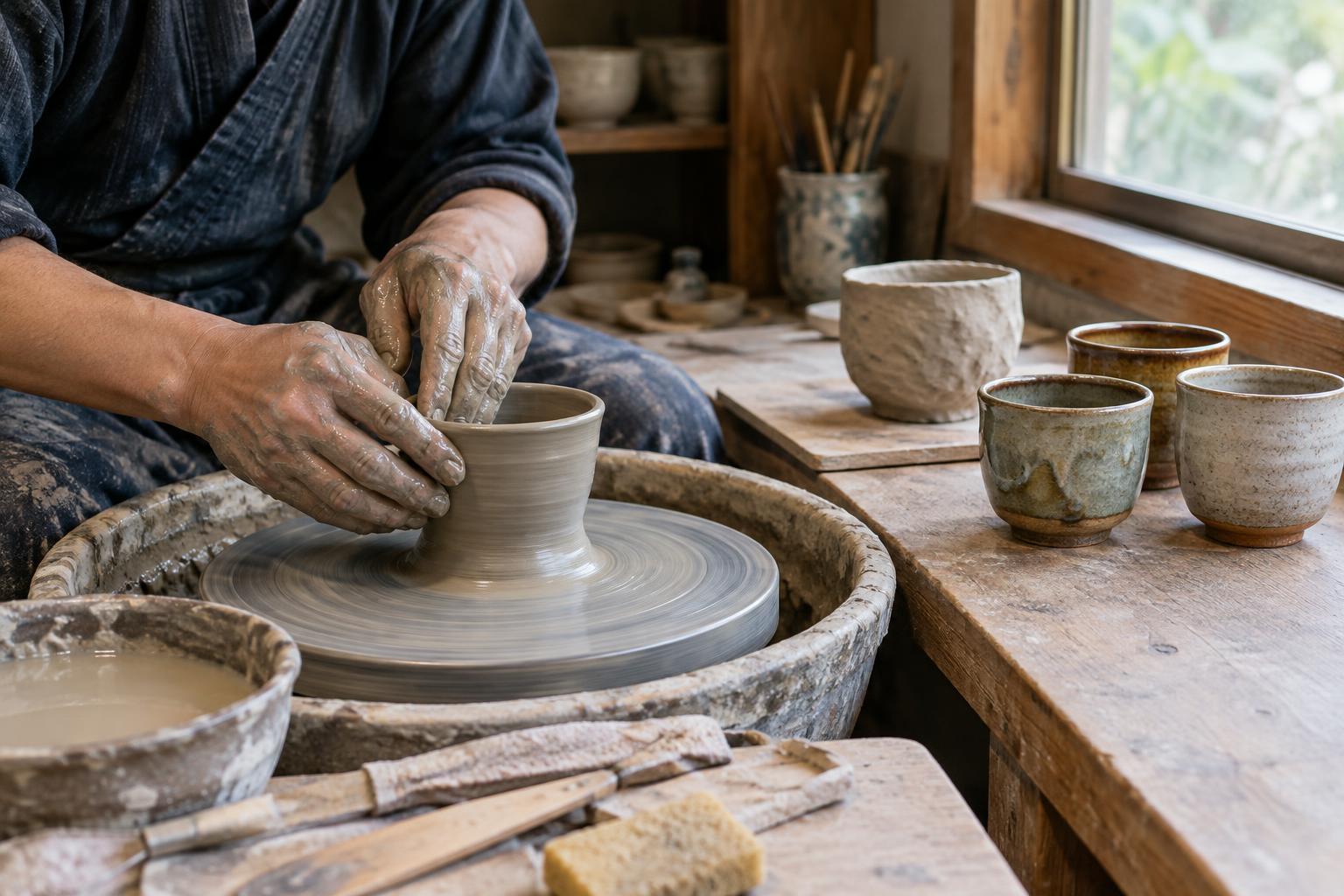
Firing turns a shaped clay object into durable ceramic, but the result depends on the clay, glaze, temperature and kiln conditions. Earthenware is generally fired at a lower temperature and remains relatively porous unless a suitable glaze covers it. Stoneware is fired hotter and can become dense and strong. Porcelain also requires a high firing temperature; its refined body can become hard, compact and, when thin enough, faintly translucent.
Heat alone does not determine appearance. A kiln’s atmosphere, the placement of a piece and the way heat moves around it can influence color and glaze. Some Japanese pottery traditions make room for variation from one firing to the next, while porcelain production can emphasize a crisp, controlled surface. Those are tendencies, not rules. Potters can pursue precision in stoneware, and porcelain can show lively, unexpected effects.
Read the surface with your eyes and hands
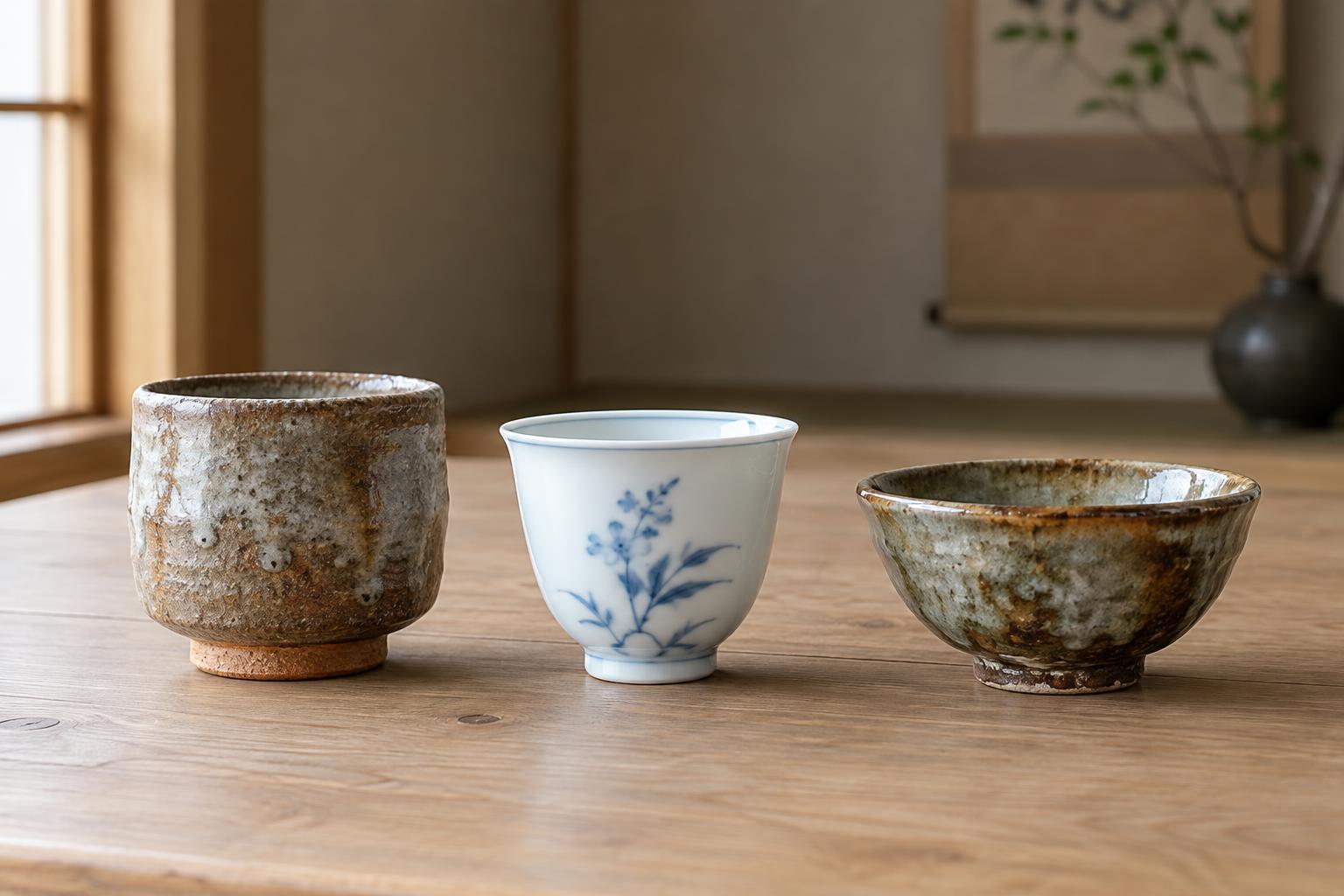
A simple way to explore a ceramic piece is to look at its unglazed foot ring, if it has one. A coarse or sandy foot may suggest a pottery body; a fine, pale foot may suggest porcelain. Then notice how the walls meet the rim. Pottery can have a soft-looking thickness and a tactile edge, while porcelain can support thin, sharply defined forms. Glaze and finishing can blur these clues, so treat them as observations rather than a test.
Finishes offer another way into the maker’s choices. Ash glazes, brushed slips and intentionally unglazed areas can draw attention to the underlying clay. A glossy white porcelain surface may serve as a clear ground for blue decoration or let the form itself take center stage. Both pottery and porcelain may be painted, carved, glazed or left partly bare. Rather than asking which finish is better, ask what it helps you notice: color, touch, silhouette or the mark of a hand.
How the differences feel in daily use
Imagine choosing a tea cup. A stoneware cup with an unglazed patch may feel warm and textured in the hand. A porcelain cup may feel smooth, light for its size and cool at first touch. These impressions are not guaranteed: thickness and shape matter as much as material. The same curiosity works for bowls and plates. Notice how the rim meets your lips, whether the base sits steadily and how the surface frames food.
Care depends on the particular object, not just its category. Porous clay or a crackled glaze may absorb moisture or stains, while a well-glazed stoneware or porcelain piece may be easier to wipe clean. If you are buying handmade tableware, ask the maker or seller whether it is intended for food, dishwasher use or sudden temperature changes. When that information is unavailable, gentle hand washing and avoiding abrupt shifts between hot and cold are cautious choices.
Appreciate the piece before the label
Japanese ceramics encompass many regional and individual approaches; one word such as “rustic” cannot describe all pottery, just as “delicate” cannot describe all porcelain. A useful habit is to compare pieces doing the same job. Set two rice bowls side by side and consider their weight, foot, rim, glaze and balance. You may find that a quiet porcelain bowl feels comforting, while a boldly textured pottery bowl feels formal in its own way.
Labels are helpful when they explain materials and techniques, but direct attention is just as valuable. Look for what the maker chose to reveal and what they chose to refine. The difference between pottery and porcelain then becomes more than a matter of definitions: it becomes a way to understand how clay, fire and finishing shape an object you can live with.