Preparing a welcome for the new year
In Japan, the New Year is often treated as more than a change of calendar. Cleaning the home, preparing special foods and putting up decorations can mark a fresh start. Traditional decorations also express a welcome to toshigami, a New Year deity associated with blessings for the household. This helps explain why some are placed at entrances while others are displayed indoors.
Kadomatsu, shimekazari and kagami mochi are three of the best-known examples. They are not interchangeable: each has its own form and usual place in the home. Materials, display dates and meanings can vary by region and family, and many people choose simpler versions or do not display them at all. Understanding their basic roles offers a way to notice the intention behind them without treating one arrangement as the only correct one.
Kadomatsu: a greeting at the entrance
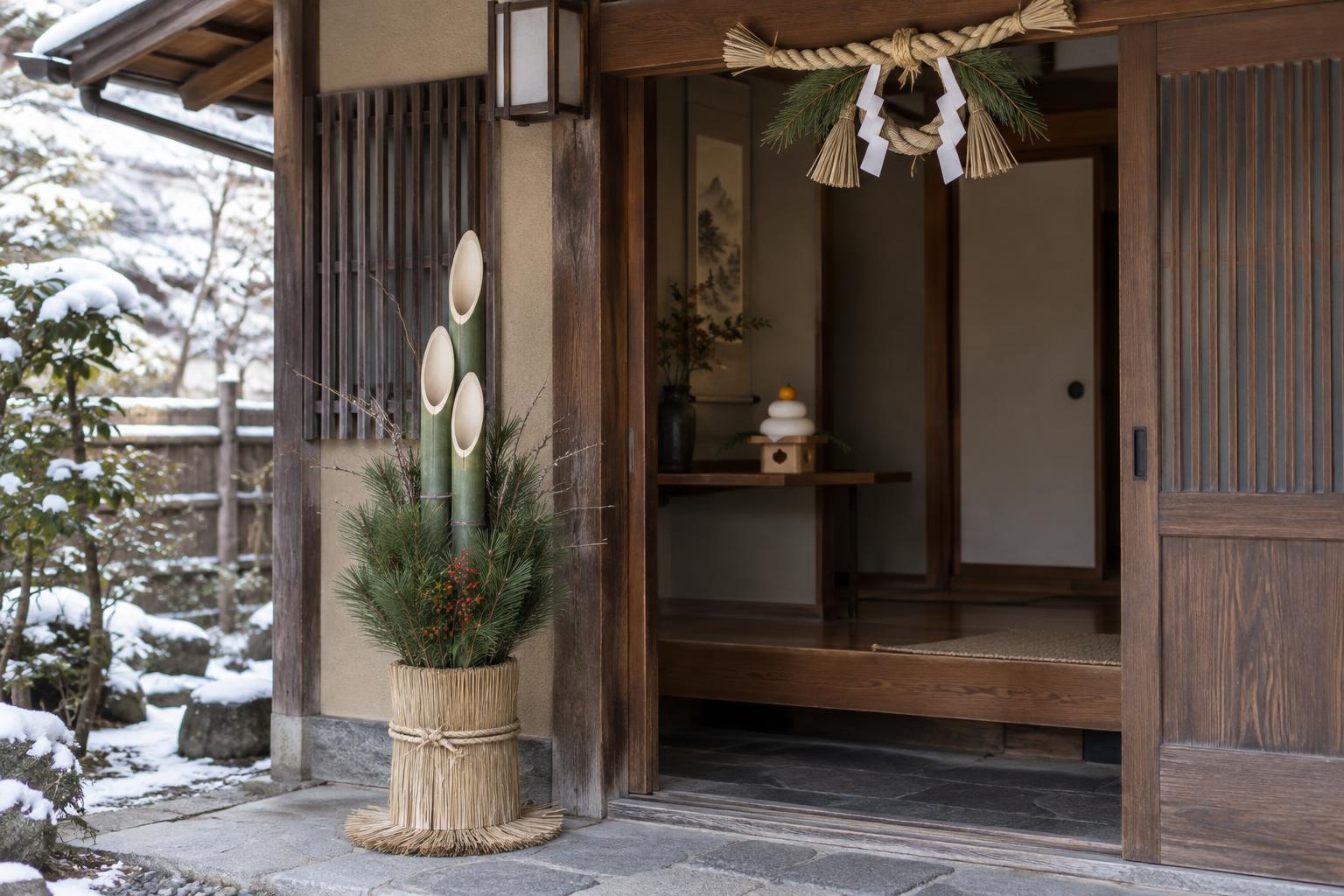
A kadomatsu is a New Year arrangement placed near an entrance, often as a pair. Pine is central to its name and appearance; bamboo and other plants may also be included. Pine stays green through winter, making it a fitting image of endurance and vitality. Upright bamboo lends a sense of growth. Together, the plants create a visible greeting at the threshold and are traditionally associated with welcoming toshigami.
Kadomatsu can be large, elaborate displays outside businesses or compact arrangements suited to a small home. Designs differ, so a familiar image of three cut bamboo stalks is only one possibility. If you are making or buying a small arrangement, consider where it can stand safely without obstructing a doorway. The point is not to reproduce the grandest version, but to understand why the entrance is such a meaningful place for it.
Shimekazari: marking a special space
Shimekazari is a decorative form of shimenawa, a rope used to mark a space as sacred or set apart. Hung at a doorway for the New Year, it signals that the home has been prepared to receive the season and its blessings. You may see folded paper strips called shide, greenery or a citrus fruit such as daidai incorporated into a design. These details are not universal, and their arrangement can change the overall look considerably.
Compared with kadomatsu, shimekazari often takes up little space, which may make it easier to recognize on an apartment door. Its significance, however, is not simply that of a festive wreath. The rope’s association with a boundary gives the decoration its distinctive role. If you encounter one, take a moment to notice its materials and placement rather than assuming every ornament has a single fixed meaning.
Kagami mochi: an offering within the home
Kagami mochi is usually made from two round rice cakes stacked one above the other, sometimes topped with a citrus fruit. It is displayed indoors as a New Year offering. The word kagami means “mirror”; the round shape is commonly linked to the form of an old-style mirror. Unlike the entrance decorations, kagami mochi brings the seasonal observance into an interior space, where it can serve as a quiet focal point.
After the display period, households may observe kagami biraki, the custom of opening the mochi and eating it, often in a warm dish. Practices and timing vary, and commercially made displays may contain packaged mochi rather than exposed rice cakes. If you intend to eat yours, follow its storage and preparation guidance. The movement from display to shared food is part of what makes kagami mochi feel connected to everyday life as well as ceremony.
Appreciating the custom without a rigid checklist
Together, the three decorations trace a path from outside to inside: kadomatsu welcomes at the entrance, shimekazari marks the doorway and kagami mochi rests within the home. That pattern is a useful way to remember them, not a rule every home must follow. Space, budget, family habits and regional customs all shape what people display and when they put it away.
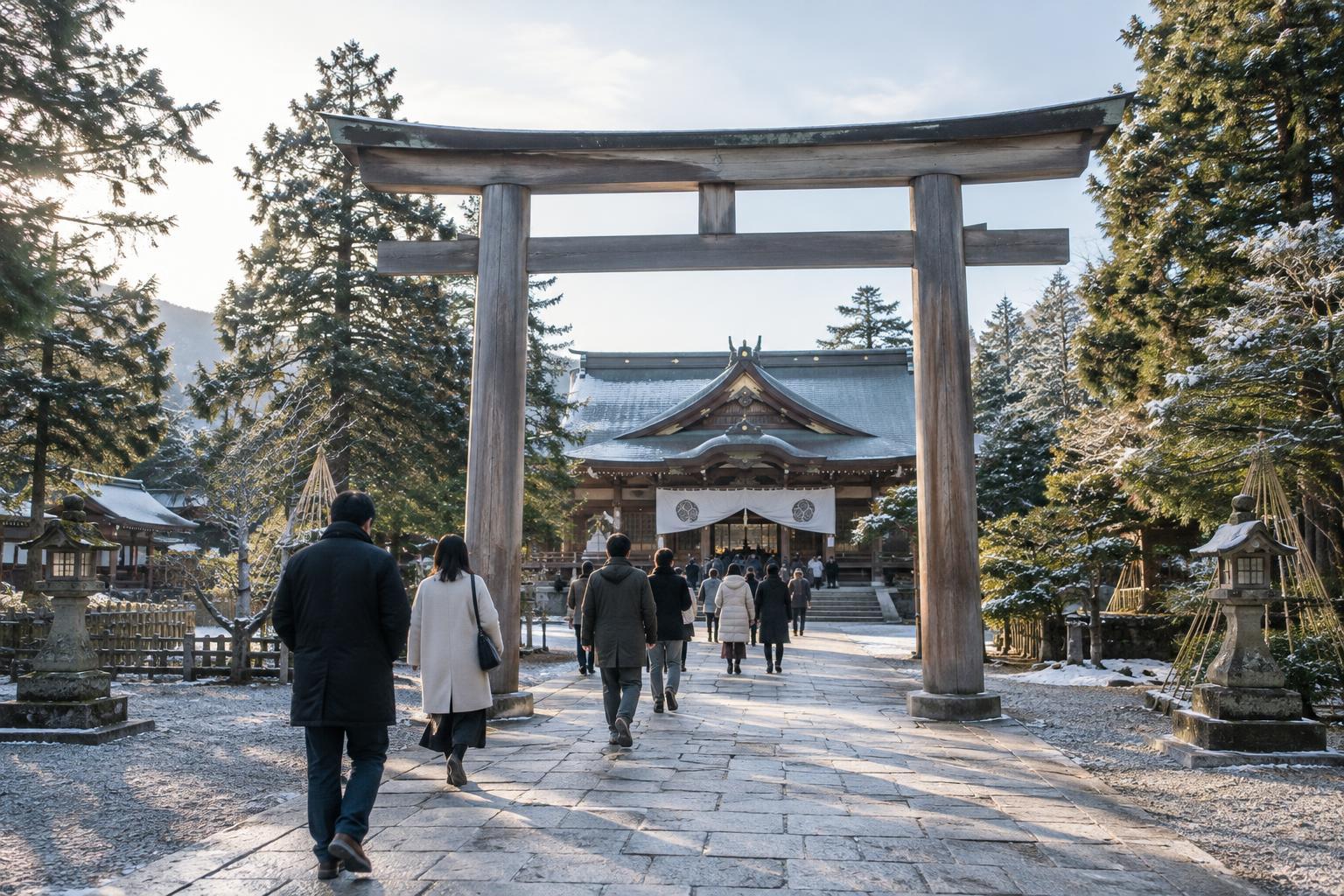
For a thoughtful approach of your own, start with one tradition that genuinely interests you. Learn what its materials signify, choose a suitable place for it and consider how you will remove or use it afterward. If you hope to take a decoration to a shrine for disposal, check whether that shrine accepts it; otherwise, follow local disposal guidance. Respect lies less in assembling a perfect set than in paying attention to the purpose behind each object.