Begin with the room you have
Japanese interiors are varied: a compact city apartment, a traditional house and a contemporary home will not look alike. Rather than trying to reproduce a particular room, borrow ideas that suit the space you already live in. Attention to daylight, useful empty space, adaptable furniture and the feel of everyday materials can guide small changes without requiring construction.
Start by watching how you use one room. Where do bags land when you come in? Which chair gets the best light? What needs to be within reach, and what could be put away? Rearranging what you own may make more difference than buying a new set of matching objects. Leave enough open floor for comfortable movement, but do not treat every visible possession as clutter. The aim is a room that supports your routines, not an empty room that is difficult to live in.
Use light and flexible boundaries
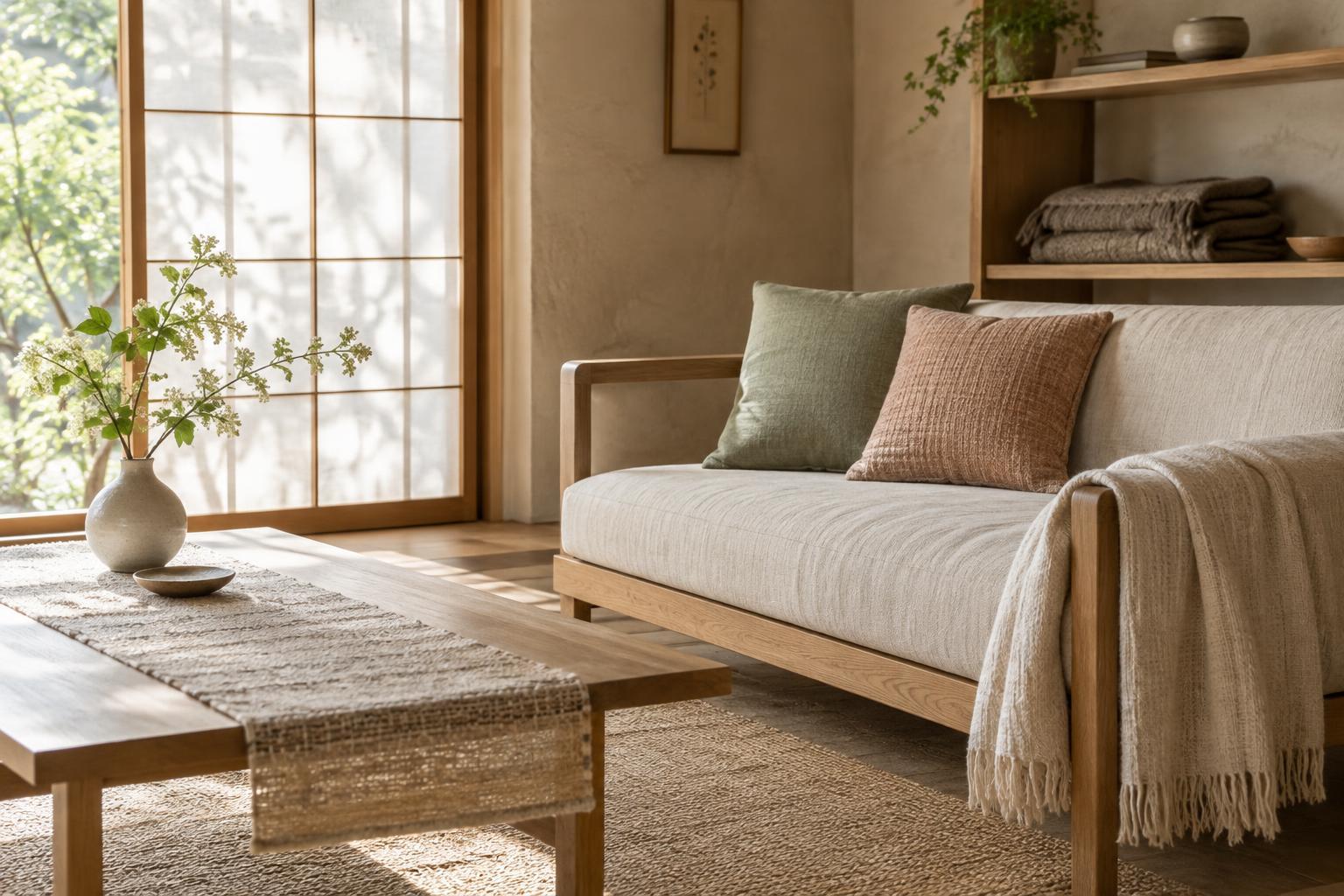
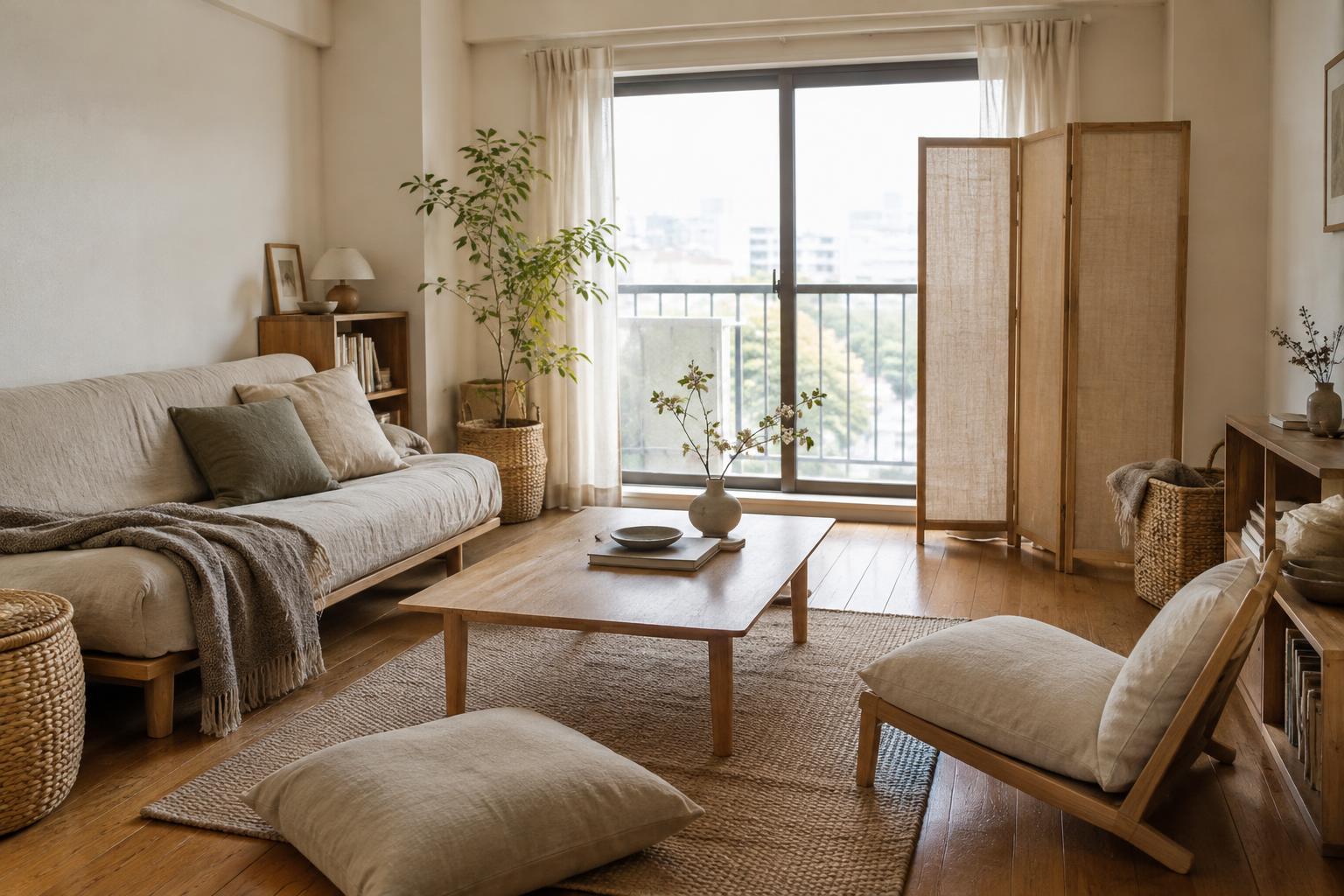
A sense of softness can come from how a room handles light. If privacy allows, keep the area immediately around a window clear. Lightweight curtains can diffuse harsh daylight; a freestanding folding screen can shield a work area or separate a sleeping space without altering a wall. A screen with a simple grid may recall the rhythm of shoji, but it need not imitate traditional paper panels to work well in a modern rental.
Before adding a screen, check that it stands securely and does not block a doorway, heater or needed ventilation. A floor lamp placed beside a reading chair can make an evening corner feel distinct without installing new lighting. Choose bulbs and shades for the tasks you actually do there. Soft light is pleasant, but a kitchen counter or desk still needs enough illumination to be useful.
Choose materials you can live with
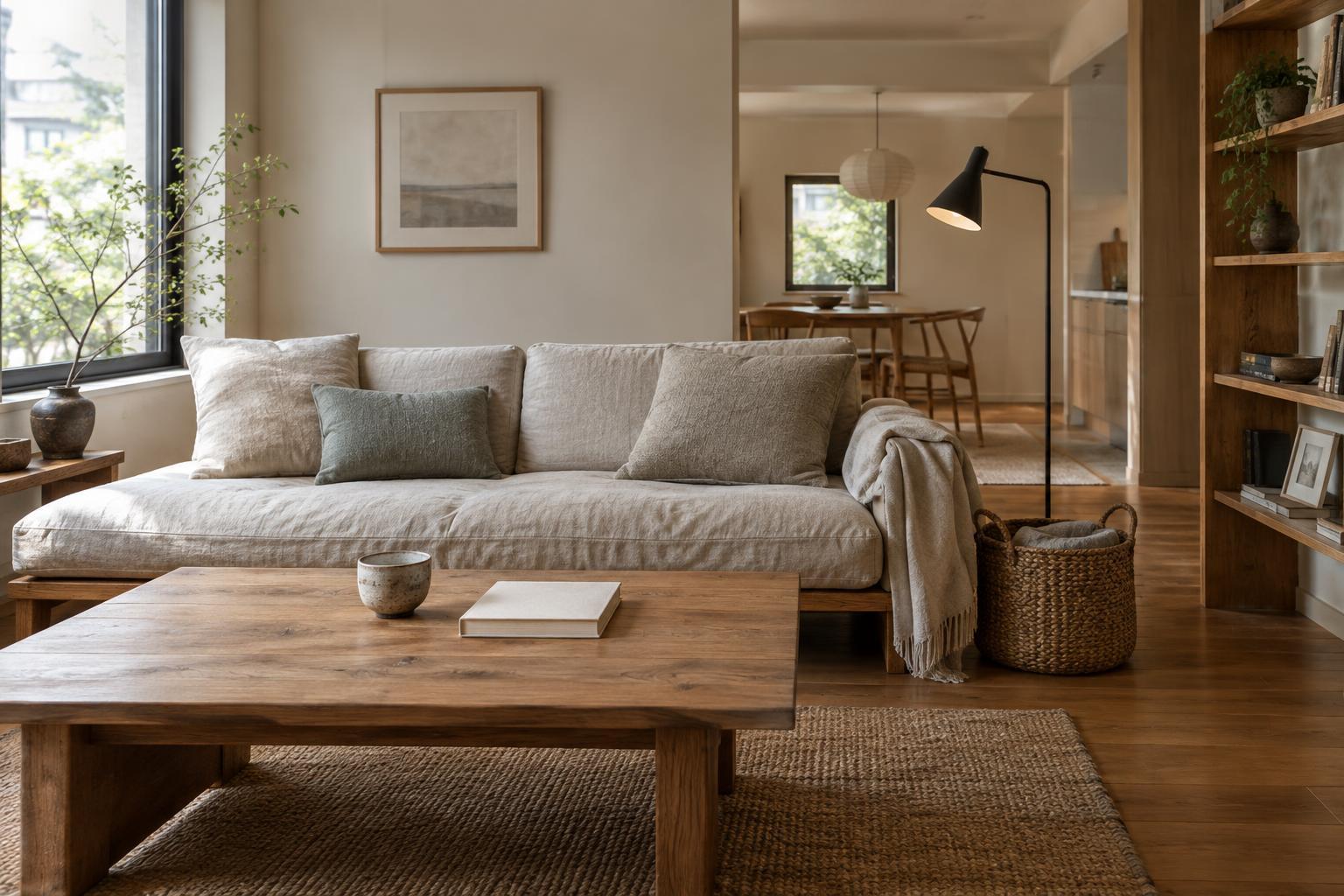
Wood, woven fibers, ceramics and plain fabrics can bring texture to a room without making it feel busy. In a rental, these materials are easiest to introduce through movable pieces: a small wooden side table, a cotton cushion cover, a woven basket or a ceramic vessel used every day. You do not need to replace everything at once. A few well-used items can establish a quiet visual thread among furniture you already own.
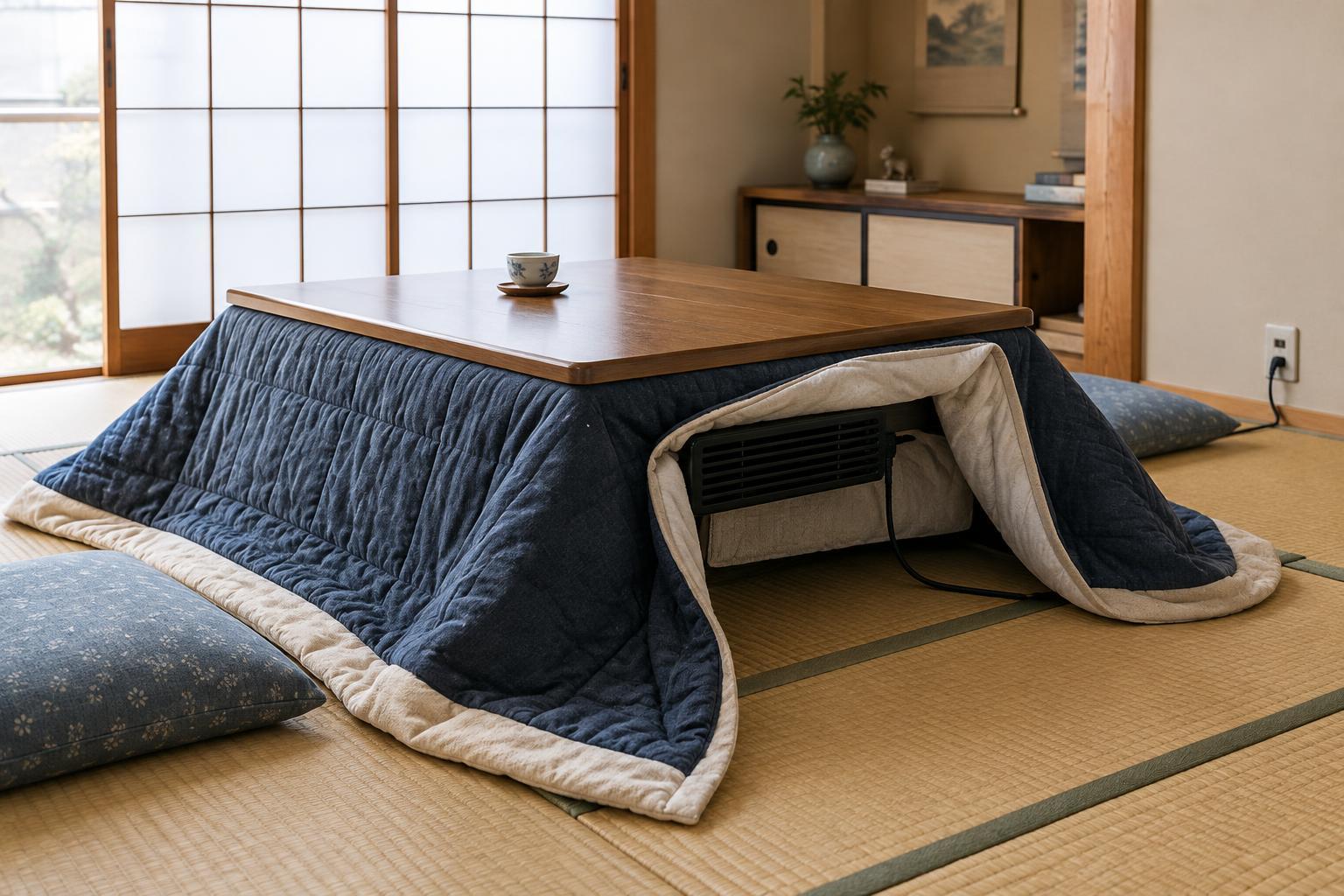
Floor seating can be inviting, but make it an option rather than an obligation. A washable cushion beside a low table may suit reading or tea; a supportive chair may suit a longer meal or a guest who cannot sit comfortably on the floor. If you want to try a rush or tatami-style mat, look for one intended for use over your existing flooring. Lift and air it as its maker recommends, especially where moisture could collect underneath.
Make storage part of the design
A calm-looking room often depends on practical storage more than on decoration. Give frequently used things an easy home: a tray for keys, a basket for throws, a box for chargers. Containers in related colors or materials can reduce visual noise, even when their contents are ordinary household necessities. Keep the items you reach for daily accessible rather than hiding them so thoroughly that tidying becomes a chore.
Furniture that serves more than one purpose is particularly useful in a small rental. A low shelf can hold books and mark the edge of a work area; a lidded box can store seasonal textiles and act as a side table if it is sturdy enough. Measure before buying, including the space needed to open drawers or walk around a piece. Check your lease before attaching shelves or hooks, and follow the weight limits and removal instructions for any approved temporary fittings.
Leave room for seasons and personal life
Japanese design is sometimes reduced to a fixed palette of beige, black and pale wood. A more adaptable idea is to notice small changes through the year. You might switch a cushion cover, display a branch in a stable vase, or bring out a favorite bowl for a particular season. These gestures allow a room to change without requiring new paint, fixtures or a collection of themed decorations.
Give a modest surface to something you enjoy looking at, whether that is a handmade object, a photograph or a plant suited to the available light. Leave space around it so it can be noticed. Above all, let the room reflect your habits and circumstances. The most useful lesson to take from Japanese interiors is not a checklist of objects to acquire, but the practice of making deliberate choices about how a home feels and functions.