What aizome means
Aizome means indigo dyeing in Japanese. The word can describe cloth dyed in many shades, from a misty pale blue to a deep blue that appears almost black. It does not, by itself, tell you which plant, vat method, or fabric was used. That matters when looking at contemporary work: makers may use traditional fermented materials, other indigo preparations, or a combination of methods suited to their workshop.
One material closely associated with Japanese indigo is sukumo, made by fermenting and processing harvested indigo leaves. Preparing it takes time, and getting color from it requires more than soaking fabric in blue liquid. Understanding that extra step makes the changes you see during dyeing—and the differences between finished pieces—much easier to appreciate.
Why the cloth changes color in the air
Indigo behaves differently from many dyes. In its familiar blue form, it does not simply dissolve in water and flow evenly into cloth. A working dye vat changes it into a soluble form that can enter the fibers. In a traditional sukumo vat, fermentation helps create the conditions for this change; the vat is also kept alkaline. Other vat methods achieve a similar usable state in different ways.
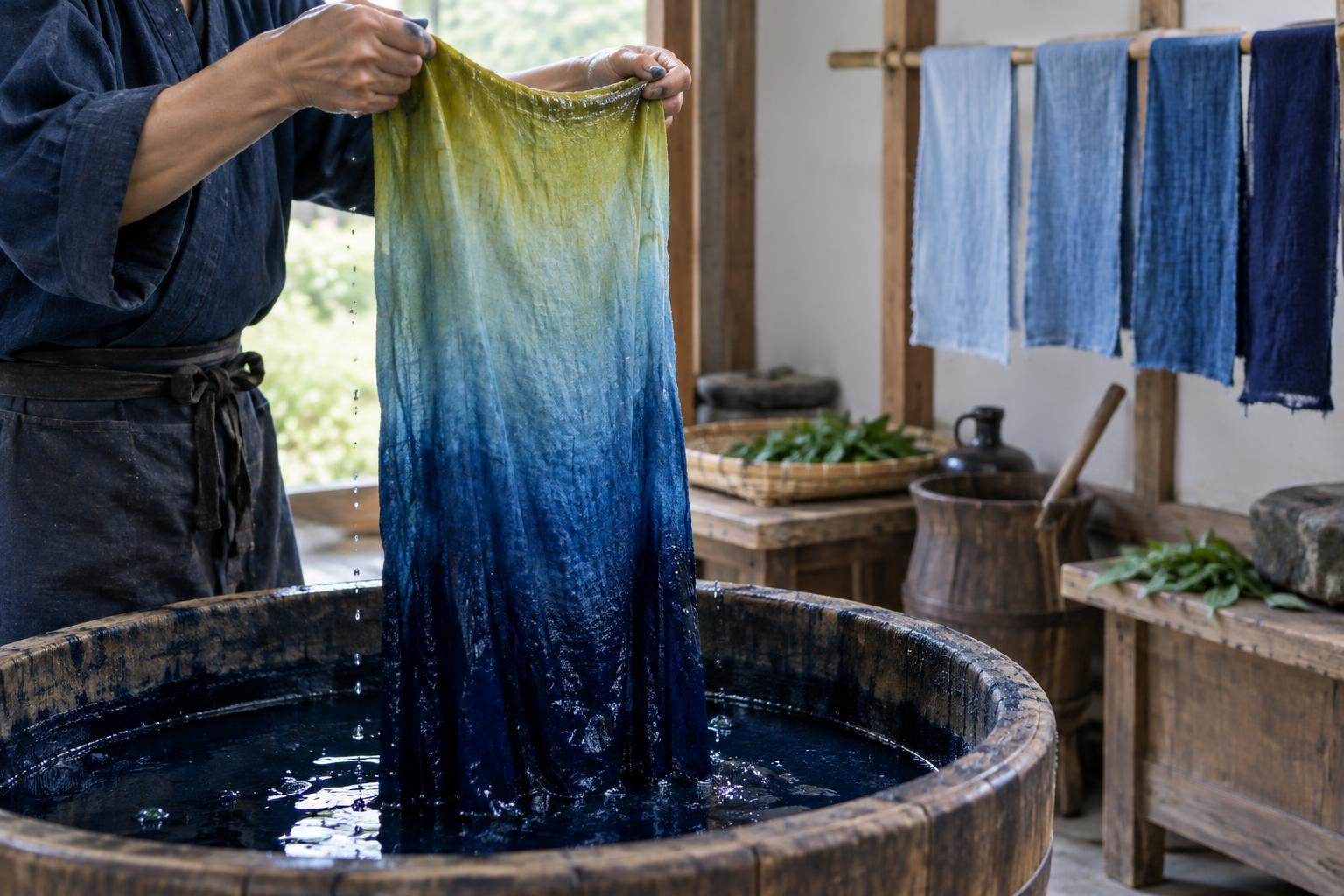
When cloth comes out of the vat, it may look yellowish or greenish rather than blue. Exposure to oxygen in the air turns the dye back toward its insoluble blue form. Watching that color emerge is one of the memorable parts of an aizome workshop. The dyer can dip the cloth again to build depth, allowing time for oxidation between dips. After dyeing, the cloth is rinsed and finished according to the maker’s process.
This is a useful outline, not a recipe for setting up a vat at home. A vat needs careful handling and attention to its materials and conditions. For a first encounter, a guided workshop offers a way to see the transformation while learning why the dyer watches the cloth, the liquid, and the timing so closely.
Why one aizome piece is lighter than another
The number of dips is an obvious influence on shade: repeated dipping can deepen the blue. Yet a pale piece is not necessarily unfinished, and a dark piece is not simply a pale one left in the vat longer. Makers choose their target color and adjust their approach along the way. The strength and condition of the vat, the length of each dip, and the time allowed for oxidation can all affect the result.
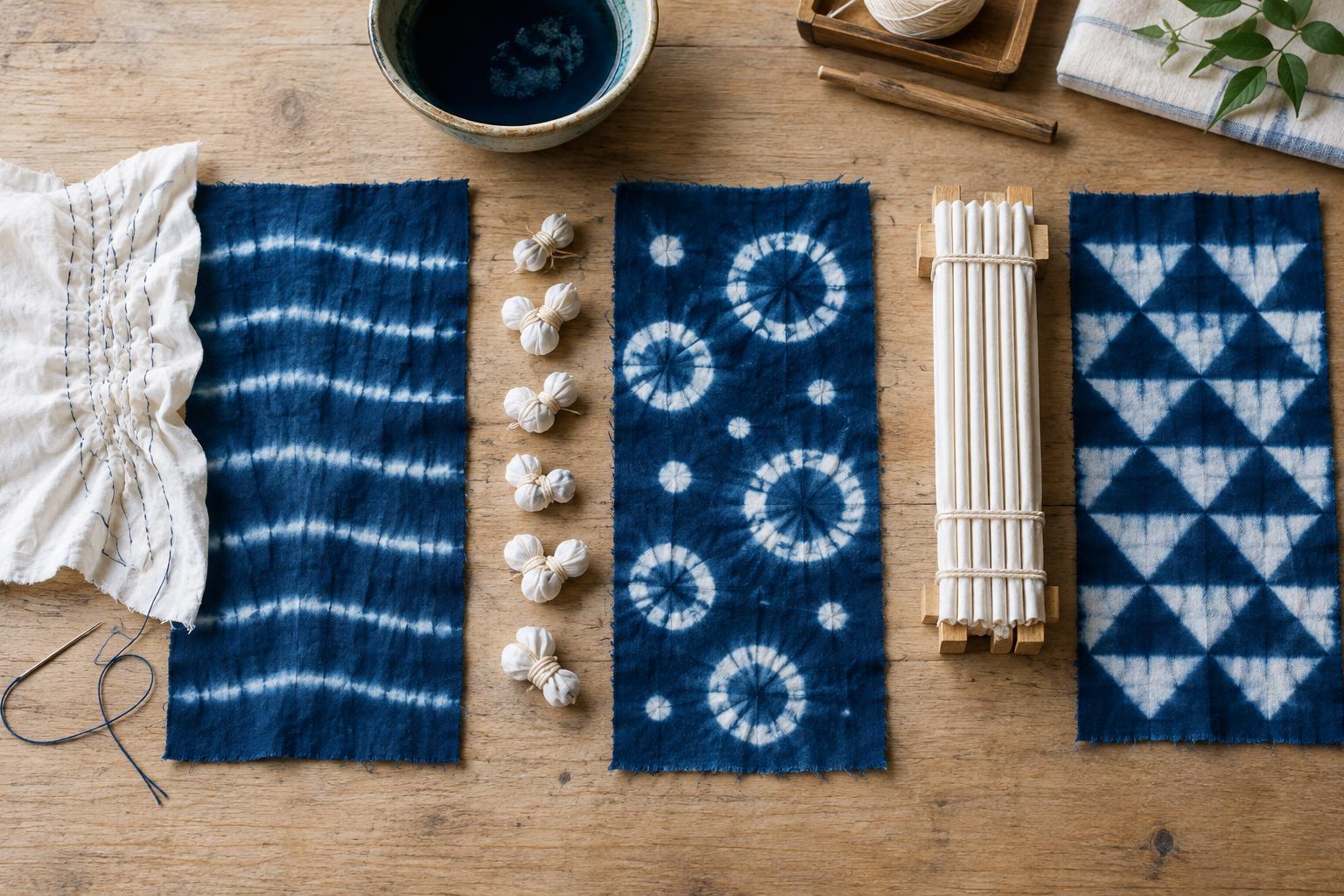
Fabric changes the picture, too. Cotton, linen, silk, and other fibers can take dye differently, while a tightly woven cloth may show color differently from a loose, textured one. Prior washing and preparation affect how readily the dye reaches the fibers. Even within one piece, folds, seams, and tied or stitched areas may limit contact with the vat. In resist-dyed work, these interruptions are intentional: they create white spaces, soft edges, or patterns against the blue.
Color is also something we perceive in context. A smooth surface may seem more even than a nubby one; a deep blue beside undyed cloth may look stronger than the same blue on its own. Slight variation can be part of the character of hand-dyed fabric, although it should not be treated as proof of any particular technique. If you are curious about a piece, asking the maker how it was dyed will tell you more than judging by shade alone.
Living with indigo-dyed cloth
When choosing an aizome textile, think first about how you will use it. A pale scarf may show a delicate range of blues, while a darker cushion cover may bring a quieter block of color into a room. Look closely at the weave, edges, and areas where color gathers or fades. These details can be as interesting as the overall shade.
Care needs vary with the fabric and the maker’s finishing process, so follow any instructions that come with the piece. As a general precaution, wash a new indigo-dyed textile separately at first, use a gentle approach, and avoid leaving it in strong sunlight for long periods. Some color transfer or gradual fading may occur with wear and washing, especially on darker items. If the textile will touch light upholstery or clothing, it is worth checking with the maker before use.
Aizome rewards attention rather than a search for one definitive Japanese blue. Its shades reflect choices made at the vat, the nature of the cloth, and the way a finished object is used over time. Knowing how the blue develops lets you notice those choices without expecting every indigo piece to look exactly alike.