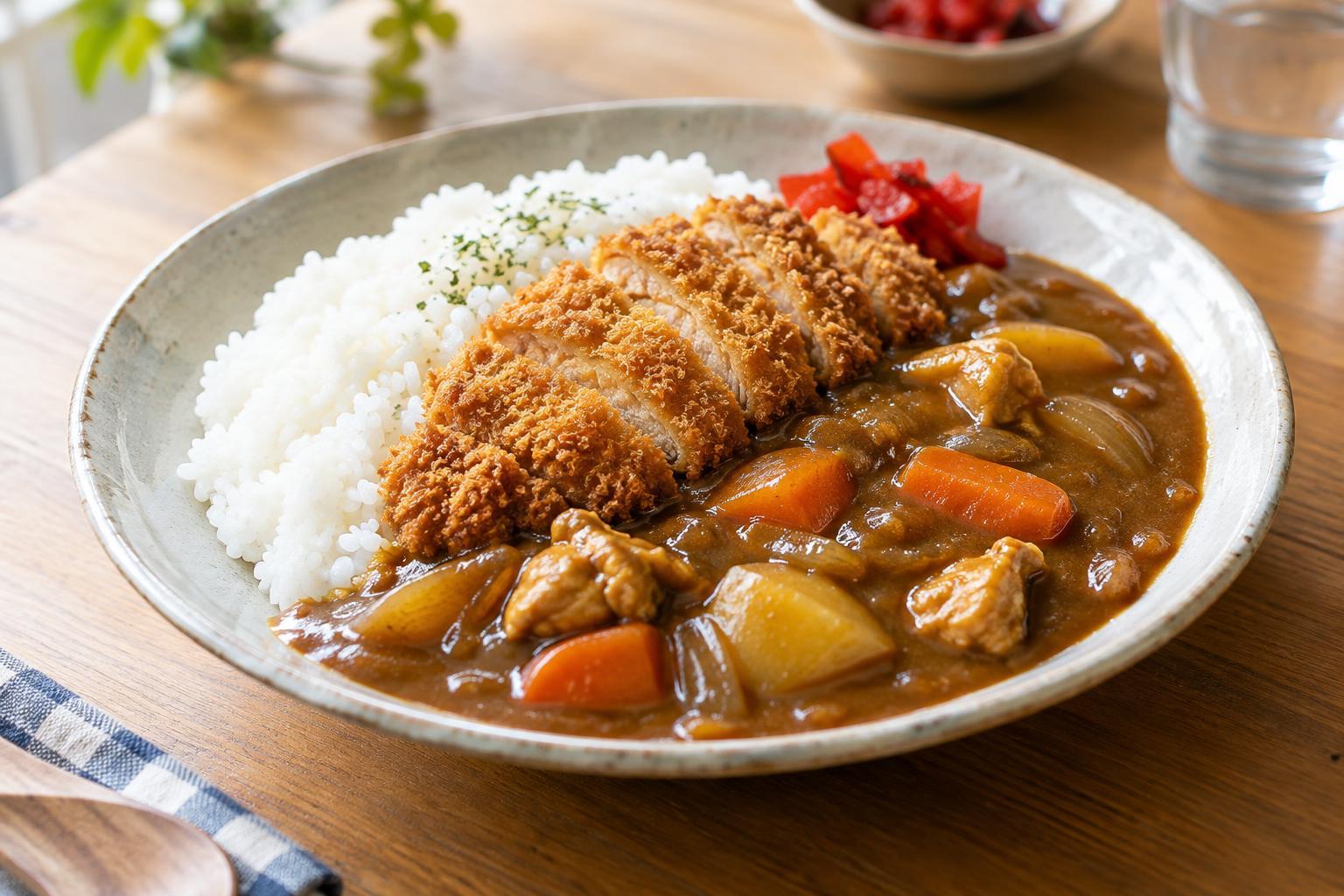
What makes a bowl of curry rice
Japanese curry rice, often called kare raisu, pairs steamed rice with a thick, gently spiced sauce. It is familiar home cooking rather than a dish with one fixed recipe. Onions, carrots and potatoes are common, while the protein might be beef, pork, chicken or none at all. A packaged curry roux makes the sauce approachable: it combines thickener, fat and seasonings in blocks that melt into the cooking liquid.
The pleasure of the dish often lies in contrast. Warm, fluffy rice catches the sauce, soft vegetables give it substance, and a topping can add something crisp, bright or creamy. Start with a straightforward pot of curry, then decide what the bowl needs just before serving. That is easier than trying to put every flavor and texture into the sauce itself.
Choose a roux and plan the pot
Roux blocks vary in sweetness, spice level, saltiness and thickness. A label marked mild may still taste warmly spiced, but it is usually a gentler place to start than a hot version. Check the package for serving size, suggested liquid amount and ingredients, especially if you need to avoid particular allergens or animal-derived ingredients. A vegetable curry is not necessarily vegetarian if the roux contains meat-based ingredients.
For a first batch, use the package directions as your guide and choose a small set of additions: onion, carrot, potato and a protein if you like. Cut firm vegetables into pieces that will cook at roughly the same pace. If you use tofu or delicate mushrooms, consider adding them later so they keep their shape. Plan the rice before you begin the sauce; having it ready to rest while the curry finishes makes serving simpler.
Build the sauce without rushing
Cook sliced onion in a little oil until softened, then add any meat and cook it as appropriate before pouring in the measured water. Add the carrots and potatoes and simmer until they are tender. If using a protein that needs thorough cooking, check that it is cooked through rather than judging only by the vegetables. Skim excess foam if you wish, but there is no need to make the liquid perfectly clear.
Turn the heat low or briefly take the pot off the burner before adding the roux. Break the blocks into smaller pieces and stir until they dissolve; this helps prevent dense lumps from settling on the bottom. Return the pot to a gentle simmer so the sauce thickens, stirring often enough to keep it from sticking. If it becomes too thick, add a little water at a time. If it seems thin, give it more time at a low simmer before adding anything else. Taste only after the roux has fully dissolved, since it supplies much of the seasoning.
Let rice and toppings do different jobs
Plain short-grain rice is a satisfying partner because its mild flavor balances the seasoned sauce, but use the rice you enjoy and can cook well. Serve the curry beside or partly over the rice rather than stirring everything together in the pot. That leaves room to control the ratio in each bite and helps any crisp topping stay crisp.
For freshness and crunch, try thinly sliced cabbage, cucumber or a small spoonful of Japanese-style pickles such as fukujinzuke, if available. For richness, add a cooked egg or a little cheese. A breaded cutlet makes a hearty version, while sautéed mushrooms add savoriness without much extra preparation. You do not need several toppings: one chosen for contrast is often more effective than a crowded plate. Serve crunchy items at the last moment and put strongly flavored pickles on the side so everyone can add their own.
Adapt the next batch
Once you know how your chosen roux tastes, adjust the vegetables and toppings rather than changing everything at once. Sweet potato or squash can make a sweeter curry; mushrooms bring a deeper savory note. Softer vegetables may need less simmering time than carrots and potatoes. If you want a looser sauce, use a little more water, but add it gradually so the seasoning does not become faint.
Curry can also be made ahead. Cool leftovers promptly, refrigerate them in a covered container and reheat thoroughly, stirring because the thick sauce can warm unevenly. Keep leftover rice refrigerated separately and reheat it thoroughly as well. A second bowl might need nothing more than fresh rice and a new topping: that small change can make a familiar pot of curry feel inviting again.