Understand the one-soup, three-dish pattern
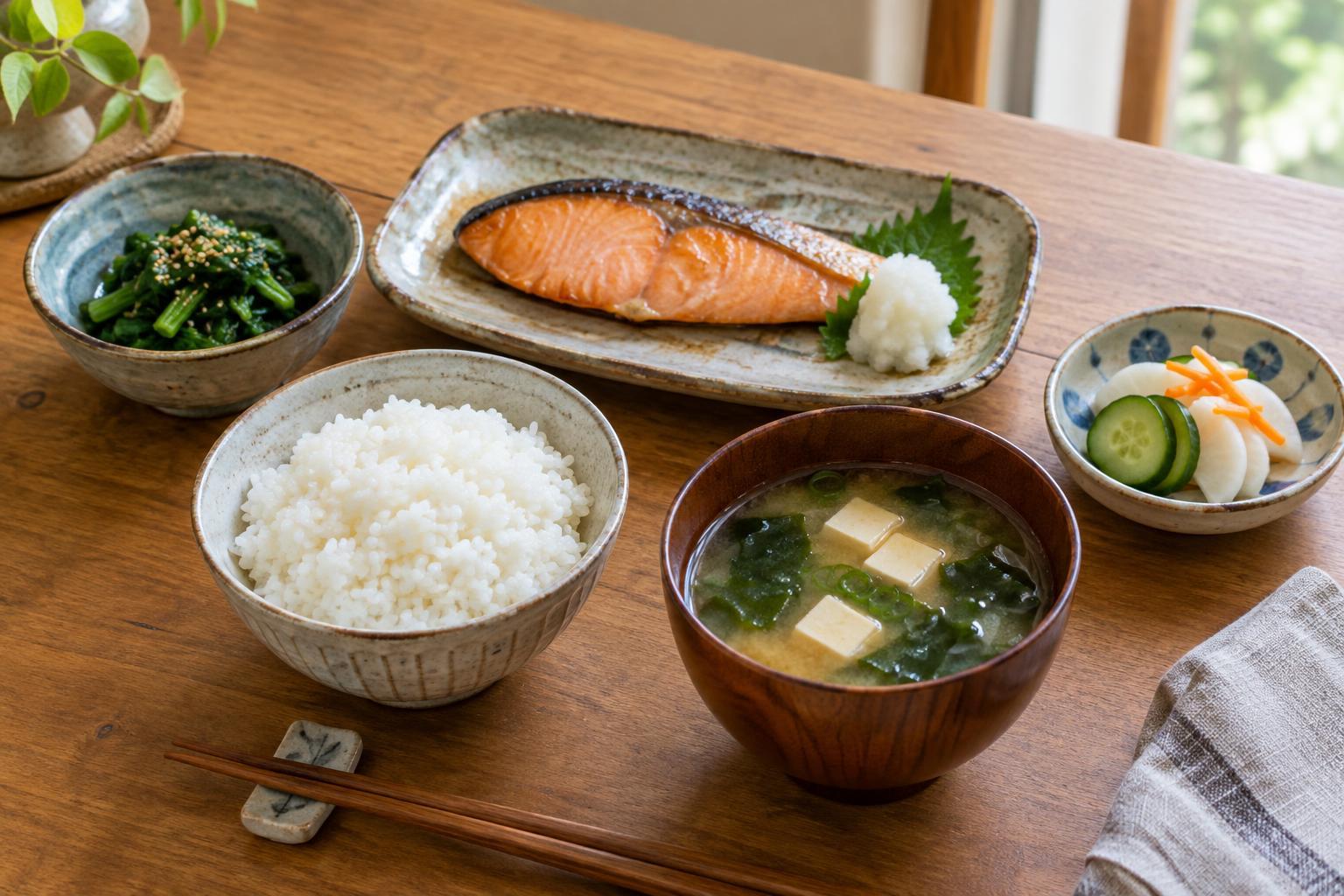
Ichiju-sansai means “one soup, three dishes.” In a familiar version of this Japanese meal pattern, rice accompanies a soup, a main dish, and two smaller side dishes. Pickles may also appear on the table, but they are generally treated as an accompaniment rather than one of the three dishes. Think of the pattern as a way to organize a meal, not a requirement to prepare an elaborate spread.
The main dish is often the most substantial item, such as fish, tofu, eggs, or meat. The sides offer contrast: perhaps a cooked vegetable and a small salad, or something simmered alongside something crisp. Soup brings warmth and moisture, while rice provides a simple foundation for the other flavors. There is room for personal preference, household habits, and whatever ingredients are available.
Start with rice and a simple soup
Cooked short-grain rice is a natural starting point, though the useful principle is to keep the staple fairly plain so it works with every dish. If you are making rice, start it first; it can rest while you finish the other components. Leftover rice, reheated thoroughly, can make this kind of meal more practical on a busy day.
For the soup, miso soup is one approachable choice. Make a light broth, add ingredients that need cooking, then dissolve miso into the hot liquid near the end rather than boiling it vigorously. Soft tofu and scallions make a quick combination; mushrooms and leafy greens are another. Dashi is often made with kombu and bonito flakes, but kombu with dried mushrooms offers an option without fish. Check packaged broths and miso if you need to avoid particular ingredients.
Keep the soup modest in size and ingredient count. It does not need to contain every vegetable in the kitchen. A few pieces of tofu or mushroom and one green ingredient can make a bowl that feels distinct from the three dishes beside it.
Choose a main dish, then build contrast
Choose your main dish before deciding on the sides. Broiled fish with a little salt, pan-seared tofu with ginger, or a simple omelet can each serve as the centerpiece. Consider how strongly you will season it: a savory glaze may be satisfying with plain vegetables, while a lightly seasoned main leaves room for a more flavorful side.
Next, choose two sides that differ from each other and from the main. If the main is warm and rich, try a cool cucumber salad and lightly cooked greens. If the main is mild tofu, a small dish of mushrooms simmered in soy-based broth and a crunchy carrot salad can add depth and texture. Vegetables are useful side-dish candidates, but the goal is variety rather than a strict formula for which ingredients belong where.
Different cooking methods help the meal feel varied without requiring complicated recipes. You might grill or pan-sear the main, blanch one vegetable, and dress another without cooking it. Small servings are enough: three dishes are easier to enjoy when each has a clear role rather than competing to be a second main.
Make a manageable first meal
For a first attempt, try rice, miso soup with tofu and scallions, pan-seared mushrooms and tofu as the main dish, blanched spinach dressed with a little soy sauce and sesame, and sliced cucumber tossed with rice vinegar. The tofu in both soup and main is perfectly workable, but you can put mushrooms in the soup instead if you want each component to feature a different ingredient. Adjust seasonings to taste and to any dietary needs.
Prepare the easiest side first and set it aside. Start the rice, assemble the soup ingredients, and cook the main while the rice finishes. Make the soup last so it reaches the table warm. If that sequence still feels like too much, use a leftover side dish or cut raw vegetables for one component. Building the meal from a mix of fresh and prepared elements is often more useful than insisting that everything be made at once.
Let the pattern guide you, not constrain you
An ichiju-sansai meal is not defined by matching plates or a perfectly symmetrical table. The pattern can help you notice whether dinner has something warming, something substantial, and a couple of contrasting tastes or textures. It also makes leftovers easier to use: yesterday’s cooked vegetables might become one side, leaving only soup and a main dish to prepare.
Once the arrangement feels familiar, adapt it to the season and your appetite. Crisp vegetables may appeal in warmer weather; simmered roots and a hearty soup may feel welcome when it is cold. Keep portions and seasoning comfortable for the people eating. The most useful outcome is an enjoyable meal that you can imagine making again.