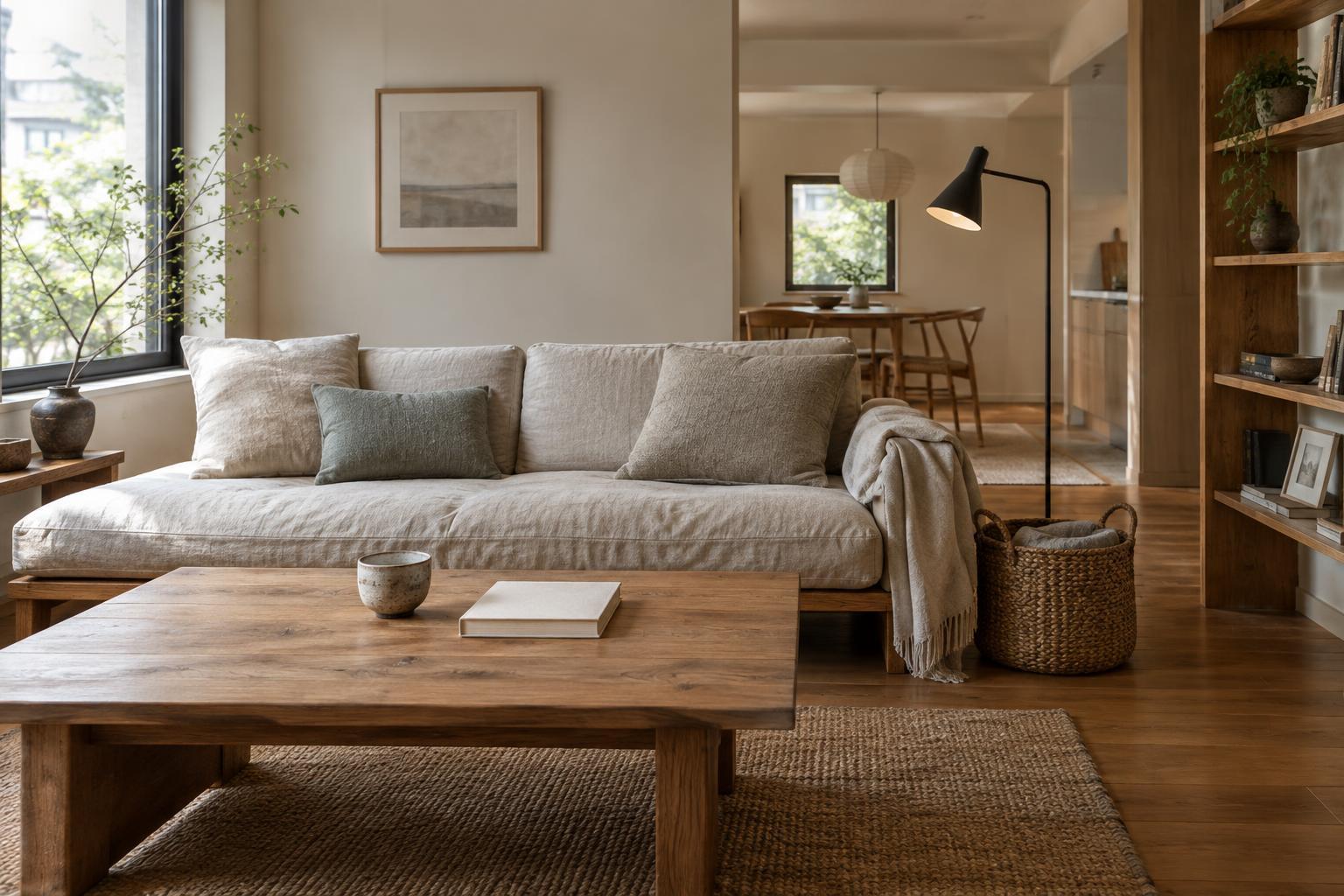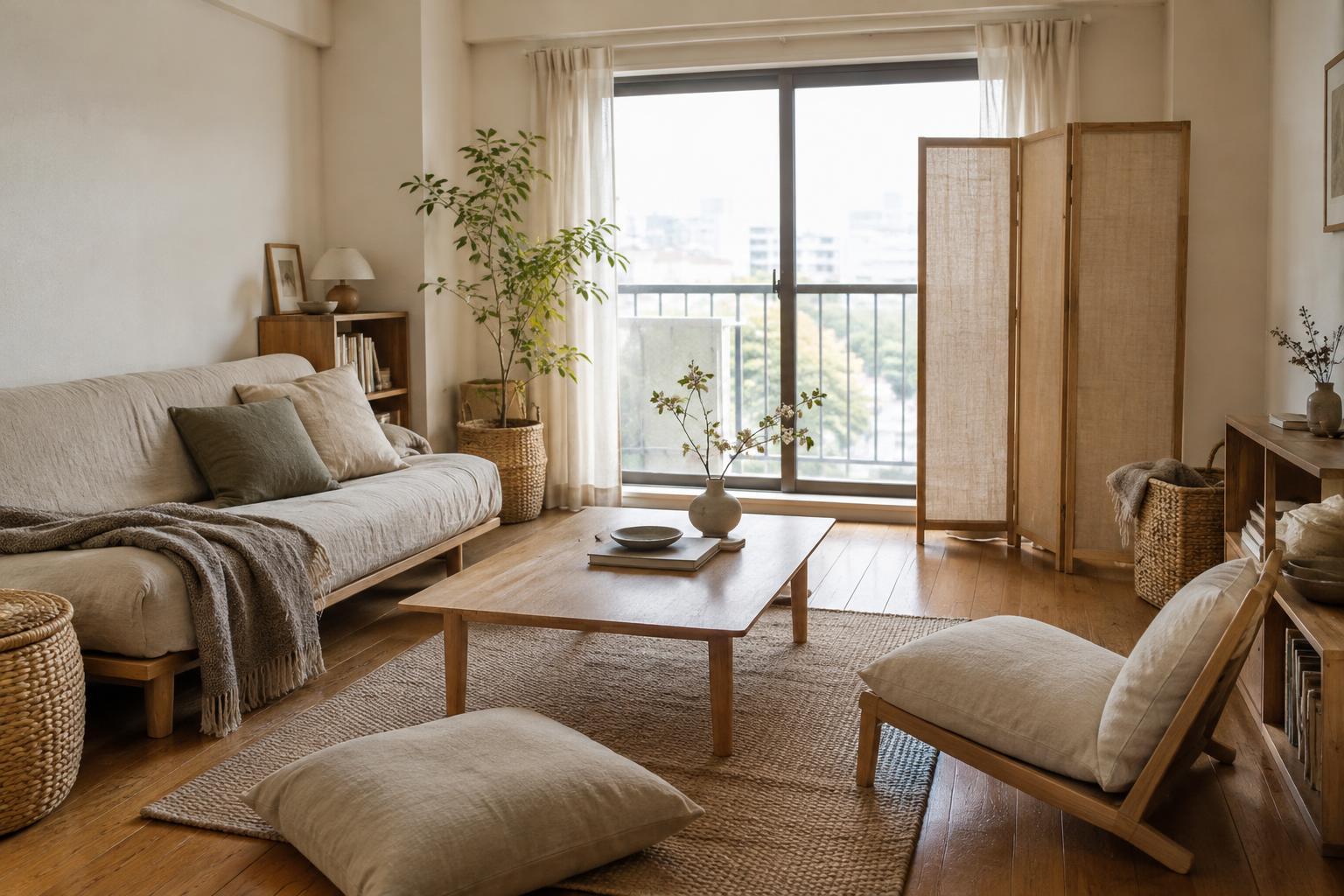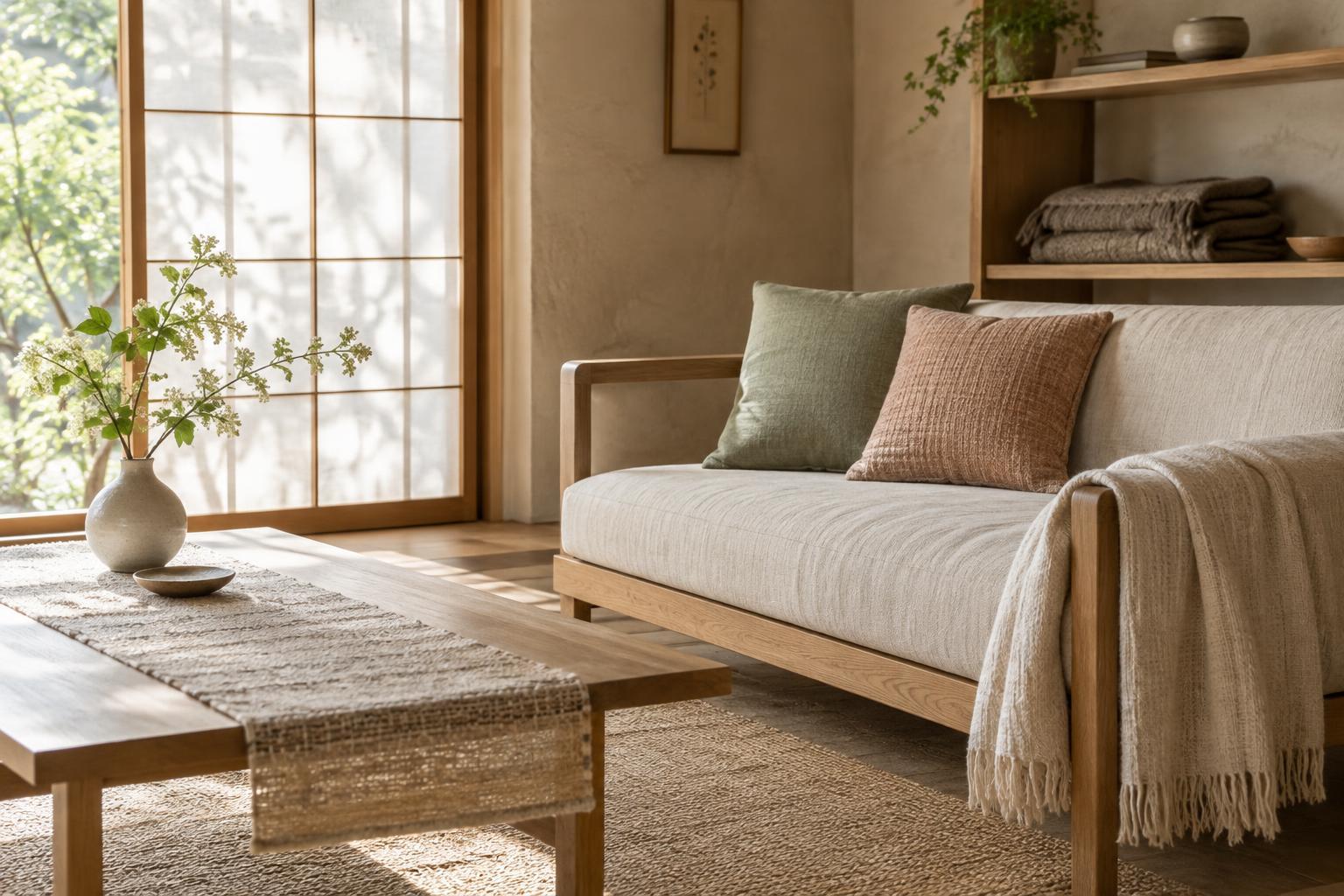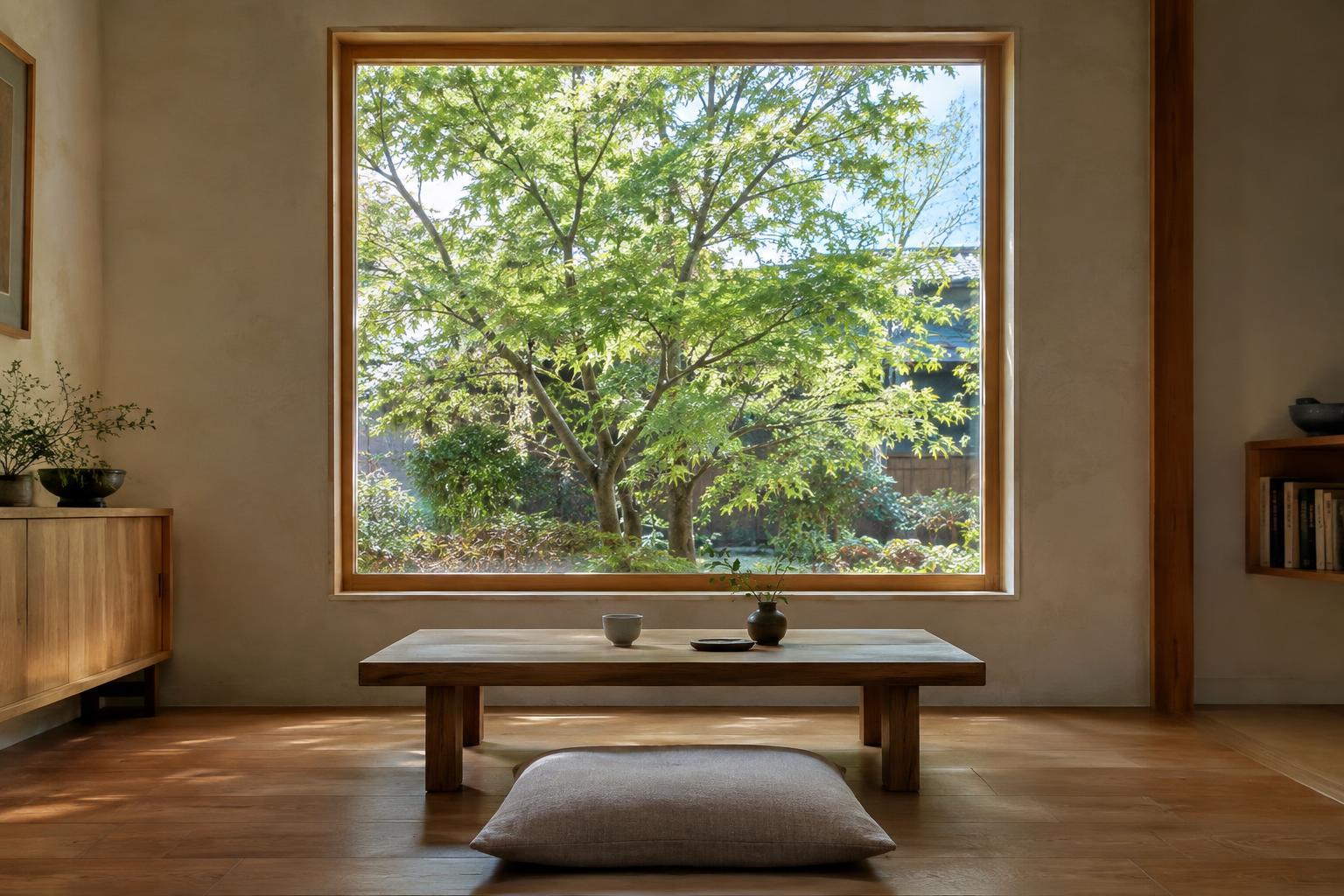
Begin with what you can see
An outdoor view can become part of an interior even when the landscape itself is beyond your control. A branch against the sky, the shadow of a neighboring roof or a strip of garden may offer something worth noticing. The first step is to spend time at the places where you actually pause: a chair, a dining seat, a desk or a spot on the floor. What falls within your view from each position?
This way of looking has an affinity with borrowed scenery, or shakkei, a concept associated with Japanese garden design. A garden can visually draw a distant hill, tree or other feature beyond its boundary into a composed scene. An apartment window is not automatically an example of that tradition, but the idea offers a useful question for a home: how might the room acknowledge a view rather than treat the window only as a source of light?
Use the window as a frame
A window already sets edges around a scene. Its proportions, divisions and height determine whether you notice open sky, a single tree or the ground below. Look at the view at different times of day before changing the room. Light may reveal a pleasing outline in the morning and make the same window uncomfortable to face later. The aim is not to create one perfect picture, but to understand what the opening offers.
Small adjustments can make its frame more deliberate. Move a tall lamp or shelf that cuts across the most interesting part of the view. Keep a windowsill clear if objects there compete with a quiet scene; if the view is plain, one restrained plant or ceramic vessel may help create a foreground. Curtains can also edit what you see. Partially drawn fabric may soften a distracting edge while leaving a patch of sky visible.
Arrange sightlines around daily life
The strongest view is not necessarily the one visible from the doorway. Consider where you sit for a cup of tea, fold laundry or read. Turning a chair slightly may bring a tree into sight without reorganizing the whole room. A low table can leave the view open from a seated position, while a taller piece of furniture may block it. Try arrangements temporarily before deciding what deserves a permanent place.
Sightlines work in both directions. A seat facing outdoors might also expose you to people passing by, or put a bright window directly behind a screen. Comfort matters more than an uninterrupted view. A translucent curtain, a plant placed to one side or a shift in seating angle can preserve a glimpse of outdoors while improving privacy or reducing glare. In a rented home, these reversible changes are often more useful than altering the window itself.
Let the room provide a quiet foreground
Borrowing a view is partly an exercise in contrast. When the area around a window is visually busy, the eye may stop at the clutter instead of moving outward. You need not empty the room: a simple surface, a calm wall color or a few objects with space between them can give the gaze somewhere to rest. Natural textures such as wood or woven fabric may connect the interior to what is outside without trying to imitate a garden.
A foreground can add depth, too. A chair back, the edge of a table or a single leaf near the window helps mark the transition from room to landscape. Check that the object does not obscure the part you most enjoy. If the outdoor scene includes buildings, wires or parked cars, there is no need to pretend they are absent. Cropping the view through furniture placement or a curtain can direct attention to a detail you find meaningful.
Make room for change
An outdoor view rarely stays fixed. Leaves grow or fall, rain changes the light, and even a small patch of sky looks different through the day. A flexible arrangement lets these shifts remain noticeable. Keep a chair easy to move, adjust curtains as the sun moves, or leave a windowsill simple enough to change with the seasons. The pleasure comes from returning to the view, not from holding it still.
If a window faces an unappealing or closely overlooked space, begin with what is possible rather than forcing a scenic effect. Diffused light, a shadow on the wall or the movement of leaves above a fence can still connect the room to outdoors. Framing a view is less about possessing a beautiful landscape than about making a comfortable place from which to pay attention.