Start with the method, not the menu
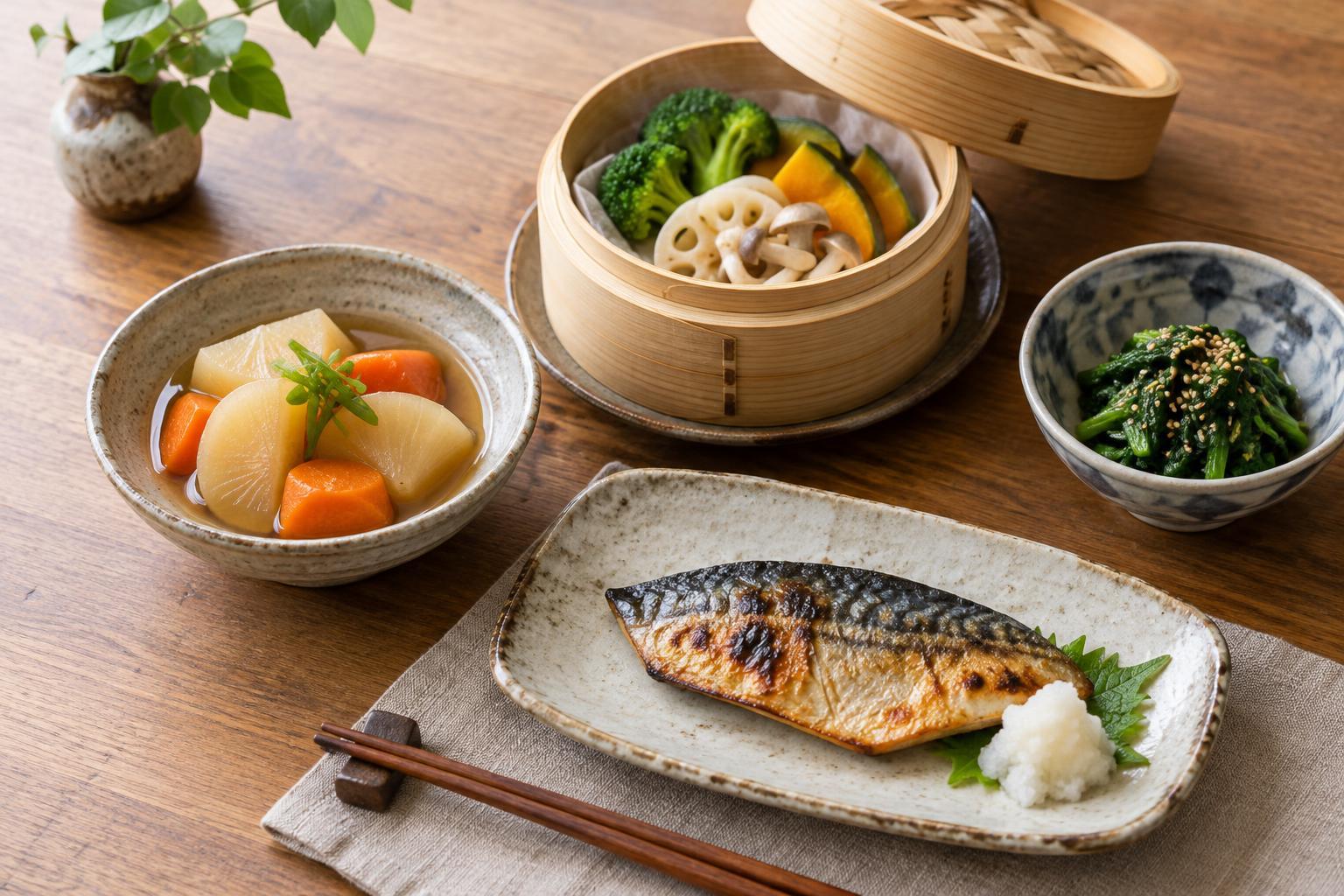
A Japanese home-cooked meal can bring together several simple preparations: something warm and softly simmered, a grilled main dish, a small dressed vegetable dish and rice. Each part has a distinct texture and flavor, but none needs to be elaborate. Learning a few methods gives you more flexibility than memorizing a fixed menu.
These four methods are starting points, not rules for every Japanese kitchen. Ingredients, seasoning and habits vary among households. Try one technique at a time with foods you already enjoy, then notice what changes when you adjust the heat, cooking liquid or finishing seasoning.
Simmering: gentle heat with flavorful liquid
Simmered dishes, often called nimono, cook ingredients in a modest amount of seasoned liquid. Vegetables such as daikon, carrots and squash are approachable choices, as are tofu and chicken. A cooking liquid might begin with dashi, a Japanese stock, and include soy sauce, mirin or sugar. Water can also be a useful starting point while you learn how much seasoning you like.
Cut ingredients into pieces that will cook at a similar pace, or add firmer pieces first. Bring the liquid to a boil, then lower the heat so it bubbles gently. A small pot helps the liquid reach the ingredients without requiring too much of it. Turn the pieces occasionally if they are not fully submerged, and taste both the liquid and the food before adding more seasoning.
Simmering is not the same as boiling until everything is soft. The aim is to let flavor enter while keeping a pleasant shape and texture. Many simmered foods also taste satisfying after a short rest in their cooking liquid, making this a useful method when you want to prepare one part of a meal ahead.
Grilling: browning without hiding the ingredient
Grilling, or yaku, uses direct heat to create browned edges and a savory aroma. At home, that might mean a grill, broiler or frying pan. Fish is a familiar choice, but mushrooms, eggplant and tofu also respond well. A little salt may be enough; other options include a light soy-based glaze or a spoonful of grated daikon served alongside.
Dry the surface of the food before cooking so it browns rather than steams. Preheat your cooking surface, give the pieces room and resist moving them constantly. If a glaze contains sugar, apply it toward the end so it is less likely to burn. Cooking times depend on thickness and equipment, so check that food is cooked through rather than relying on a set number of minutes.
Grilling pairs well with milder sides. A simply seasoned piece of fish, for example, can sit beside rice, soup and vegetables without every dish competing for attention.
Steaming: preserving a tender texture
Steaming, or mushi, surrounds food with moist heat. It is useful for delicate ingredients and for dishes where you want a soft, clean-tasting result. A steamer basket set over a pot works well, but a heatproof plate raised above simmering water in a covered pot can serve the same purpose. Keep the food above the water and leave space for steam to circulate.
Vegetables can be steamed until just tender, then finished with a small amount of salt, citrus or sauce. Egg dishes need gentler attention: keeping the heat low helps them set smoothly rather than becoming coarse. When lifting the lid, angle it away from you to avoid the hot steam. Because steaming adds little surface browning, a finishing seasoning often supplies the contrast.
Dressing: seasoning after cooking
Dressed dishes, known broadly as aemono, combine prepared ingredients with a seasoning mixture. Spinach, green beans and other vegetables can be blanched, cooled and drained before dressing. One simple direction is sesame: ground sesame seeds mixed with a little soy sauce and a touch of sweetness. The dressing should coat the food, not collect in a pool at the bottom of the bowl.
Moisture control matters here. Gently squeeze excess water from cooked greens, or pat other vegetables dry, so the seasoning stays clear and balanced. Dress close to serving time when you want the freshest texture, and taste before adding extra soy sauce.
Together, these methods offer an easy way to build a meal. Simmer something ahead, grill one ingredient while the rice cooks, and dress a vegetable at the end. On another day, steam the main dish instead. The pleasure is in finding a balance of soft and crisp, warm and cool, and lightly and more deeply seasoned foods.