Start with the neighborhood, not a shopping list
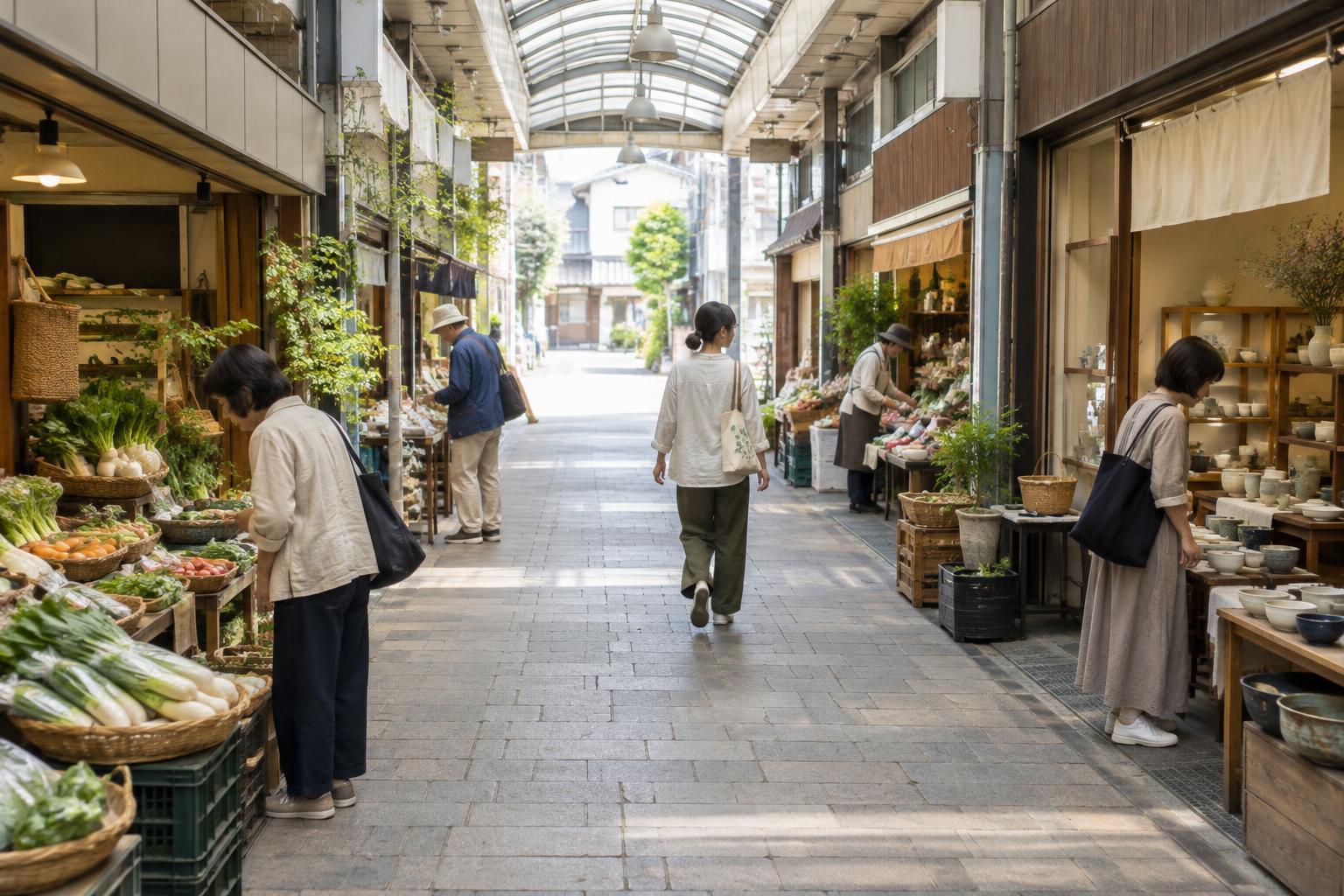
A shopping street can be a pleasant place to spend an unhurried hour in Japan. Some have covered walkways; others are ordinary streets lined with shops, cafés and services. Markets vary just as widely, from places where residents buy ingredients to areas with many visitors. Rather than treating every stop as a place to find souvenirs, look at what the street is for and who else is using it.
Choose one area that fits naturally into your day instead of crossing a city for a quick photograph. Leave time to walk its side streets, stop for a snack or sit down if a suitable spot is available. Individual businesses may keep different hours, and some close on particular days, so check the places you especially hope to visit. A flexible plan makes an unexpected closure a small change rather than a ruined afternoon.
Browse with attention to the space
A narrow shop may have room for only a few customers, particularly when shelves extend close to the entrance. Pause before stepping inside with a large bag, and keep it close enough that you will not brush against displays or block a doorway. If a shop looks busy, returning later can be kinder than trying to squeeze through.
It is usually fine to look without buying, but follow any posted guidance about touching goods or taking photographs. Handwritten signs and delicate objects deserve the same care as formal exhibits. If you are unsure whether you may handle something, ask a staff member rather than testing it. A simple greeting on entering and a thank-you on leaving help make a brief exchange pleasant, even when you share little language.
Remember that a shopping street is also a route to work, school and home. Keep entrances clear while checking your map, and step aside before arranging purchases or gathering a group. This is especially helpful on busy days, when a small pause in the wrong place can interrupt the flow of the street.
Make food stops comfortable for everyone
Food stalls and small shops can make browsing more enjoyable, but there is no single rule for where to eat. Some vendors have a designated standing area or nearby seats; others package food to take away. If it is unclear, ask where you may eat or look for a sign before opening your purchase. Avoid assuming that a crowded walkway is an appropriate place to stop with food in hand.
Bins may not be available exactly when you need one. Carry a small bag for your own wrappers until you find a suitable place to dispose of them, and use a vendor’s bin only if it is meant for the waste you have. Keeping packaging under control also protects goods in neighboring shops from spills. If you have dietary needs, check ingredients before ordering rather than relying on appearance alone; recipes and preparation methods can differ between sellers.
Buy what you can carry and use
Markets and shopping streets invite spontaneous purchases. Before buying a fragile bowl, a box of sweets or a large textile, think about how it will travel through the rest of your day and whether it will fit safely in your luggage. If you want to take food across a border, check the rules that apply to your destination before purchasing it for that purpose.
Prices and payment methods may differ between neighboring businesses. Check the displayed price, ask if you cannot find one, and have another payment option available in case your preferred method is not accepted. Treat the stated price as the starting point rather than assuming bargaining is expected. If a maker explains an object’s materials or care, listen and ask a short, specific question; you may come away with a more useful purchase, not just another thing to pack.
Leave room for an ordinary visit
A good visit need not include a famous shop or a full bag. You might remember the arrangement of vegetables outside a grocer, the sound of a workshop, or the contrast between a busy arcade and a quiet lane nearby. Observe without turning staff or customers into attractions. Ask before photographing people or a shop interior, and accept a refusal without pressing for a reason.
If you enjoy an area, consider spending at one or two businesses that genuinely suit your interests. Then give yourself permission to leave. An easy pace, clear paths and thoughtful purchases let you enjoy the street while recognizing that it continues to belong to the people who use it every day.