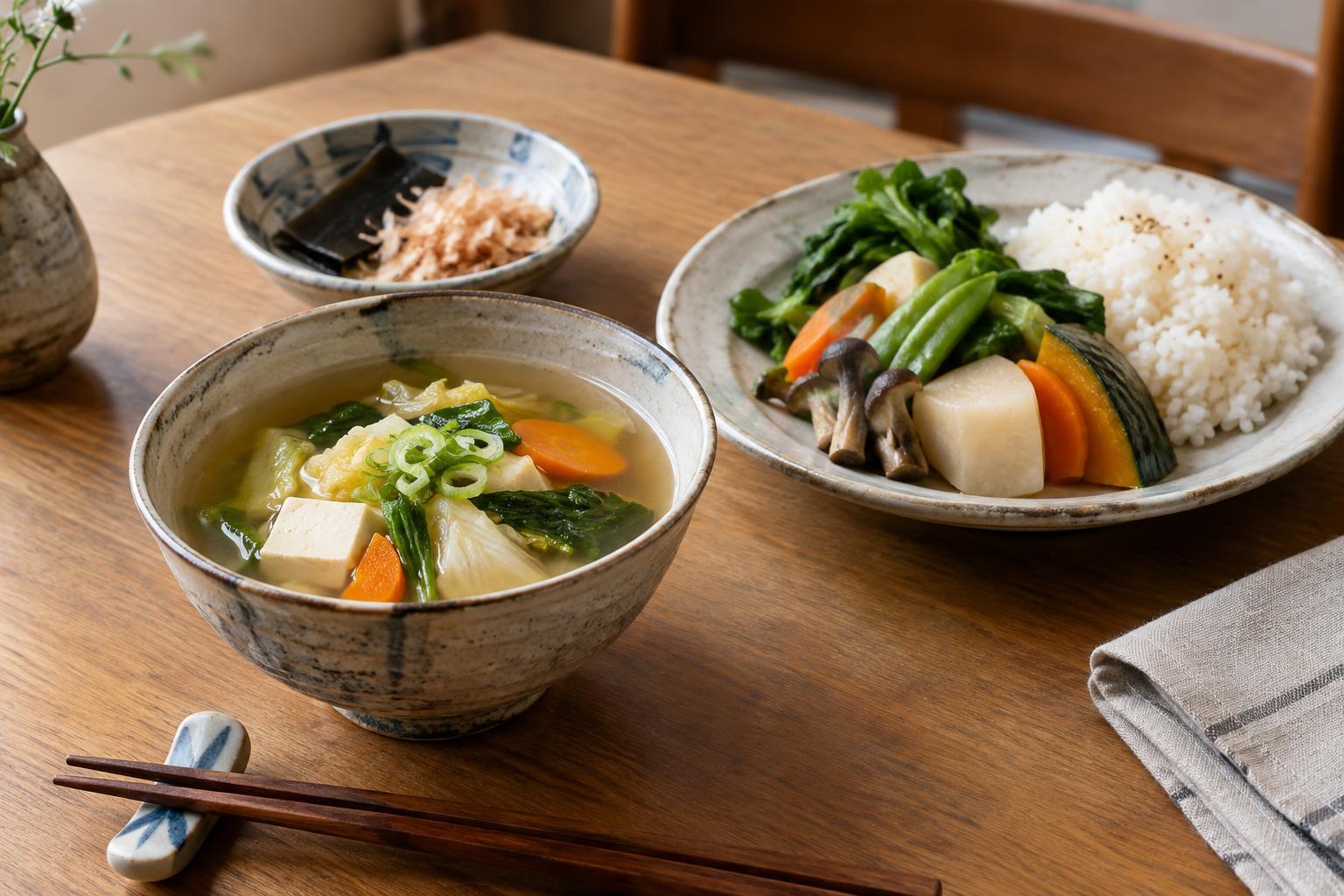
Why a vegetable dish may contain fish
In Japanese cooking, dashi is a light stock that gives many dishes their savory foundation. It can be made from kombu seaweed or dried shiitake mushrooms, both of which suit a vegetarian diet. It is also commonly made with katsuobushi, flakes of dried bonito fish, sometimes combined with kombu. A dish can therefore look entirely plant-based while its broth or seasoning contains fish.
This does not mean every traditional dish uses the same stock. Recipes vary by cook, restaurant and packaged product. Rather than treating dashi as something to avoid automatically, it helps to ask what a particular dish is made with. If you eat eggs or dairy but not fish, say so: the word “vegetarian” alone may not communicate the boundary clearly.
The places dashi is easy to miss
Soups are the most obvious place to check. Miso soup is often built on dashi before miso is added, even when the visible ingredients are tofu and vegetables. Noodle broths and the dipping sauces served with soba, udon or tempura may also contain fish-based dashi. A plain-looking bowl of noodles is not necessarily vegetarian because the liquid matters as much as the toppings.
Dashi also seasons foods served with little or no visible broth. Vegetables simmered as nimono may absorb it; spinach and other greens served as ohitashi may be dressed with it. Tofu dishes can arrive with a dashi-based sauce. Egg dishes such as dashimaki tamago or chawanmushi may contain it too, so eating eggs does not settle the fish question.
Packaged foods deserve a separate glance. Instant soups, noodle cups, rice seasonings and prepared sauces may use fish extract or powdered dashi. An onigiri with a simple filling can be an easier choice than an unfamiliar prepared meal, but its filling and seasoning still need checking. Labels and recipes vary, so the name or appearance of a food is only a starting clue.
How to ask without relying on guesswork
A specific question is often more useful than asking whether something is “vegetarian.” You can explain, “I don’t eat fish or meat, including fish-based dashi,” and ask whether the dish uses bonito stock. In Japanese, “Katsuobushi no dashi wa haitte imasu ka?” asks whether bonito-flake stock is included. “Sakana no dashi mo taberaremasen” conveys that you cannot eat fish-based stock either.
Keep the exchange simple and allow room for staff to check. A server may not know how a prepared sauce or soup base was made, and a kitchen may not be able to alter it. If the answer is uncertain, choose something whose ingredients can be confirmed rather than asking for a guarantee. A short written note explaining what you do and do not eat can also help when ordering in a busy setting.
Finding satisfying alternatives
Kombu and dried shiitake can make flavorful dashi without fish. At a restaurant, ask whether a dish can be prepared with vegetable-based stock, but expect that some broths and sauces are made in advance. Choosing a dish that is already prepared without fish may be simpler than requesting a change to a standard recipe.
Shojin ryori, a style of Buddhist temple cuisine centered on plant foods, can be a rewarding option, though menus and individual venues should still be checked against your needs. Vegetarian-focused restaurants may offer more clearly described choices. Elsewhere, a meal assembled from confirmed rice, vegetables, tofu and other suitable dishes can be just as enjoyable as trying to adapt a set menu.
Stay curious, and check the details
Eating vegetarian in Japan does not require mistrusting every dish. It does call for noticing ingredients that are meant to blend into the background. Fish-based dashi contributes flavor without leaving an obvious piece of fish on the plate, which is why soups, dressings and simmering liquids are worth asking about.
Approach each menu as a conversation rather than a test. Ask about the stock, be clear about your boundaries, and accept that an uncertain answer may mean choosing something else. Those small habits make room for both respectful exchanges and the pleasure of discovering foods that fit the way you eat.