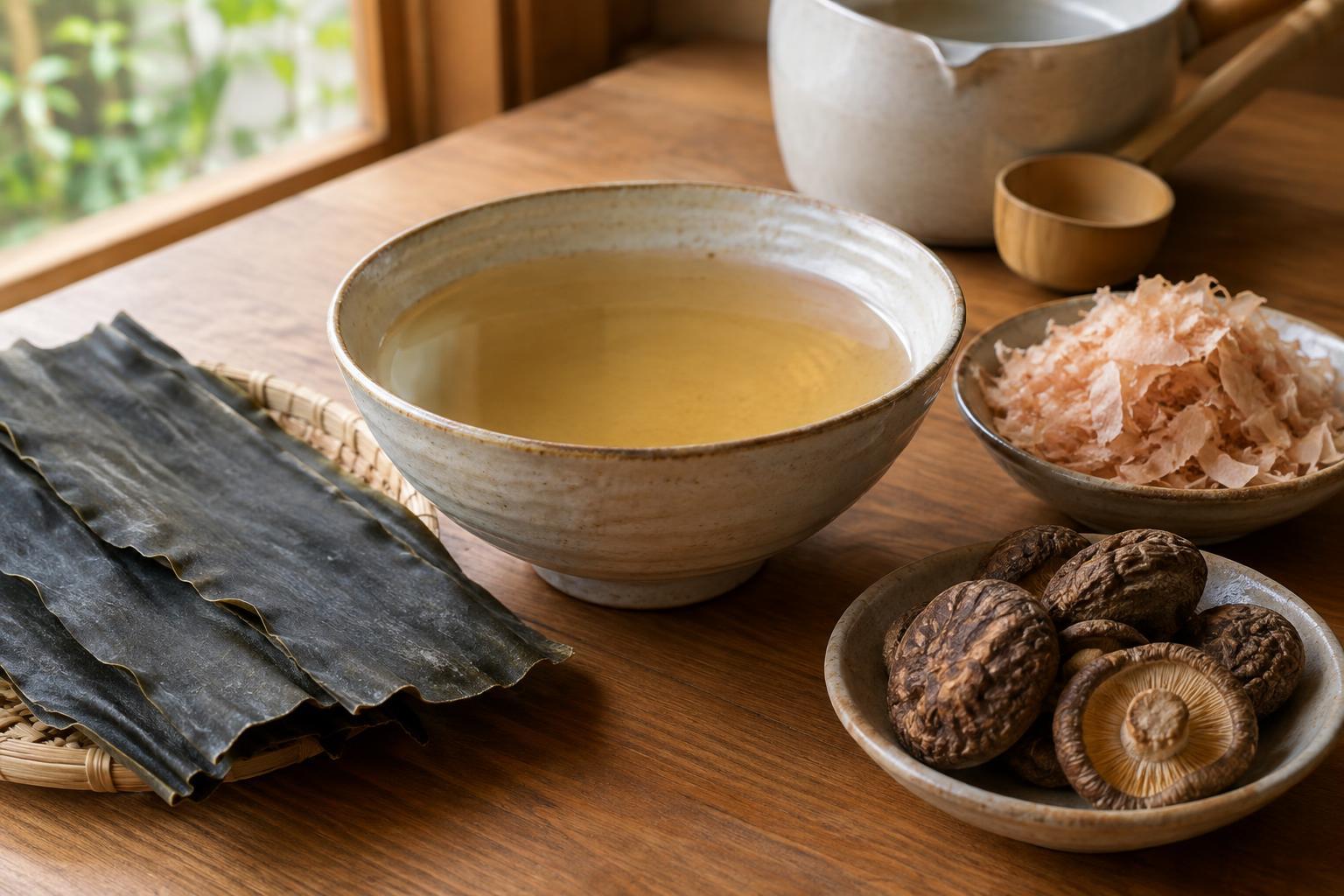
What dashi does in a dish
Dashi is a family of stocks used throughout Japanese cooking. Rather than providing the rich body of a long-simmered meat broth, it often adds a light savory foundation that lets tofu, vegetables, noodles or fish remain distinct. A bowl of miso soup may taste different depending on its dashi, even when the miso and other ingredients stay the same.
Three common starting points are kombu, a dried kelp; katsuobushi, thin shavings of dried, smoked and fermented bonito; and dried shiitake mushrooms. Each can make a stock on its own. Kombu and bonito are also frequently combined in awase dashi, or mixed dashi. These choices are flexible rather than strict rules: the best stock is the one whose flavor supports what you are cooking.
Kombu: a gentle, versatile base
Kombu dashi has a subtle marine character and a rounded savory taste. It works especially well when you want delicate ingredients to come forward, as in a clear soup with tofu and greens or a lightly seasoned vegetable dish. Because kombu is seaweed rather than fish, it is also a useful starting point for a plant-based meal.
To make a basic version, place a piece of kombu in water and let it soak until it softens; a longer soak in the refrigerator is convenient if you are planning ahead. Warm the water gently, then remove the kombu before it reaches a vigorous boil. This is a common way to keep the stock mild, although methods vary. If the kombu looks dusty, wipe it lightly rather than scrubbing away every pale trace on its surface.
Bonito: a fragrant lift
Katsuobushi gives dashi a more pronounced aroma, with smoky and fish-forward notes. It can bring definition to noodle broths, dipping sauces and soups with stronger seasonings. For a stock that is both rounded and lively, first extract flavor from kombu, remove it, then add bonito shavings. The pairing is a familiar way to build awase dashi.
For a straightforward preparation, bring kombu-infused water close to a boil, take the pot off the heat and add the bonito. Let the shavings steep briefly, then strain the liquid. Avoid pressing hard on the solids if you want a clearer, cleaner-tasting stock. Bonito dashi is not vegetarian, and its distinct flavor may be too assertive for a dish in which you want only a faint background savoriness.
Shiitake: depth without fish
Dried shiitake make a dark, earthy stock that is particularly good with mushrooms, root vegetables and simmered dishes. Their flavor is more noticeable than kombu’s, so consider the balance of the finished dish. Shiitake dashi can stand alone, but combining its soaking liquid with kombu dashi gives a plant-based stock with both depth and a softer marine note.
Cover dried shiitake with cool water and soak them until fully rehydrated, preferably in the refrigerator if leaving them for several hours. Remove the mushrooms and strain the liquid if it contains grit. You can slice the softened mushrooms for the dish itself, making good use of both the stock and the ingredient that produced it. Taste the soaking liquid before adding it all: a little may be enough in a delicate soup.
Choosing, seasoning and keeping your stock
Match the dashi to the role it needs to play. Choose kombu when clarity and restraint matter; kombu with bonito for an aromatic everyday soup or noodle broth; and shiitake, alone or with kombu, when you want an earthy plant-based base. There is no need to choose by name alone. If a stock tastes too strong for your recipe, dilute it with water and adjust the seasoning afterward.
Dashi is usually a foundation, not a finished soup. Miso, soy sauce or salt can be added later, depending on the dish; season gradually so you can still taste the other ingredients. Homemade dashi is easiest to appreciate soon after making it. Cool any leftover stock promptly, refrigerate it for short-term use or freeze it in small portions. That way, a simple bowl of soup can begin with a stock chosen for what is actually in the bowl.