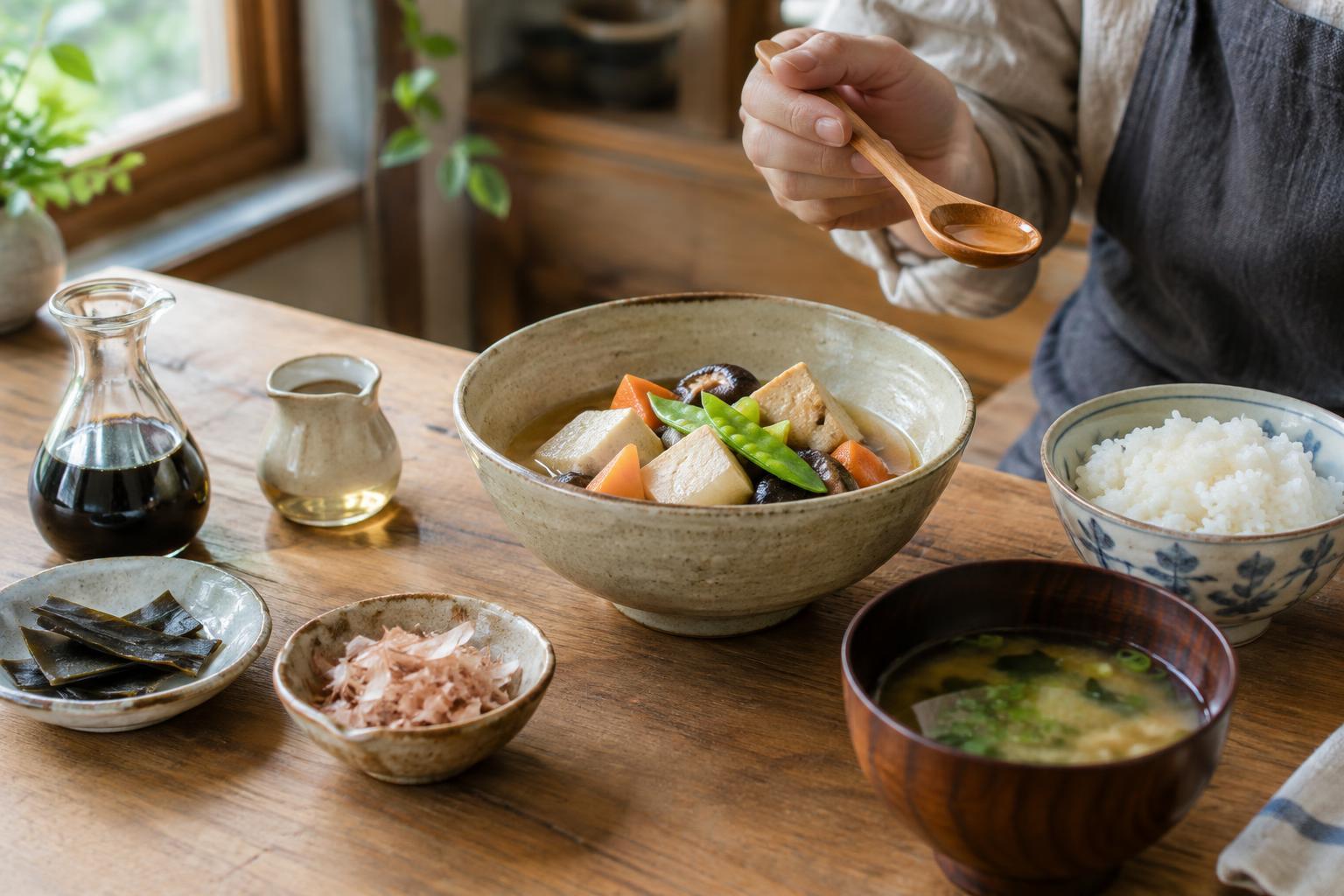
Mistake 1: Treating every dish as a contest between three flavors
Sweetness, saltiness and umami are useful ideas, but they are not a formula that every Japanese dish must follow equally. A bowl of miso soup may taste gently savory, while a simmered vegetable dish may have a noticeable sweet edge. The aim is to let the main ingredients remain recognizable, not to make every seasoning equally prominent.
Before adding anything, decide what should lead. For a clear soup, that might be the aroma of dashi and the taste of vegetables. For a soy-based simmered dish, it might be a mild sweet-salty broth. Thinking about the finished dish makes it easier to notice when one seasoning starts to cover everything else.
Mistake 2: Adding soy sauce whenever a dish needs more umami
Soy sauce brings savory depth, but it also brings salt and a distinct aroma. Repeated additions can make a dish too salty before it tastes any fuller. Miso presents a similar challenge: it offers complexity, yet adding more is not always the best way to deepen a soup.
Taste the cooking liquid first. If it is pleasantly salty but seems thin, consider whether the base needs more time with its ingredients or a little more unsalted dashi, rather than another pour of soy sauce. Dashi made with kombu, dried fish or mushrooms can contribute savory character without relying solely on salt. Its strength and character vary, so add and taste gradually.
Mistake 3: Using sweetness to hide excess salt
Sugar or mirin can soften the impression of a salty sauce, but they do not remove salt. Adding more sweetness to correct a heavily seasoned broth may leave it both salty and cloying. This is especially easy to do with a glaze, which tastes milder while it is thin in the pan than it does after it reduces and coats the food.
For a dish that is still cooking, first ask whether you can add more unseasoned liquid or ingredients without losing the character of the recipe. With a sauce, stop reducing it and taste a small amount alongside the food it will accompany. A sauce that seems assertive on its own may be just right when used sparingly over plain rice, tofu or vegetables.
Mistake 4: Seasoning once, then forgetting that cooking changes the balance
A simmering liquid concentrates as water evaporates. Vegetables may release liquid, while tofu, noodles or other ingredients can absorb some of the seasoning around them. As a result, a broth that tastes balanced at the start may finish too strong, or a dish that seems well seasoned in the pot may taste mild when served.
Season in stages instead. Start with a lighter hand, allow the ingredients to cook, and taste again near the end. Use a clean spoon to sample a little broth and a piece of the main ingredient; they may tell different stories. If you are preparing a miso soup, mix the miso into a little warm broth before returning it to the pot, then taste. Gentle warming after that helps preserve its aroma.
Mistake 5: Forgetting the meal around the dish
Japanese home meals often bring several components together rather than asking one dish to supply every flavor. Plain rice, a lightly dressed vegetable and a seasoned main dish can make a satisfying combination. If every component receives the same sweet soy seasoning, the meal may feel repetitive, even when each dish tastes good separately.
Try tasting a forkful or bite in context: the main ingredient with rice, or a spoonful of soup after a seasoned side. Leave some dishes simple so others have room to stand out. When adjusting a recipe, change one thing at a time and note the result. Over time, this habit teaches you more than chasing a fixed ratio of sugar, salt and umami ever could.