Think of bento as a lunch, not a formula
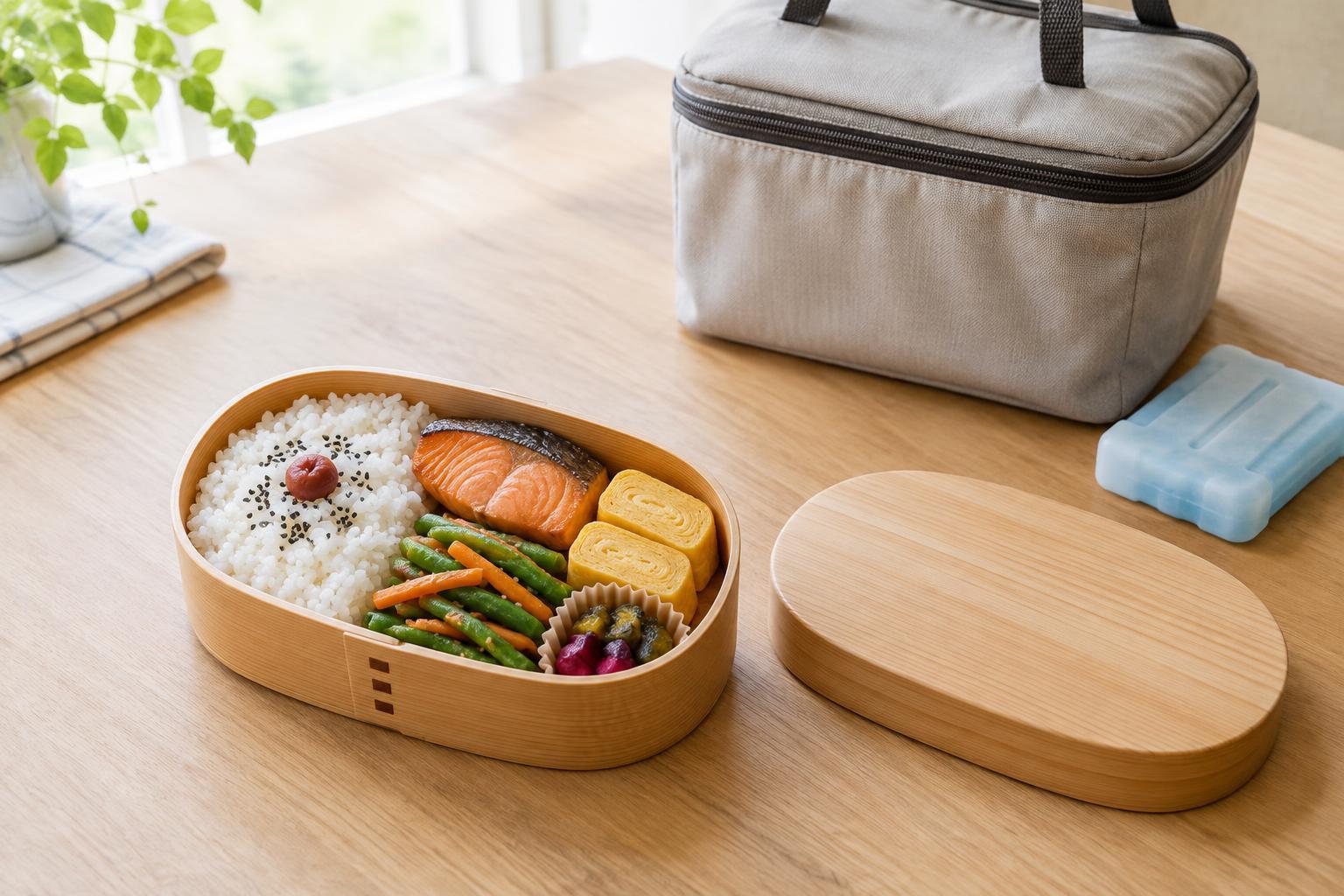
Bento is a packed meal, often arranged in a box with separate spaces for different foods. There is no single combination that makes a lunch a proper bento. Rice with a main dish and a few sides is familiar, but noodles, bread or other staples can work too. The useful starting question is simple: what will still taste good, feel satisfying and be safe to eat when you open the box?
For a balanced everyday lunch, choose a filling staple, a protein food and some vegetables or fruit. That might mean rice, cooked chicken and blanched greens; an onigiri, a firm omelet and cut vegetables; or soba noodles with tofu and a crisp side. Color and texture make the meal appealing, but they are not a substitute for enough food. Adjust portions to your appetite, schedule and what you have available.
Choose foods that pack well together
A compact box is easiest to eat when each item is already bite-sized or easy to pick up. Cooked vegetables, lightly dressed salads, roasted vegetables and firm proteins tend to be less awkward than foods that need cutting at your desk. If you are packing leftovers, use food that was stored safely after the original meal rather than leaving it out to become tomorrow’s lunch.
Moisture is often the practical challenge. Drain cooked greens, let excess sauce drip from a main dish and keep a juicy fruit portion in its own small container. A cup or divider can prevent one food from soaking another, though it does not make unsafe food safe. Pack sauces separately when you want crisp textures, and avoid overfilling the box so its lid closes cleanly.
You can keep the planning modest. Preparing one extra portion of dinner, washing vegetables ahead of time or keeping a few reusable dividers ready may make lunch easier. A bento does not need elaborate decoration to reflect care: a mix of flavors you enjoy is enough.
Cool cooked food before closing the lid
Food safety begins before the box leaves home. Wash your hands and use clean utensils and containers. Cook foods thoroughly, and keep ready-to-eat ingredients away from raw meat or its juices. If you are using rice, cook it, cool it promptly and refrigerate it rather than leaving it at room temperature overnight. Cooked rice needs care because it can become unsafe when held warm for too long; reheating later is not a reliable fix for poor storage.
Steam trapped inside a closed lunch box can create condensation and make food soggy. Let freshly cooked components stop steaming before sealing the box, but do not leave perishable foods sitting out for an extended period while they cool. For larger portions, transferring food to shallow containers can help it cool more quickly in the refrigerator. Assemble a cold bento from chilled components when possible.
Match the box to the trip
An insulated bag and a frozen ice pack are useful when lunch contains perishable foods and will not go straight into a refrigerator. Place the ice pack near the food, close the bag and keep it out of direct sun. Refrigerate the bento on arrival if you can. A beautiful box or a tight-fitting lid does not, by itself, keep food cold.
As a general food-safety rule, perishable food should not spend more than about two hours at room temperature, or one hour in very hot conditions. An ice pack helps only if it keeps the food cold enough for the full journey and wait. If you cannot manage that, choose a shelf-stable lunch or pack temperature-sensitive items separately in a properly chilled container. Follow any more specific storage directions on packaged ingredients.
Build a simple bento you can repeat
For an easy first box, try chilled rice, a fully cooked protein you like, drained cooked vegetables and a small serving of fruit packed separately. Vary one element at a time: swap rice for noodles, change the vegetables with the season or add a small container of dressing. This keeps the routine flexible without making every lunch a new project.
At lunchtime, discard food that smells or looks unusual, but remember that harmful changes are not always obvious. When in doubt about how long a perishable bento has been warm, it is safer not to eat it. The best bento habit is one you can sustain: pack food you enjoy, keep it at a safe temperature and make the next box a little easier than the last.