Start with the meals you want to make
A useful pantry begins with a short list of dishes, not a long shopping list. If you want to make rice bowls, miso soup, and simple vegetable sides, you can do a great deal with rice, soy sauce, miso, a source of dashi, and a few fresh ingredients. Buy small amounts at first. Once you know what you enjoy cooking, it becomes easier to decide whether a new seasoning deserves space on your shelf.
Japanese home cooking varies by household and region, so there is no single definitive pantry. Recipes also differ in how they balance salt, sweetness, and savory depth. Think of the ingredients below as a starting point, and taste as you go rather than assuming one brand will behave exactly like another.
Choose rice and everyday seasonings
Japanese short-grain rice is a versatile foundation for plain rice, onigiri, and rice bowls. Look for rice labeled Japanese short-grain or sushi rice; follow the package directions for water and cooking, since varieties and equipment differ. Store uncooked rice sealed in a cool, dry place, and avoid buying more than you can use comfortably. Cooked rice can be portioned and frozen for quick meals later.
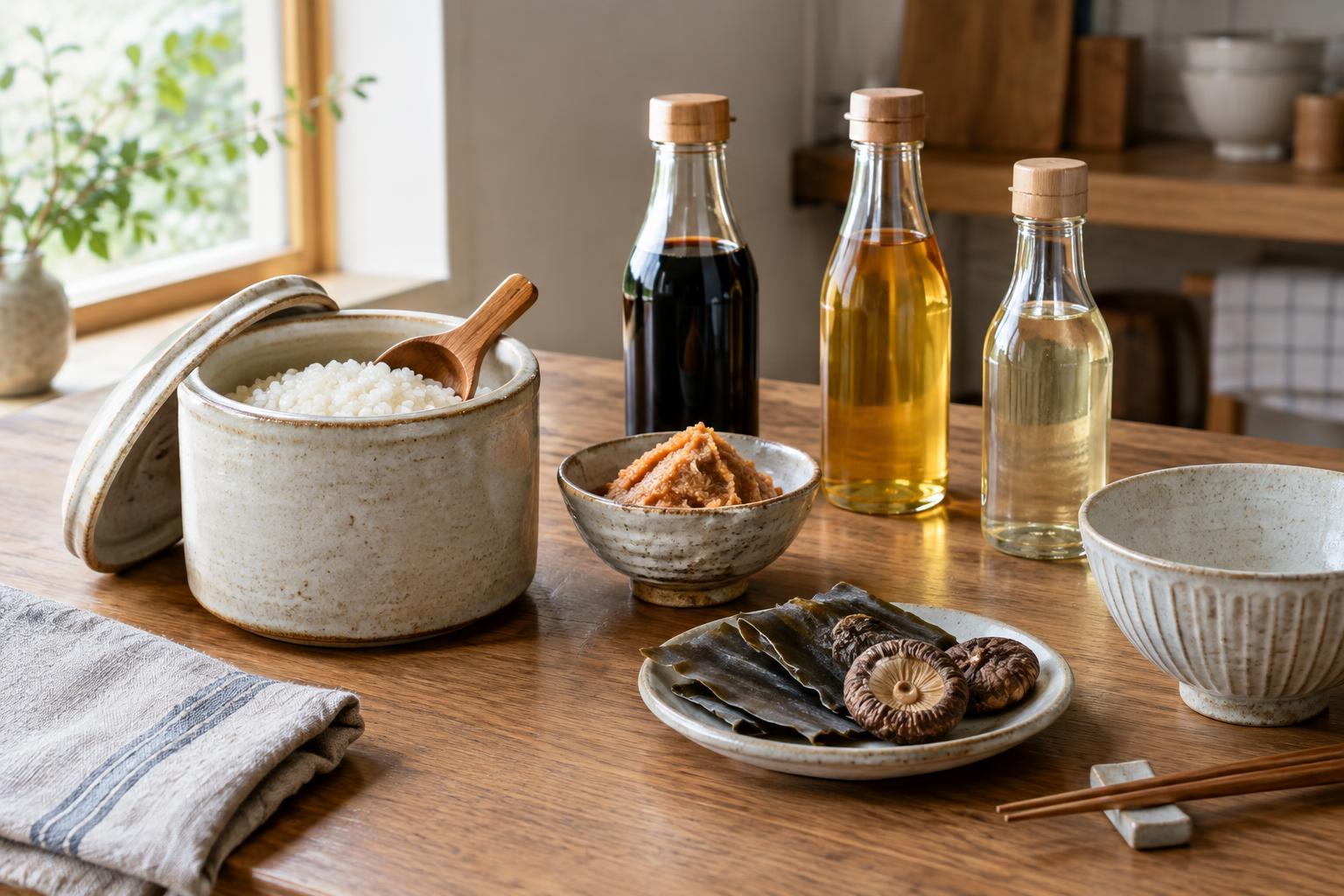
Soy sauce adds salt and savory flavor. A standard Japanese-style soy sauce is a flexible first bottle; check labels if you need to avoid wheat. Miso, a fermented paste commonly made with soybeans, makes a quick soup base and can also season dressings and glazes. Its flavor and saltiness vary widely, so start with a small amount. Most miso keeps well refrigerated after opening, but follow the storage directions on the package.
Rice vinegar brings gentle acidity to dressings, quick pickles, and seasoned rice. For sweetness, ordinary sugar will cover many beginner recipes. Mirin, a sweet rice-based seasoning, is useful in sauces and simmered dishes, but products sold under that name can differ in sweetness and alcohol content. Read the label before buying, especially if either matters to you. You can add mirin once you find yourself making dishes that call for it often.
Understand dashi before you buy it
Dashi is a broth that gives many soups and simmered dishes their underlying flavor. Common ingredients include kombu, a dried kelp, and katsuobushi, flakes of dried bonito fish. For a simple version, kombu can be steeped in water and gently heated; bonito flakes may then be added briefly and strained out. The process is approachable, but it is not a requirement for your first Japanese meal.
For convenience, dashi packets and granules are widely used in home kitchens. Their ingredients vary: some contain fish, salt, or other seasonings, while others are plant-based. Check the label rather than assuming a product is vegetarian or unseasoned. If you prefer to build flavor without fish, kombu and dried shiitake mushrooms are useful options. Keeping either dried ingredient on hand also means you can make broth when you need it, without a carton taking up refrigerator space.
Add a few ingredients for texture and finishing
Once the basics are in place, choose additions that suit the food you actually eat. Nori sheets are handy for wrapping onigiri or adding to a rice bowl. Dried wakame can go into soup, though a little expands considerably when soaked. Toasted sesame seeds add a finishing touch to greens and noodles, while sesame oil contributes a distinct aroma; use it in modest amounts so it does not overwhelm a dish.
Soba, udon, and other packaged noodles can turn pantry seasonings into a quick meal, but they are optional if rice is your usual staple. Likewise, ingredients such as pickles, curry roux, or furikake can be convenient without being essential. Check packages for allergens and storage instructions, particularly for products containing wheat, soy, fish, or sesame. Keep dried seaweed and other dry goods tightly sealed to protect them from moisture.
Put the pantry to work
A first meal might be rice topped with a simply cooked protein or vegetables, alongside miso soup and a cucumber salad dressed with rice vinegar and a little soy sauce. Another day, use dashi as the base for a broth with tofu and greens. These meals let you learn what each ingredient contributes before combining many seasonings in one recipe.
Restocking can be gradual. Notice which bottle you reach for repeatedly, which one sits untouched, and whether a smaller package would make more sense next time. A Japanese home-cooking pantry is most useful when it reflects your habits: a compact set of ingredients you know how to use is more inviting than a crowded shelf of possibilities.