Start with the route, not the train name
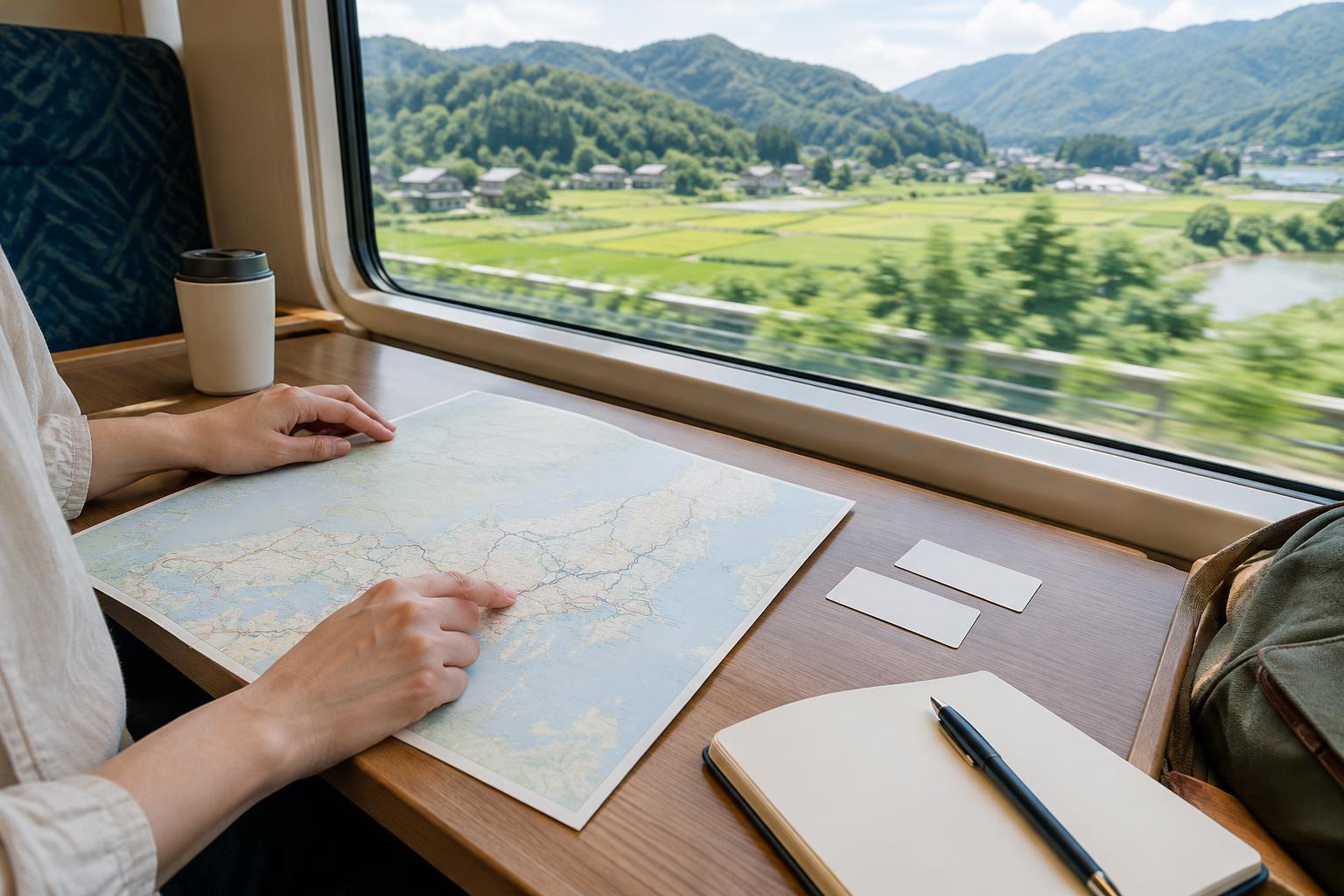
A rail map of Japan can look like one vast system, but its lines are run by different companies. The Japan Railways (JR) group operates many routes, while private railways and local operators serve others. A journey across one city might use more than one operator; a longer trip might combine a Shinkansen with a local train. This matters because a ticket, pass or payment card accepted on one part of a journey may not cover every part.
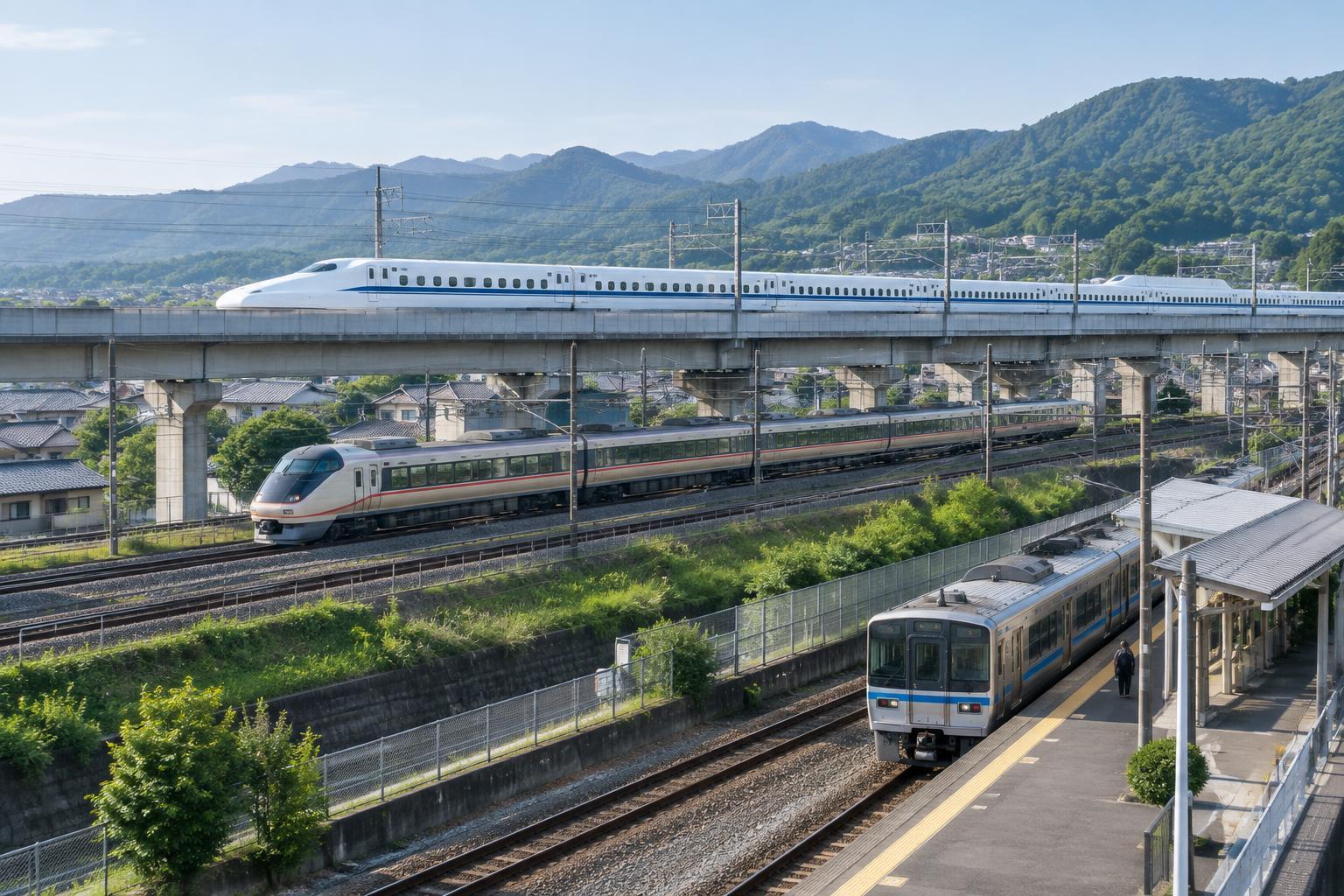
It helps to separate two questions: which line gets you to your destination, and which service should you take on that line? Local, rapid and limited express usually describe how a train serves its route, especially how often it stops. Shinkansen refers to Japan’s high-speed rail network. Station signs and journey planners may show both an operator and a service name, so check the destination and departure time rather than relying on a familiar train name alone.
Shinkansen: the long-distance backbone
Shinkansen trains are often the straightforward choice for travel between major cities. They run on a network separate from most conventional rail lines and stop at designated Shinkansen stations. Not every city has one, and a Shinkansen station is not always in the same place as a city’s main station. Before booking, check the exact station name and how you will travel onward from it.
Shinkansen services on the same route may make different numbers of stops. A faster service is not automatically the best choice if it passes your destination, while a train with more stops may offer a simpler trip. Ticketing also needs a little attention: the fare and the Shinkansen supplement may be displayed as separate components, even when you purchase them together. Seat options and reservation rules vary by train and travel period. If you have a rail pass, check its precise coverage and whether the service you want requires an additional payment.
Limited express: reach beyond the high-speed lines
Limited express trains use conventional rail lines and make fewer stops than many other services on the same route. They often connect major hubs with places the Shinkansen does not directly reach, such as regional towns or destinations near the coast and mountains. Some provide especially comfortable seating or wide windows, but facilities depend on the train. A limited express can be the most convenient choice even when it is not the fastest train on your entire journey.
The word “express” does not by itself tell you what you will pay. Limited express travel commonly involves a basic fare plus a limited express charge; a reserved seat may affect the price or the ticket you need. Other rapid or express services may work differently. Check the full fare before boarding, particularly if you plan to pay with an IC card. On some routes, tapping a card covers the basic fare but not the limited express charge; on others, card use may be restricted.
Local and rapid trains: the useful everyday network
Local trains generally stop at every station on their route. They are often the best way to reach a neighborhood, a smaller town or the final stop after a longer intercity journey. Rapid trains skip some stations but usually travel on conventional lines too. Service labels and stopping patterns differ by operator, so confirm that your intended station appears among the stops before boarding.
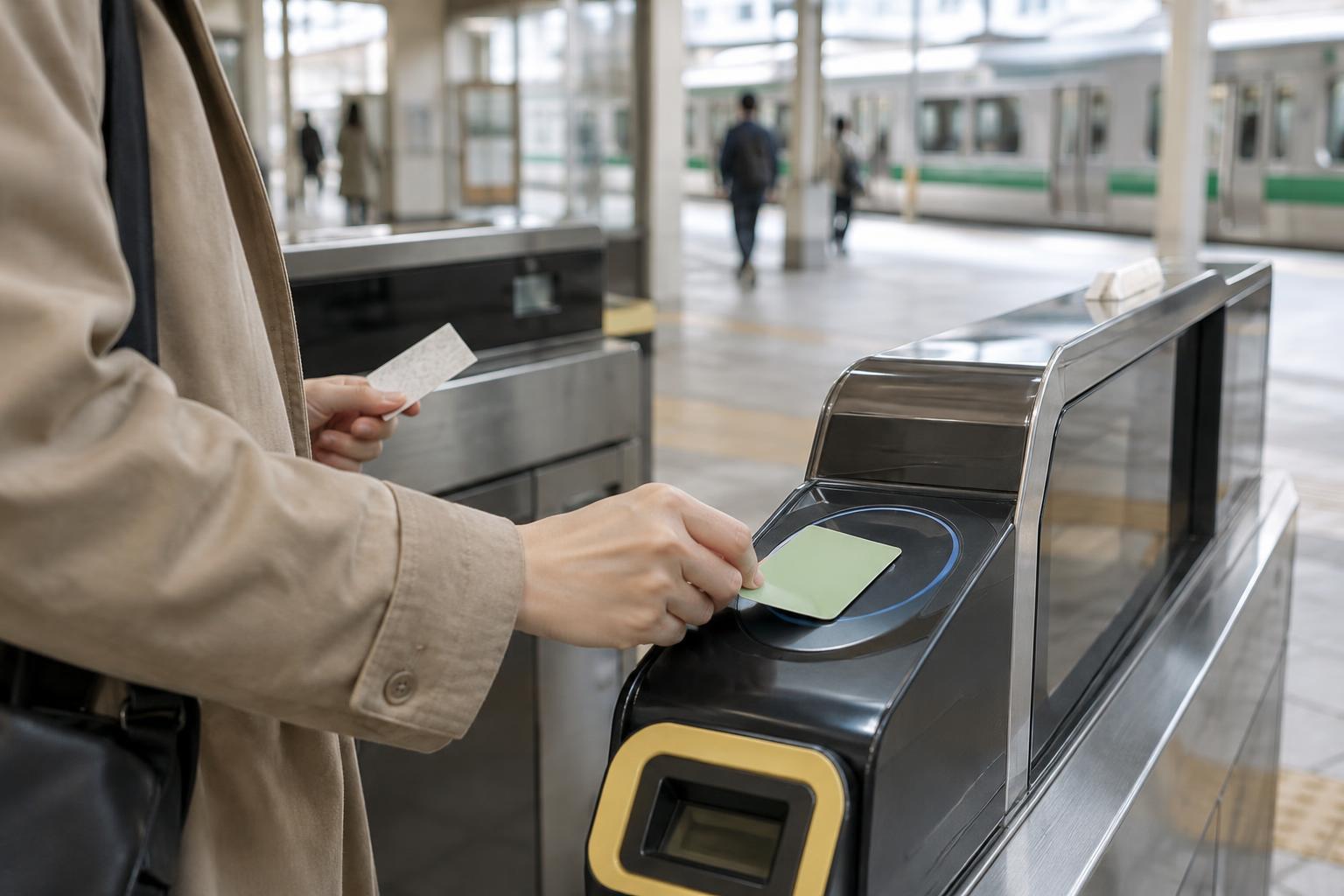
For many ordinary urban journeys, a rechargeable IC card makes paying the fare simple: tap at the gate on entry and exit, then follow any instructions if you change between operators. Cards are widely useful but not universal, especially on some rural lines. In places without compatible gates, you may need a paper ticket or need to follow the train’s instructions for paying on board. Carrying a little cash and checking the payment method before you set out can make an unfamiliar trip feel much calmer.
Make transfers part of the plan
When comparing routes, look beyond the headline travel time. A transfer may involve a walk between platforms, a change of ticket gates or even a move to another station. Allow extra time if you have luggage, are visiting a large station for the first time or need to buy a separate ticket. Station signs often use line colors, numbers and English alongside Japanese, but the most reliable details to match are the departure time, destination and platform shown for your train.
On board, keep bags clear of doors and walkways, speak quietly and let passengers leave before you enter. If you have a reserved seat, check your car and seat number before settling in. With those small habits—and an understanding of what each service is for—the network becomes less a puzzle to solve than a series of manageable choices. The Shinkansen covers distance, limited express trains extend your reach, and local trains bring the journey into everyday Japan.