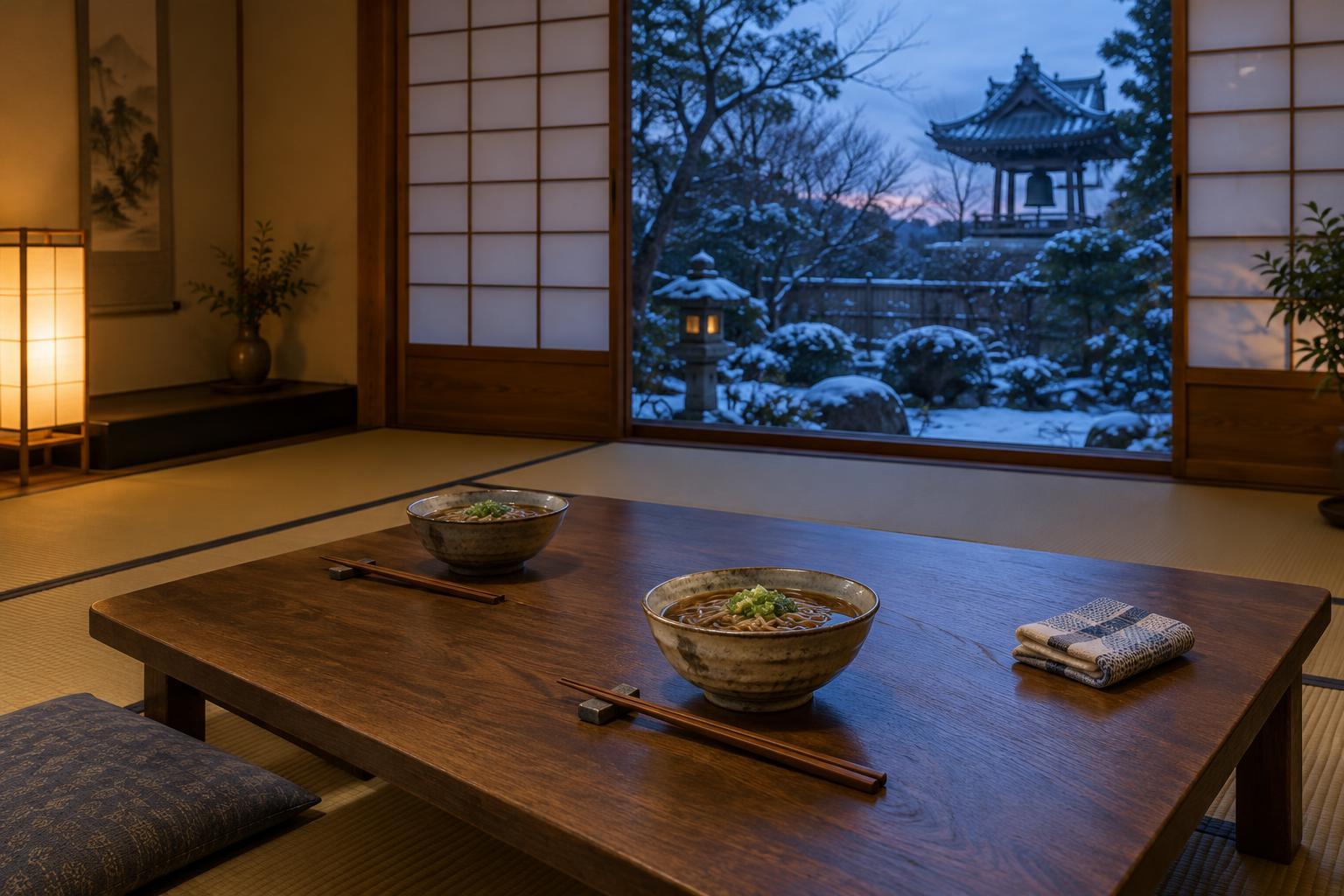
A turning point in the winter light
Tōji is the Japanese name for the winter solstice, the day with the shortest period of daylight and the longest night in the Northern Hemisphere. It usually falls around December 21 or 22. Afterward, the days begin to lengthen, even though the coldest part of winter may still lie ahead. That contrast gives Tōji its quiet appeal: it marks a change that is real but not yet easy to see.
The solstice has long been associated with the return of light and the hope of renewed strength. In Japan, those ideas often appear through ordinary acts rather than elaborate celebrations. A warm bath and a seasonal meal can make the day feel distinct. Customs vary by region, household and generation, however, and many people simply go about their usual routines. Tōji is best understood as an invitation to notice the season, not a checklist that everyone follows.
Why put yuzu in the bath?
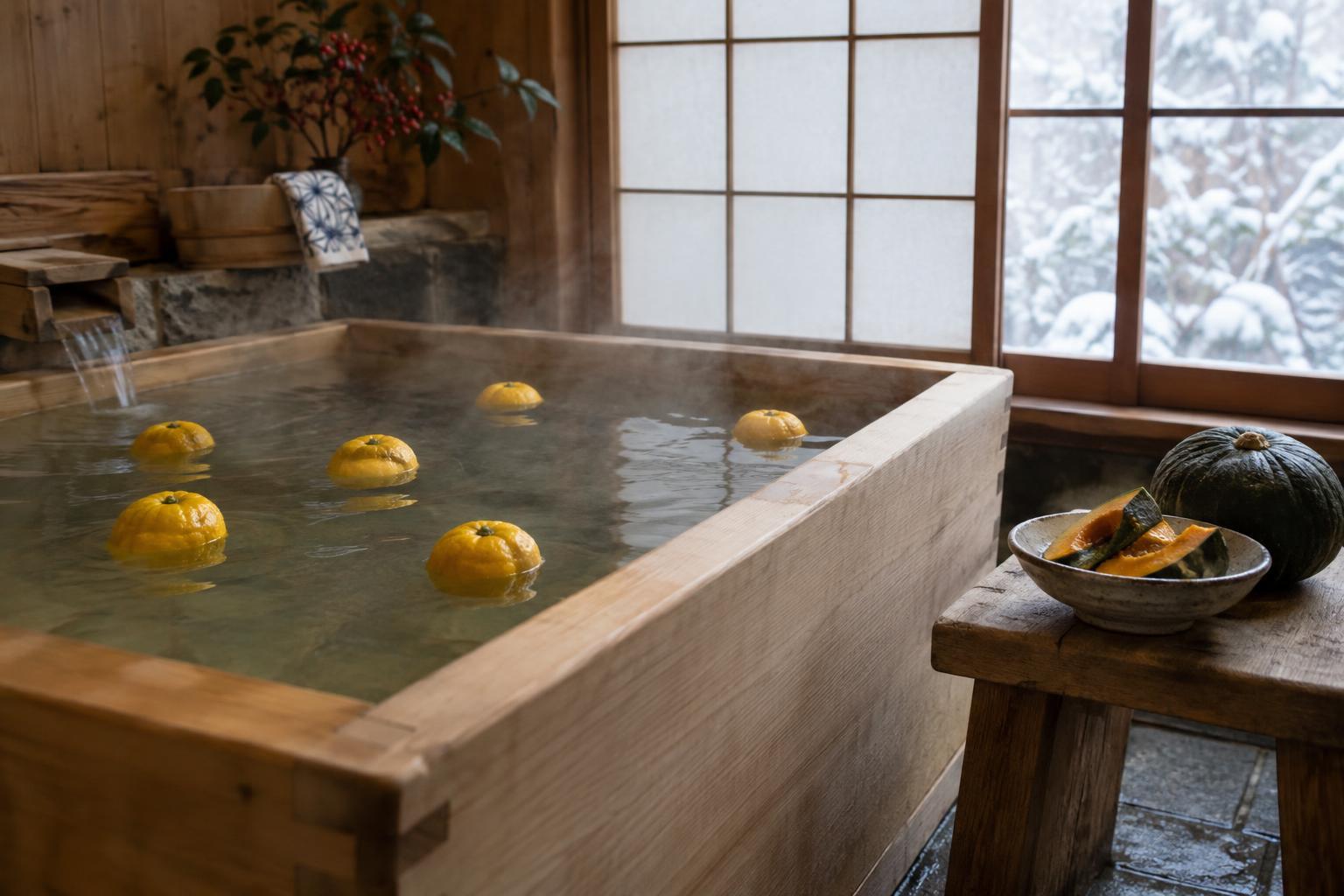
A yuzuyu is a bath scented with yuzu, a small citrus fruit with a vivid, tart fragrance. Around Tōji, whole fruits may be floated in bathwater; some people lightly score the peel or place cut fruit in a cloth bag to release more aroma while keeping seeds and pulp contained. The scent turns a familiar soak into a seasonal experience, especially welcome on a dark evening.
Yuzu baths are also linked in popular custom with good fortune and staying well through winter. These are traditional associations, not reasons to treat a bath as medical care. If you would like to try one, start with a small amount of fruit and avoid squeezing its juice directly into the water. Citrus can irritate sensitive skin, and cut fruit may make the bath feel more intense. Rinse off or skip it if you notice discomfort. In a shared bath, ask before adding anything to the water.
Kabocha on the solstice table
The other familiar Tōji custom is eating kabocha, a dense, sweet squash often called Japanese pumpkin in English. Its deep-colored flesh makes it a fitting ingredient for a winter meal. One common preparation is kabocha no nimono: pieces simmered until tender in a gently sweet and savory broth. In some homes and regions, kabocha is paired with azuki beans. There is no single required solstice menu.
Kabocha is associated in seasonal custom with nourishment and resilience during winter. You need not make a special ceremonial dish to appreciate that idea. Simmer wedges with a little water, soy sauce and a modest amount of sugar, adjusting the seasoning to your taste. Leave the edible skin on if you like its texture, and take care when cutting the firm squash: a stable board and a sharp knife make the task easier. A simple bowl of warm kabocha can be the center of a Tōji supper.
Making room for a small seasonal ritual
To observe Tōji outside Japan, begin with what is available rather than trying to recreate an idealized scene. If fresh yuzu is hard to find, you might choose a plain warm bath and enjoy a yuzu-scented tea or food separately. If kabocha is unavailable, another winter squash can make a satisfying seasonal meal, though it will taste and cook differently. The point is to pay attention to warmth, food and the gradual return of daylight.
A respectful approach also leaves room for the everyday character of these customs. A yuzu bath does not need to become a wellness promise, and a kabocha dish does not need to stand for all Japanese winter traditions. Open the curtains to the brief afternoon light, prepare something warming, or pause at dusk to notice the changing sky. Tōji offers a gentle way to meet the longest night while remembering that the days are already beginning to grow.