A threshold between years
Ōmisoka is December 31, the final day of the year in Japan. For many households, it is less a single ceremony than a sequence of ordinary and meaningful acts: finishing chores, sharing a meal and welcoming the turn of the year. What the day looks like varies. Some people spend the evening quietly at home, while others visit a temple or shrine, gather with family or work through the holiday.
The appeal of Ōmisoka as an at-home practice lies in its sense of transition. Rather than trying to reproduce someone else’s celebration exactly, you can use its familiar elements to give the year a clear ending. A clean corner, a simple supper and a few minutes of quiet can each mark that shift.
Make space with a year-end clean
Year-end cleaning, often called ōsōji, goes beyond a quick New Year’s Eve sweep. It is a chance to clear away accumulated dust and unfinished household tasks before the new year begins. In practice, many people do the substantial work ahead of December 31, leaving the last day for smaller jobs and preparations. There is no need to turn the custom into a test of how spotless your home can become.
If you are starting on Ōmisoka itself, choose a manageable area: the entryway, kitchen counter or place where you eat. Put away what has collected there, wipe the surfaces and take out rubbish if your local collection schedule allows. Finish by setting out something you will appreciate in the morning, such as a clean cup or a freshly folded cloth. The useful question is not “Is everything perfect?” but “Does this space feel ready for the next day?”
Share a bowl of toshikoshi soba
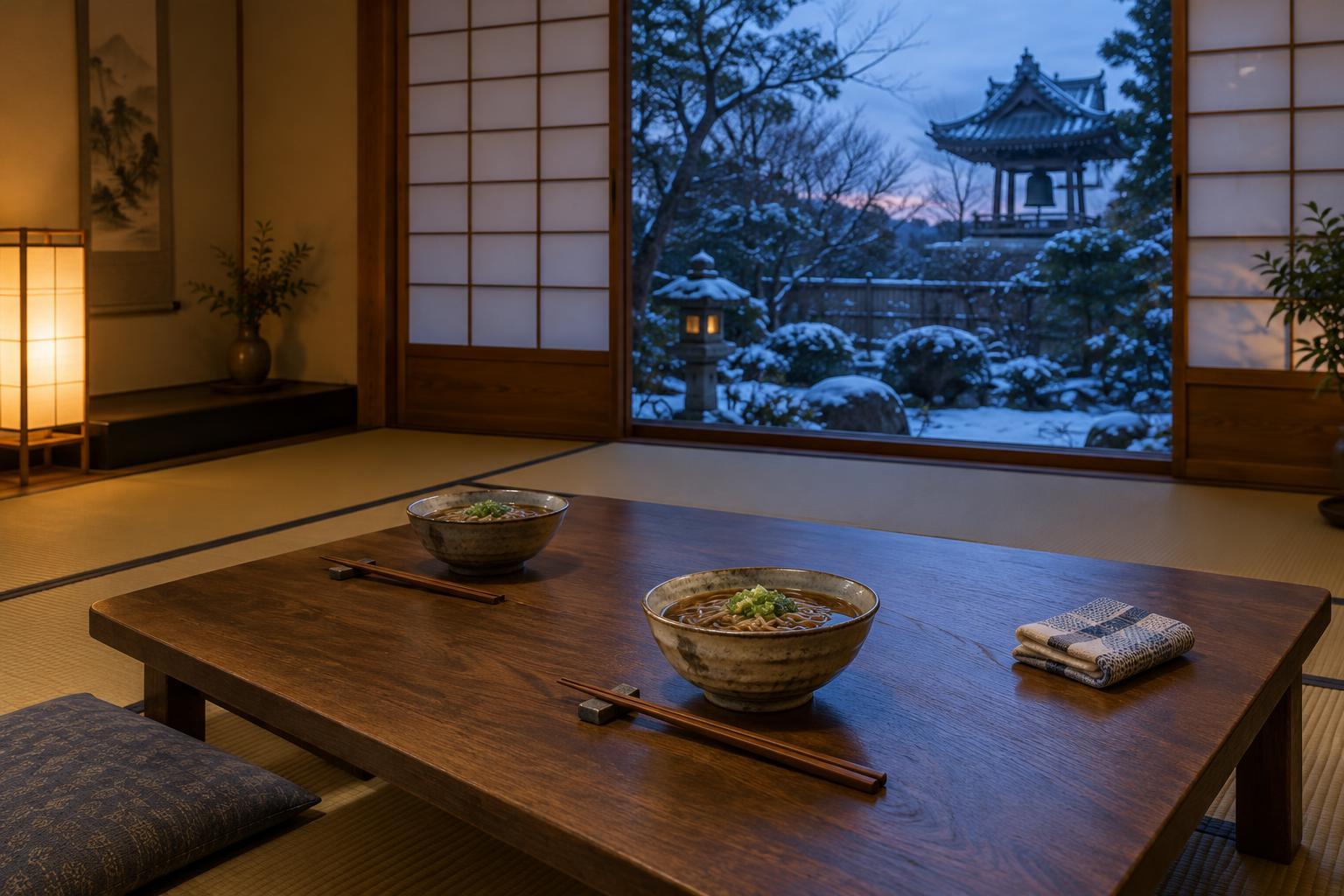
Toshikoshi soba, or year-crossing buckwheat noodles, is a familiar Ōmisoka food. Explanations of its symbolism differ, but the long noodles are commonly associated with hopes for a long life, and the meal gives people a simple way to pause together before midnight. Households serve soba in different ways, from a warm broth to a cold dish with dipping sauce.
An at-home version can be modest: cook the noodles according to the package, prepare a broth or dipping sauce you enjoy, and add toppings that suit your table. If buckwheat is unsuitable for someone eating with you, there is no obligation to serve it. The value of the meal need not depend on strict authenticity; it can come from sitting down, eating without haste and acknowledging the year you have shared.
Listen for the year’s final bells
On New Year’s Eve, some Buddhist temples ring their bells in a practice known as joya no kane. The traditional count is 108 strikes, often explained in connection with human attachments or worldly desires in Buddhist thought. The timing and arrangements vary by temple, and not every community or household observes the custom in the same way.
If you cannot hear a temple bell where you live, you do not need to imitate a ceremony. You might instead spend a short, screen-free interval noticing the sounds around you. Think of one thing you are ready to leave behind and one thing you hope to carry forward. If you do plan to visit a temple, check its own guidance beforehand and follow the cues of the people caring for the space; a late-night visit is part of a living community, not simply a backdrop for a photograph.
Welcome the morning without rushing it
Ōmisoka leads into Shōgatsu, the New Year period, so the last evening often includes small preparations for the first day. Depending on the household, these might involve arranging seasonal decorations, preparing food or simply making sure everyone can rest. Decorations such as shimekazari or kadomatsu carry particular associations with the New Year, but they are not required for a meaningful evening at home.
A gentle plan is enough: complete one cleaning task, make or share a meal, then allow a quiet moment before bed or midnight. You could write down what you appreciated about the past year and place the note somewhere you will find it later. In the morning, enjoy the clear surface or prepared breakfast you left for yourself. Ōmisoka offers no guarantee of a fresh start, but its small, deliberate actions can help you meet one with attention.