A celebration of growing up
Shichi-Go-San means “seven-five-three.” It is a Japanese celebration in which families give thanks for a child’s growth and wish them continued health and happiness. The occasion is associated with November 15, although many families choose a nearby weekend or another convenient day. Rather than following a single required schedule, they shape the visit around their child, their household and the places available to them.
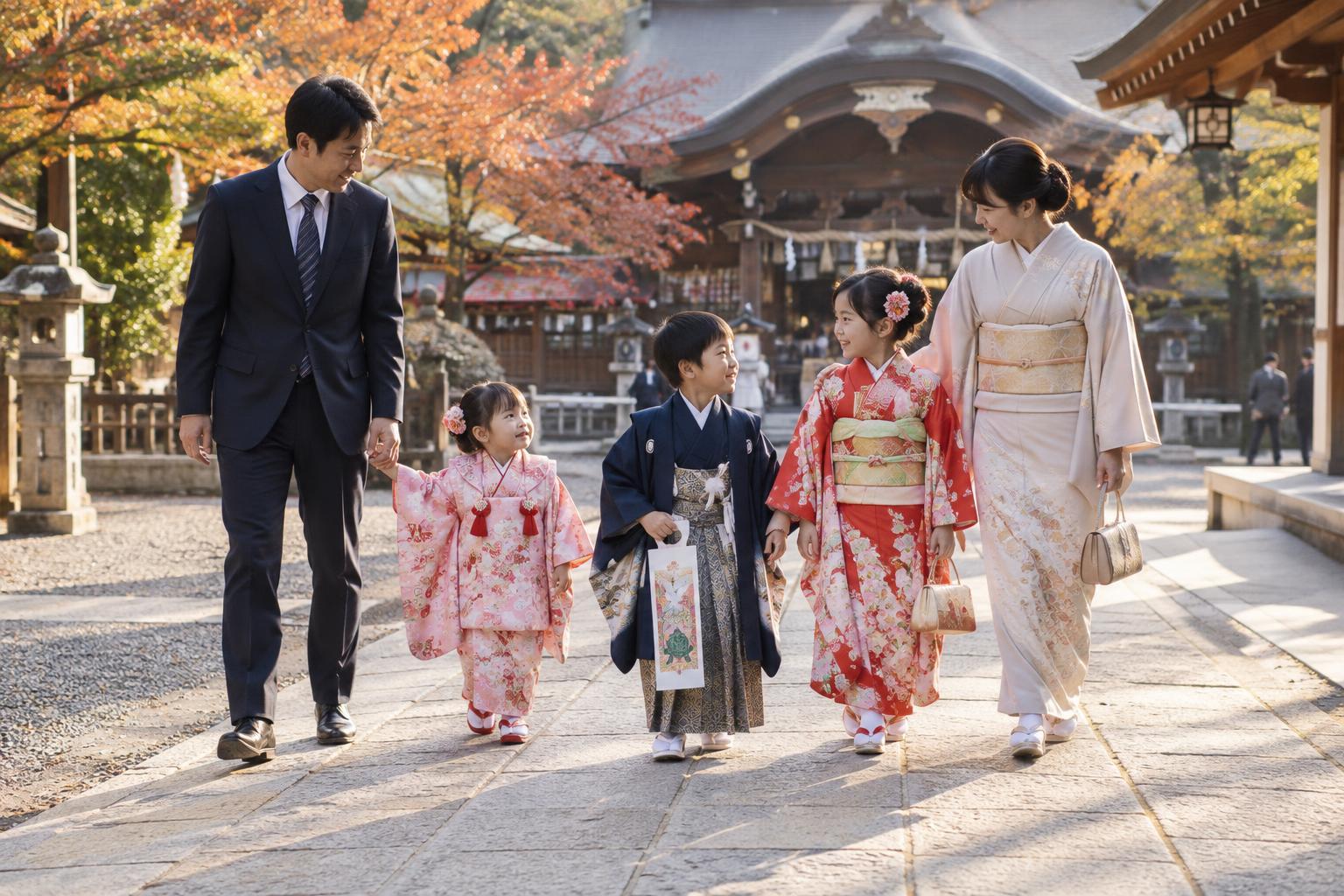
The day often centers on a visit to a Shinto shrine. Children may dress up, have photographs taken and receive a small treat called chitose ame. For a family, the significance can be simple: pausing amid everyday routines to notice how much a child has grown. A young child may remember the outfit or the candy most vividly; adults may remember the chance to gather several generations together.
Why three, five and seven?
Traditionally, the ages were linked to different milestones in childhood. Age three was associated with beginning to grow out the hair after a period of keeping it short. At five, boys might first wear hakama, the pleated garment worn over a kimono. At seven, girls might begin wearing a kimono tied with an obi rather than a simpler fastening used for younger children. These associations help explain the familiar pattern of celebrating girls at three and seven and boys at five.
They are not a rule that every family follows. Some celebrate a boy at three, include siblings together or choose the year that works best for a child. There can also be differences in how age is counted: an older Japanese system counts a child as one at birth and adds a year at the new year, while many families now use the child’s actual age. If you hear that a child is celebrating “at three,” it is worth remembering that the family may be using either approach.
What happens at a shrine visit?
A shrine visit gives families a place to express gratitude and hopes for the child’s future. Some make a brief visit and offer a prayer on their own. Others arrange a formal blessing, often called a gokitō, conducted by a shrine priest. Arrangements, fees and photography rules differ between shrines, so families planning a formal visit generally check the shrine’s guidance beforehand.
At the shrine, the experience may be quieter and less ceremonial than an observer expects: a child holding a parent’s hand, grandparents straightening an outfit, or a family waiting for its turn. Visitors should follow posted guidance and leave space for worshippers. Before photographing anyone else’s child, it is important to ask permission; even a busy celebration remains a personal family occasion.
Clothing, photographs and a long, sweet wish
Traditional clothing is one of the most recognizable parts of Shichi-Go-San. A three-year-old may wear a hifu, a sleeveless vest over a kimono; a five-year-old may wear hakama; and a seven-year-old may wear a kimono with an obi. These are common images, not a checklist. Families also choose suits, dresses or other comfortable clothes, and some rent an outfit for photographs rather than wearing it throughout the day. Comfort matters, especially for a young child facing unfamiliar layers and a long outing.
Chitose ame, or “thousand-year candy,” is another familiar sight. The long, slender sweets are commonly presented in a decorative bag and convey a wish for a long life. Families may take photographs at the shrine, visit a studio or gather for a meal afterward. None of these extras is necessary to understand the occasion. At its heart, Shichi-Go-San is a flexible way to honor a child’s passage through early childhood, with familiar customs making that gratitude visible.