Before you book: look beyond the room photo
Ryokan range from small family-run inns to larger properties with extensive facilities. Their routines vary, so read the details of the room and meal plan rather than assuming every stay follows the same pattern. Check whether dinner and breakfast are included, where they are served, and whether the room has a private bathroom. If bathing is important to you, confirm what kind of baths are available and whether they are shared, reservable or attached to your room.
Pay particular attention to arrival times. A ryokan serving dinner may ask guests to check in earlier than a hotel would, so staff can prepare the meal. If you expect to arrive late, ask before booking whether dinner will still be possible. Disclose food allergies or dietary restrictions when you inquire, not at the table; an inn may be unable to make certain changes, especially with little notice. It is also worth checking accessibility, bedding arrangements and tattoo policies for shared baths if any of these affect your stay.
When comparing prices, make sure you are looking at the same meal plan and occupancy. A lower room rate may exclude dinner, while another may cover two meals. Keep the confirmation handy: it is the best reference for check-in and checkout times, cancellation terms and any reservations you have made for private bathing.
Arriving and settling into a tatami room
At the entrance, follow the inn’s lead about footwear. You may be asked to remove outdoor shoes and use indoor slippers. Before stepping onto tatami matting, remove the slippers too; bare feet or socks are generally appropriate on the mats. Some inns also provide separate slippers for the toilet. Leave those inside the toilet area when you come out, rather than walking through the room in them.
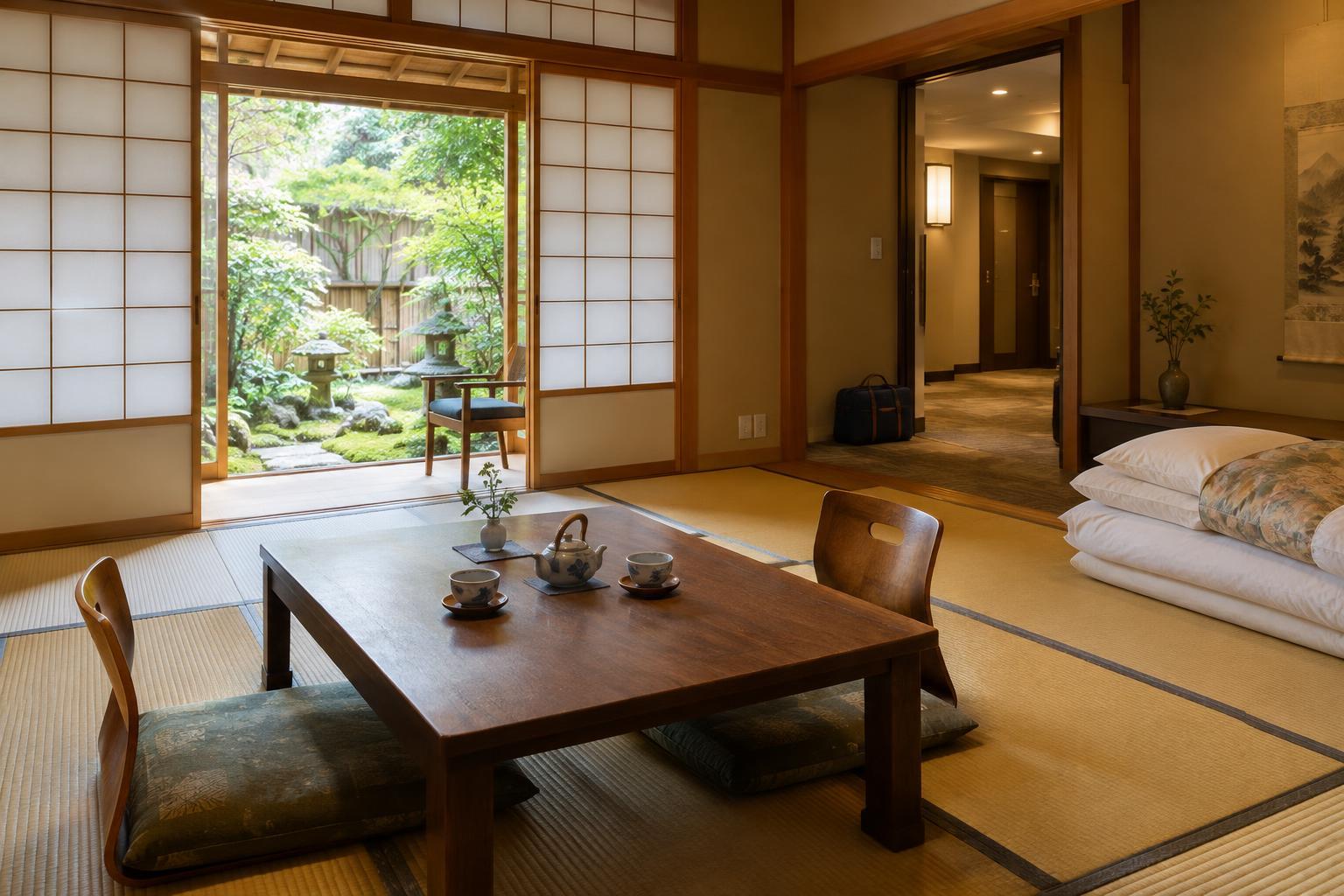
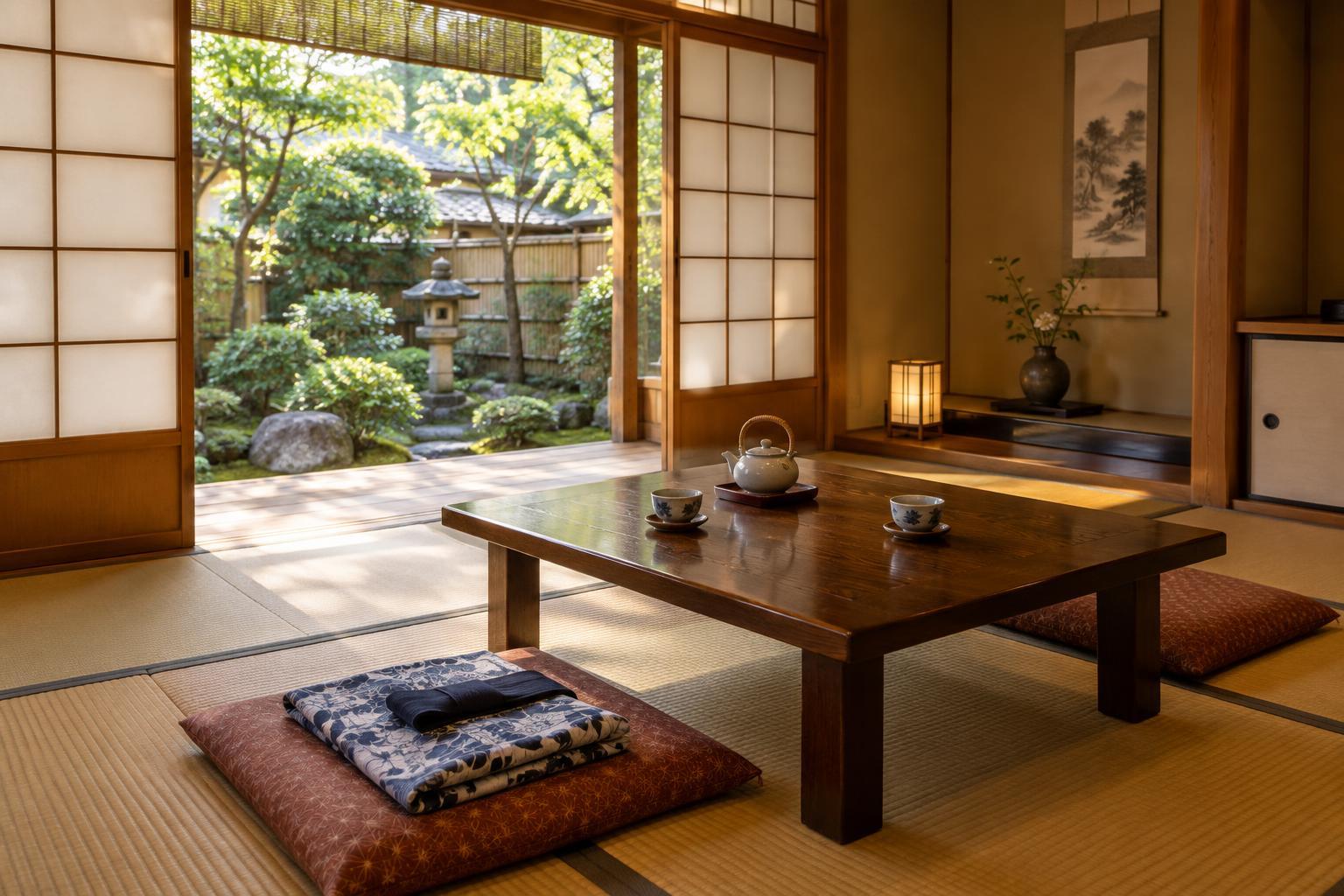
A guest room may have a low table, floor cushions and a decorative alcove. Treat the alcove as a display space rather than a shelf for luggage. Place bags where they will not scrape walls or damage tatami, and ask if you are unsure where a large suitcase belongs. Staff may explain the room’s facilities and the timing of meals and baths at check-in. Listening then can spare you guesswork later.
If your room uses futons, they may be stored away during the day and laid out by staff while you are at dinner. In other places, guests set them up themselves or use permanent beds. Follow the inn’s instructions rather than rearranging furniture unnecessarily. A provided yukata, a casual cotton robe, is often suitable for relaxing around the property, though rules for wearing it in dining areas can differ.
Meals: enjoy the pace and communicate early
Dinner can be one of the pleasures of a ryokan stay. Depending on the plan, it might arrive in several courses in your room, be served in a dining room, or take a simpler form. Breakfast may be Japanese-style, Western-style or a choice between the two. If you are curious about an unfamiliar dish, a polite question is welcome; there is no need to pretend you know every ingredient.
Arrive at the agreed meal time, especially when dishes are prepared to be served in sequence. If you need to change that time, ask as early as possible and be prepared for the answer to be no. Dietary needs are similarly best settled before arrival. Once the meal begins, staff may not have the ingredients or time to redesign it. You do not need to finish every bite, but handling the dishes carefully and allowing staff to guide the pace helps the meal run smoothly.
You may be offered tea or a welcome sweet in your room. These small gestures are part of the stay, not a test of etiquette. A simple thank-you is enough; tipping is not generally expected at a ryokan unless the property gives different guidance.
Bathing without guesswork
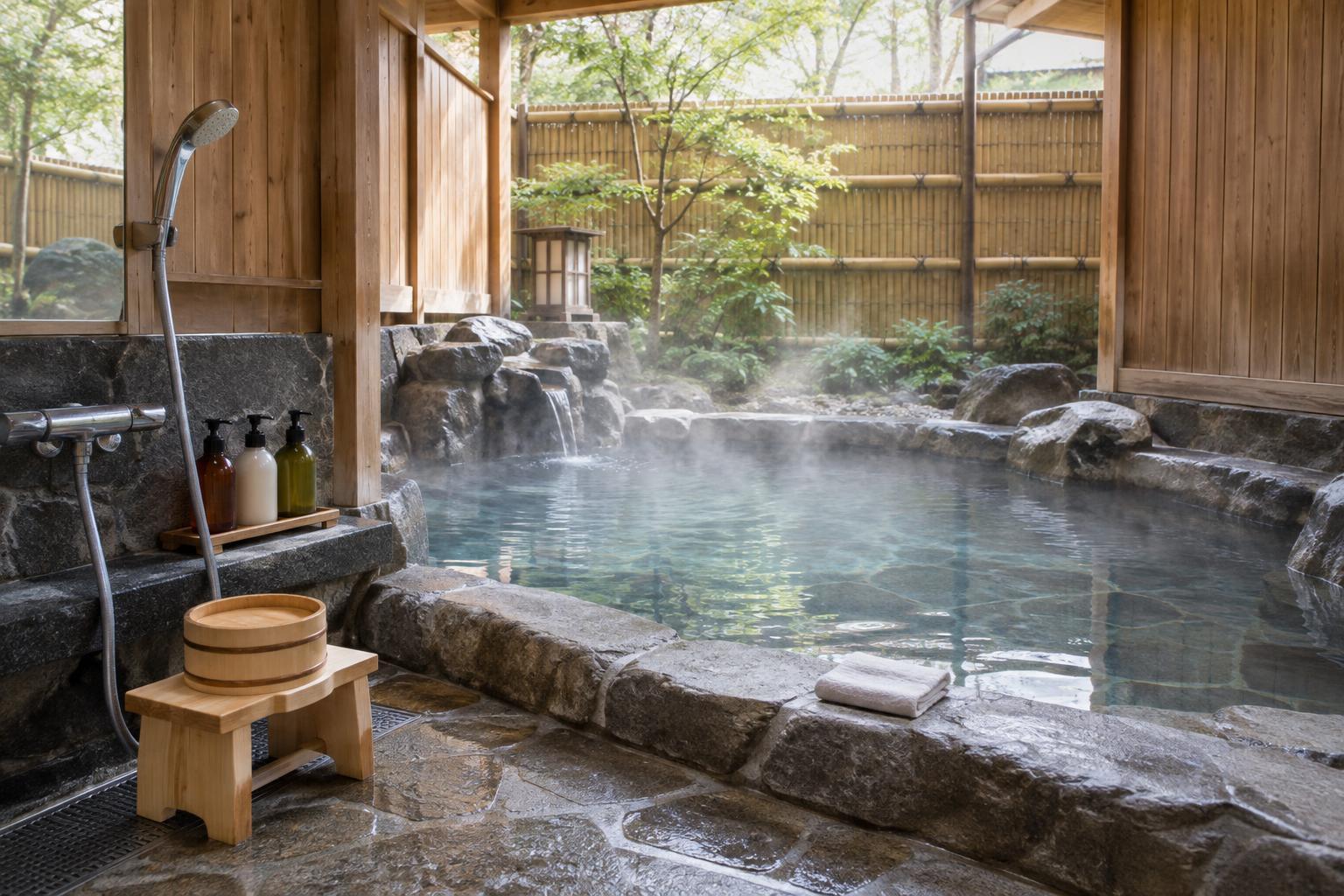
If the ryokan has shared baths, look for posted instructions and follow them even if you have used an onsen elsewhere. Generally, guests wash and rinse at the shower stations before entering a shared tub. Keep soap and towels out of the bath water, and avoid swimming or making excessive noise. Baths are for soaking, so take your time while remaining considerate of others.
Shared baths may have separate areas with changing access times; private baths may require a reservation. Do not assume that a room described as having a bath includes access to a hot spring, or that every hot-spring inn has the same rules. If you have questions about tattoos, children, swimwear or bath hours, ask the property directly before your stay. Staff can explain the arrangement more reliably than a general guide can.
A calm checkout
The evening before departure, confirm the checkout time and ask when any remaining charges should be settled. This is especially useful if you have ordered drinks, booked a private bath or arranged a meal outside your original plan. Allow enough time in the morning for breakfast, packing and the bill rather than treating checkout like a hurried hotel departure.
Leave borrowed items such as yukata, towels and keys where the inn requests. Check drawers, bedding and charging outlets for your belongings, and let staff know if you have accidentally damaged something. A warm thank-you at the desk is a fitting end to the visit. Ryokan customs may be new to you, but attentive observation, timely questions and consideration for shared spaces will carry you through most of the stay.