Start with the journey you need to make
An accessible itinerary is personal. A route that works for someone using a wheelchair may not suit a traveler who needs frequent rests, finds crowds difficult or relies on clear visual information. Before booking, write down what you need to know: step-free access, walking distance, bathroom layout, places to sit, luggage handling or a quieter time to travel. Note which features are essential and which are preferences. That distinction will help you make decisions when information is incomplete.
Plan each day as a chain of journeys: lodging to station, station entrance to platform, arrival platform to street, and street to destination. A step-free train ride is only one part of that chain. A nearby-looking attraction may still involve a steep approach or a difficult crossing. For a first draft, choose fewer stops than you think you can manage and leave room for meals, rest and unexpected detours.
Research stations by entrance, exit and transfer
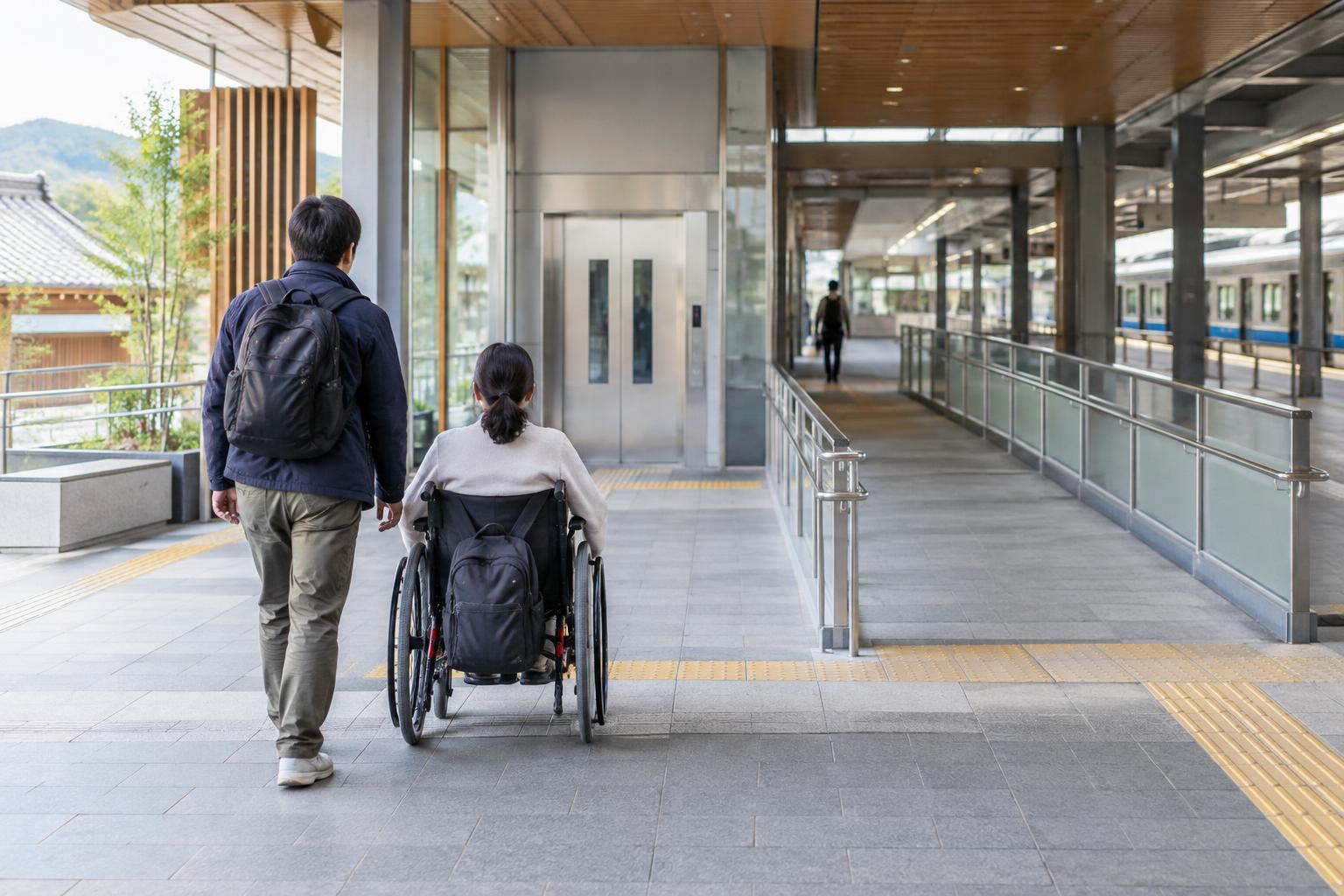
When checking a rail route, look beyond the station name. Find the entrance you expect to use, the exit closest to your destination and the path between platforms if you need to transfer. Station diagrams, operator accessibility pages and map views can help you identify elevators and estimate walking distances. Large interchange stations may have several separate routes through them; an elevator at one exit does not establish that every transfer is step-free.
Treat an online map as a starting point rather than a promise. Equipment can be unavailable, and an accessible exit may be farther from your destination than the exit suggested by a general route planner. If a particular connection is critical, check the relevant operator’s information and ask about the exact stations and transfer before travel. Save station names and exit numbers in a form you can show staff. Build in enough transfer time that finding an elevator does not become a race.
Ask lodging about the details that matter
Descriptions such as “accessible” or “barrier-free” are useful leads, but they may not answer your specific questions. Contact lodging before committing to a booking if a feature is essential. Ask whether the route from the street to the room is step-free, whether an elevator serves the room’s floor, and whether any doors or thresholds could be an obstacle. If dimensions matter, request measurements rather than relying on photographs.
The bathroom often needs its own set of questions: Is there a step into it? Is the shower separate from a tub? Where are grab bars placed, and is there space to turn or transfer? You might also ask about bed height, room to move around the bed, and access to the breakfast area. If you need a quieter room or a place to store equipment, say so plainly. Keep written replies with your reservation details so you can refer to the agreed room features on arrival.
Build routes with alternatives and breathing room
Compare routes by effort, not only by travel time. A journey with one straightforward transfer may be preferable to a faster route with several platform changes. Consider the distance from the station to your accommodation, especially when arriving with luggage. Look at the final approach to each destination, and identify where you could pause along the way. If a route depends on one elevator or a tight connection, find a second option before you leave.
A useful daily plan has a main activity, an easier alternative and a sensible point to turn back. Save the address of your lodging and the stations you plan to use, including their names in Japanese if available. Offline copies of maps and booking details can help when a connection is unreliable. If you expect to need assistance boarding or navigating a station, ask the transport operator how to arrange it and allow time for the process.
Leave room for questions and changes
It can help to prepare a short explanation of your needs that you can show or say: for example, that you need an elevator route, cannot use stairs or need a little more time. Keep the question specific. “Which exit has an elevator to street level?” is easier to answer than a broad request for an accessible route. Translation tools can help with simple questions, but confirm important details when possible rather than assuming a translated reply settles everything.
Good planning does not mean eliminating every uncertainty. It means knowing what to verify, carrying the information you have gathered and allowing yourself to change plans. Japan offers many ways to enjoy a place at a thoughtful pace, from a neighborhood walk to a carefully chosen museum visit. A manageable route and a comfortable place to return to can make those experiences more rewarding than an overfilled itinerary.