Check the rule for the train you will actually take
There is no single luggage rule for every train in Japan. Local trains, limited express services and Shinkansen trains differ in layout, and rules can vary by operator and route. Before traveling with a large suitcase, check the guidance for each service on your itinerary, especially if you change between train operators. A bag that is easy to manage on an intercity train may be awkward during a crowded city transfer.
One rule worth knowing applies to certain Shinkansen services on the Tokaido, Sanyo and Kyushu routes. On these services, luggage whose height, width and depth add up to more than 160 cm and no more than 250 cm generally needs a reservation for an oversized-baggage space or compartment. Luggage over 250 cm in total is not permitted under that rule. Measure the outside of your packed bag, including protruding parts such as wheels and handles, and confirm the current requirements with the operator before booking. Do not assume the same thresholds or reservation process apply on every Shinkansen line.
Choose a storage spot before you board
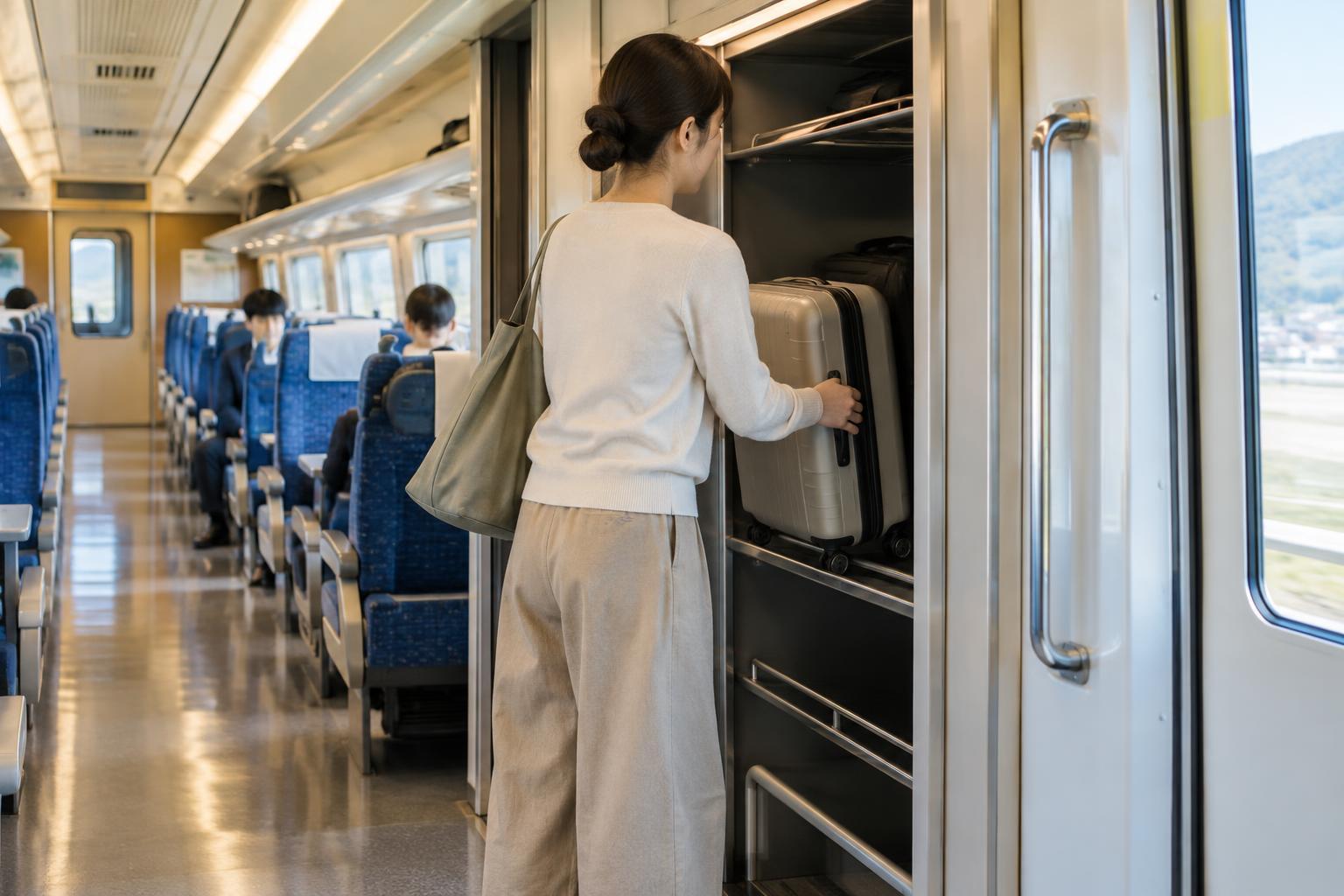
A modest bag may fit on an overhead rack or in front of your seat, provided it stays secure and does not intrude into anyone else’s space. Lift only what you can handle safely. A heavy suitcase placed overhead could be difficult to remove, particularly if the train moves while you are reaching for it. Keep the aisle, doors and access to other seats clear.
Some reserved seats have designated space behind the last row, but that space is not general-purpose storage. On services that require an oversized-baggage reservation, use the space or compartment assigned through that booking rather than placing your case wherever it appears to fit. If you are unsure where your bag belongs, ask train staff. For an ordinary suitcase that does not require an oversized-baggage reservation, you still need a place where it can remain stable without obstructing others.
Plan for stations and local trains, not just the long ride
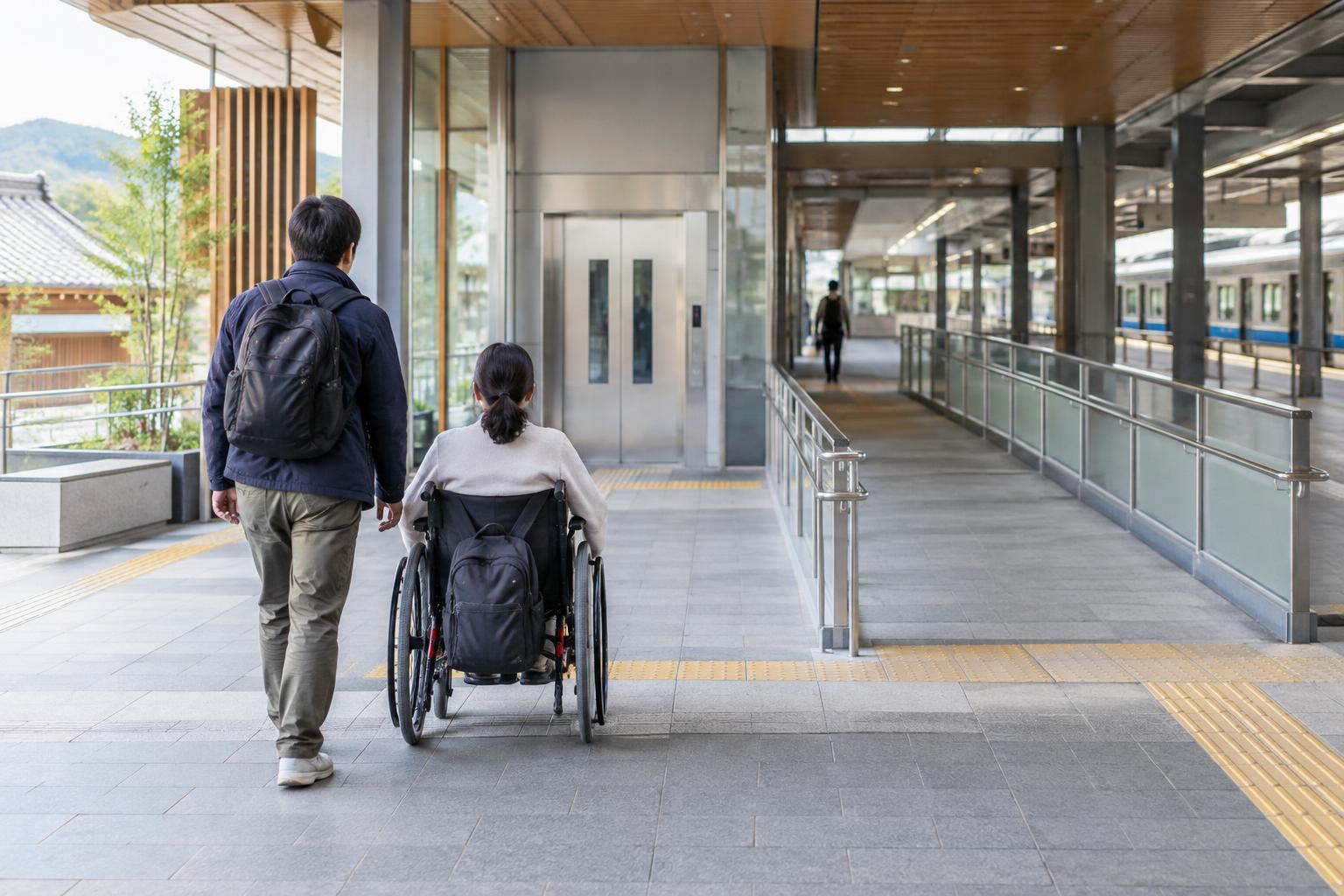
The hardest part of a luggage-heavy journey may be a short connection. Station corridors can be busy, platforms may be narrow, and the most direct route may include stairs. Allow extra transfer time rather than rushing with a rolling case. Look for elevators when you need them, but leave room for travelers who rely on them. Before the train arrives, have your ticket or phone ready and keep loose items tucked away so you can board without stopping at the doorway.
On a crowded local train, keep a small bag close to your body and position a suitcase where it will not roll or block the flow of passengers. Avoid spreading belongings onto seats. If possible, travel with less luggage during busy commuting periods or choose a route with fewer changes. A slightly longer journey can feel easier when it involves fewer platforms and less lifting.
Consider storing or sending a bag ahead
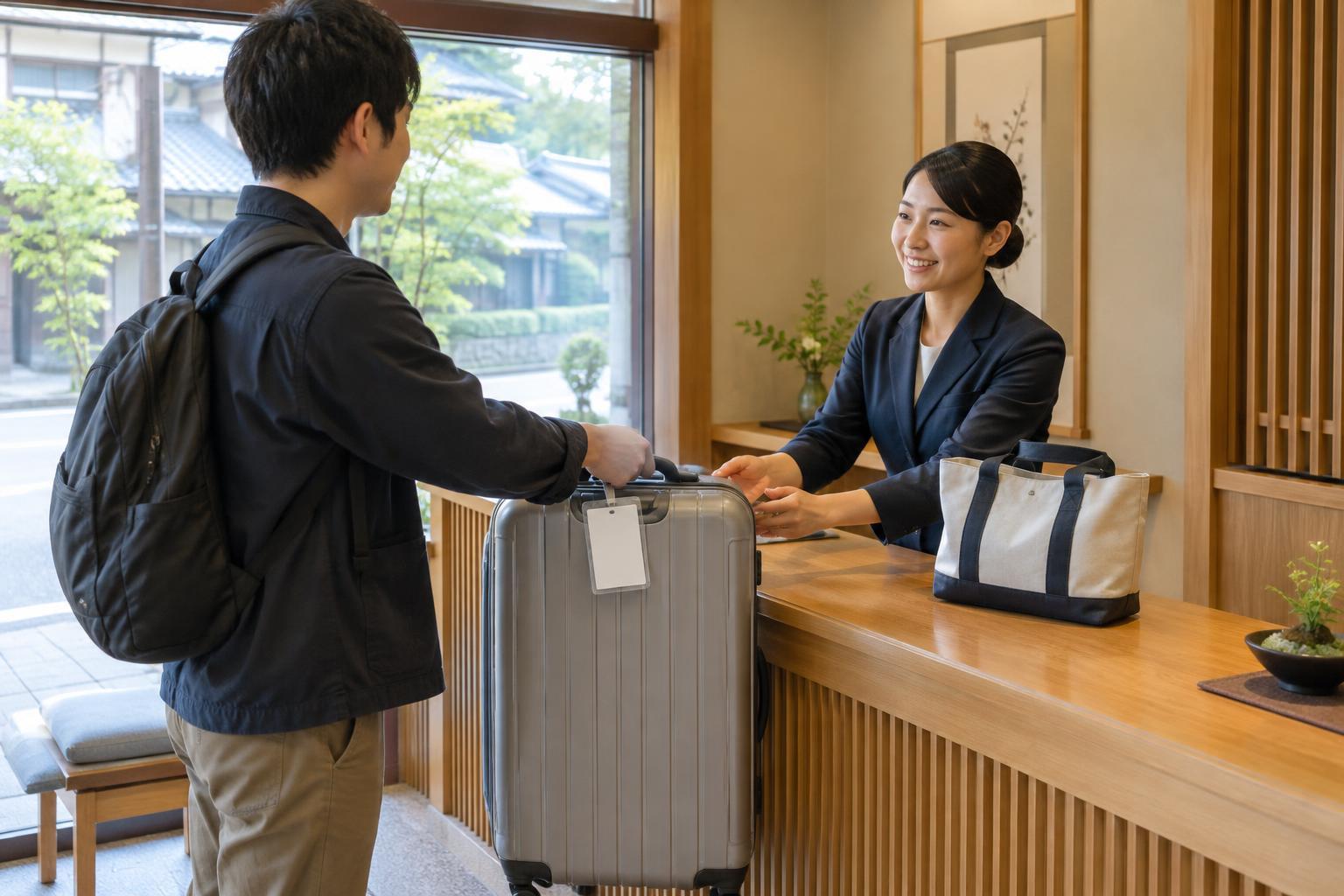
Station lockers can be useful for a day trip or a few hours between accommodations, but sizes and availability vary. A large case may not fit, and lockers at a busy station can fill up. Check what you will do if none is available: a staffed luggage counter, hotel storage or another station may be an alternative. Confirm opening hours and collection arrangements before leaving anything behind.
Luggage delivery services can also make a multi-stop trip simpler. They may transport a suitcase between accommodations or from an airport to a hotel, subject to the service’s coverage, size limits and delivery schedule. Keep anything you need immediately with you, including medication, travel documents, valuables and a change of clothes. Treat delivery as a planned handoff, not an instant substitute for carrying a bag.
Pack for easy handling and shared space
A manageable suitcase is often more useful than one packed to its maximum capacity. Test whether you can lift it onto a rack, carry it up a short flight of stairs and turn with it in a narrow space. Use a small day bag for items needed during the ride, but avoid attaching so many extra bags that the whole set becomes unstable. Secure straps and handles so they do not catch on seats or other travelers’ belongings.
A little preparation makes considerate travel feel natural: measure a large case, reserve the appropriate space when required, and decide where it will go before boarding. Once on the train, place it promptly and keep an eye on it without guarding more space than you need. The aim is not to travel with no luggage at all; it is to bring an amount you can manage while leaving the journey comfortable for everyone sharing it.