What makes onigiri work
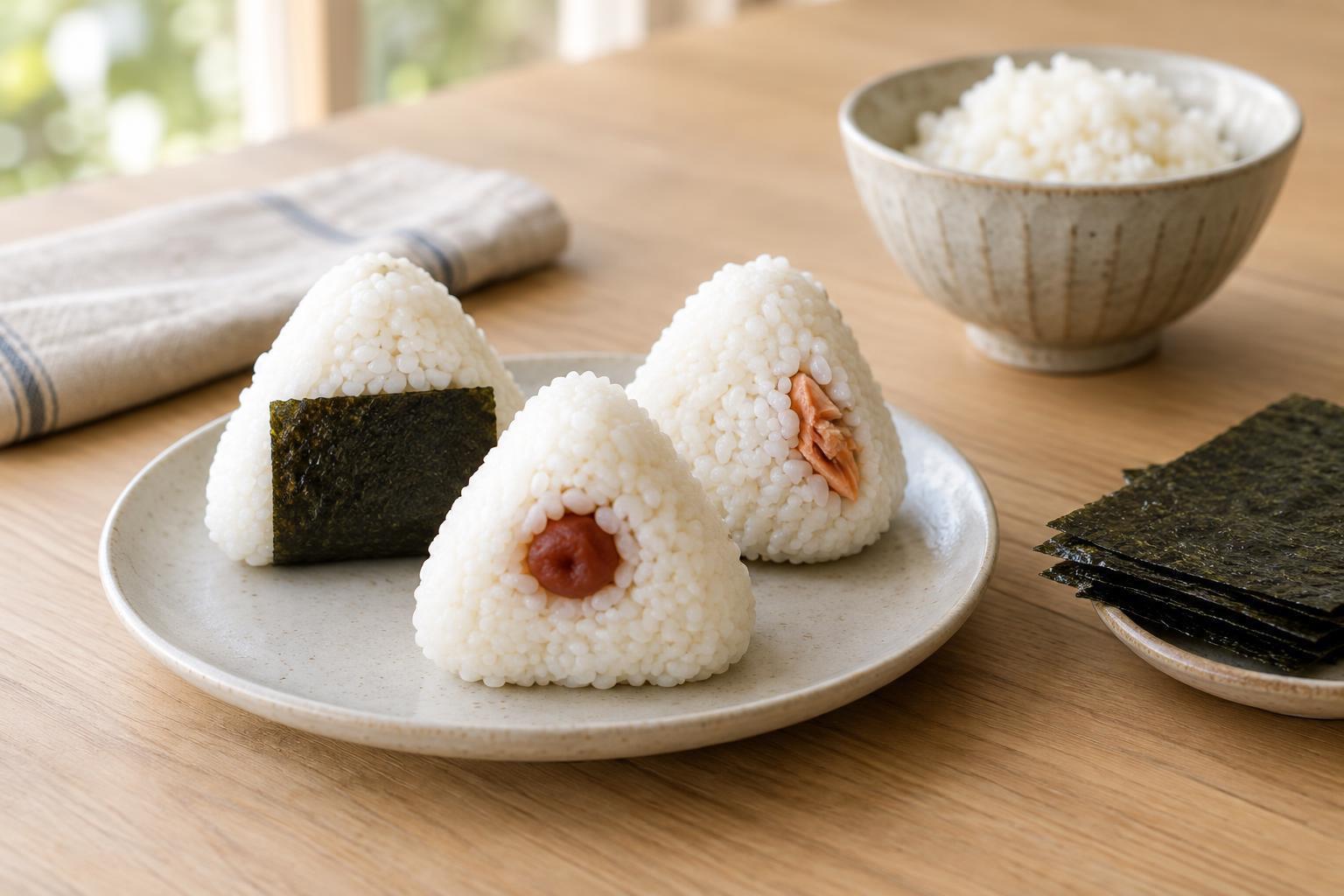
Onigiri is cooked rice pressed into a shape that can be held in the hand. Triangles are familiar, but rounds and cylinders work just as well. Some have a filling tucked into the center; others have ingredients mixed through the rice or scattered over the outside. A strip of nori, or dried seaweed, may make the rice easier to hold and add a crisp contrast.
The pleasure of onigiri lies in its simplicity, but it is worth paying attention to texture. The rice should hold together without becoming a dense block. A modest amount of a well-seasoned filling gives each bite interest without making the shape difficult to close. You need no special mold: clean hands, a small bowl of water and a little salt are enough to begin.
Start with rice that holds together
Japanese short-grain rice is a useful choice because its cooked grains cling together. Cook it according to the package directions, then let it rest briefly so the moisture settles. Rice that is warm enough to handle comfortably is generally easier to shape than rice that has gone cold and firm. If it sticks to your fingers, dampen your hands lightly rather than adding a lot of water, which can leave the surface wet.
Before shaping each piece, spread a small pinch of salt across your palms. Salt seasons the outside of the rice, so start lightly; you can always adjust your next batch. For a first attempt, use a portion of rice that fits comfortably between your hands. Smaller onigiri are often easier to shape and fill than oversized ones.
Shape gently and keep fillings contained
For a filled onigiri, place some rice in one palm and make a shallow hollow in the center. Add a small spoonful of filling, cover it with more rice and press just firmly enough to seal the edges. Turn the rice between your hands as you shape it. For a triangle, use one hand to form a gentle corner while the other supports the opposite side. There is no need to squeeze hard: the aim is a shape that stays together while retaining the texture of individual grains.
Try a filling that is flavorful but not excessively wet, such as flaked, thoroughly cooked salmon, a little umeboshi with its pit removed, or seasoned cooked mushrooms. If a filling is saucy, drain it before using it. You can also skip the center filling and mix sesame seeds or a small amount of furikake into the rice. Check the seasoning of any prepared ingredient first so the finished onigiri does not become too salty.
Choose when to add the nori
Nori can change the experience of eating onigiri. Wrap a strip around a freshly made piece if you like the seaweed to soften against the warm rice. If you prefer a crisp bite, keep the nori separate and wrap it around the onigiri just before eating. This is especially helpful when packing lunch, since moisture from the rice gradually softens the seaweed.
Nori is optional, not a requirement for a successful onigiri. For variety, leave the rice uncovered or coat part of the outside with sesame seeds. Whatever you choose, make a few onigiri the same way before changing the filling or shape. Repeating the steps makes it easier to notice how much rice, pressure and seasoning work for your hands.
Pack and serve with care
Onigiri is appealing as a portable food, but cooked rice and fillings still need thoughtful handling. Work with clean hands and utensils, avoid leaving prepared onigiri sitting out for long periods, and keep perishable fillings chilled until needed. If you are making them ahead, refrigerate them promptly in a covered container and follow food-safety guidance appropriate to the filling and your journey. Refrigeration may firm the rice, so onigiri often tastes best when made close to serving time.
At home, serve onigiri with a simple soup, vegetables or pickles, or enjoy one on its own as a snack. If your first triangle comes out round, it will still be good to eat. Begin with plain salted rice and one filling you enjoy; once the texture and shaping feel familiar, small changes in seasoning, size and wrapping can make each batch your own.